Plant Overview
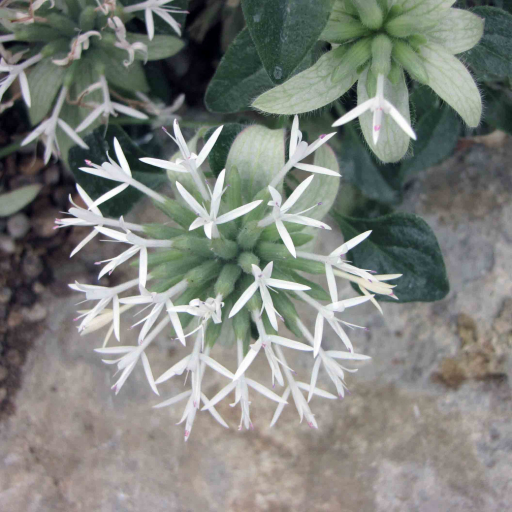
Often called the "Little Monardella," this pint-sized perennial is a hidden gem of the California mountains. It belongs to the mint family, which explains its refreshing fragrance and architectural flower heads. Unlike its taller cousins, Monardella nana stays close to the ground, forming charming, aromatic cushions that seem to glow against the rugged terrain of its native habitat.
🔍 How to Identify
- 🌸 Flower Bracts: The most striking feature is the cluster of large, papery bracts that surround the tiny tubular flowers. These bracts are often creamy white or pale yellow, sometimes flushed with a soft pink or purple tint.
- 🌿 Fragrant Foliage: The small, oval leaves are arranged oppositely along the stems. If you gently rub them, they release a sharp, spicy-sweet mint scent that is unmistakable.
- ☁️ Velvety Texture: The stems and leaves are often covered in fine, soft hairs. This "fuzz" gives the plant a silvery appearance and helps it conserve moisture in the dry mountain air.
🏡 In Your Garden
- 🪨 The Drainage Specialist: This plant evolved on rocky slopes and mountain ridges, so it absolutely demands "perfect" drainage. If its roots sit in heavy, wet clay, it will likely decline. It is an ideal candidate for rock gardens or dry stone walls.
- 🦋 Pollinator Magnet: Despite its small stature, it acts like a neon sign for local wildlife. Butterflies and native bees are frequently seen hovering over the papery bracts to reach the nectar tucked deep inside the tiny tubes.
⚠️ Safety & Toxicity
- ✅ Generally Safe: Monardella nana is not known to be toxic to humans, dogs, or cats. It is a member of the Lamiaceae family, which contains many common culinary herbs.
- 🖐️ Skin Sensitivity: While not dangerous, the fine hairs and concentrated aromatic oils may cause very mild skin irritation for individuals with high sensitivity. It is always best to wash your hands after pruning or handling.
✨ Fun Fact
🏔️ High Altitude Hero: While many wild mints prefer valley floors or meadow edges, Monardella nana is a true mountaineer. It is specifically adapted to high elevations, often found clinging to rocky slopes as high as 8,000 feet above sea level!

Detailed Care Instructions
To grow Monardella Nana plant, you can follow these steps:
- Choose the right location: Monardella Nana plants grow best in full sun to partial shade. Select a location in your garden that receives at least 6-8 hours of direct sunlight per day.
- Prepare the soil: The soil should be well-draining and slightly acidic. Amend the soil with organic matter, such as compost, to improve drainage and fertility.
- Planting: Dig a hole slightly larger than the root ball of the Monardella Nana plant. Place the plant in the hole, making sure the top of the root ball is level with the soil surface. Backfill the hole with soil, gently firming it around the plant.
- Watering: Monardella Nana plants prefer moderate watering. Water the plants deeply but infrequently, allowing the top inch of soil to dry out before watering again. However, avoid overwatering as it may lead to root rot.
- Mulching: Apply a layer of organic mulch around the base of the plant. This will help retain soil moisture, suppress weeds, and provide insulation to the roots.
- Pruning: Regularly trim back any dead or damaged foliage to maintain the plant's appearance and encourage new growth.
- Fertilization: Monardella Nana plants generally do not require frequent fertilization. However, you can apply a balanced slow-release fertilizer in early spring to promote healthy growth. Follow the manufacturer's instructions for application rates.
- Pests and diseases: Monardella Nana plants are generally resistant to pests and diseases. However, keep an eye out for any signs of aphids, powdery mildew, or leaf spot. Treat any infestations or infections promptly using organic methods or appropriate pesticides, if necessary.
- Propagation: Monardella Nana plants can be propagated through division or from stem cuttings. Dividing the plant every few years in the spring can help rejuvenate growth.
- Winter care: Monardella Nana plants are hardy perennials and can withstand cold temperatures. However, in colder regions, it might be beneficial to cover the plant with mulch or burlap during the winter to provide additional protection.
By following these steps, you should be able to successfully grow Monardella Nana plants in your garden.

Place in a bright room that is sun drenched almost all day. Or directly in a south-facing window.

Monardella Nana plant should be watered regularly, but not excessively. It needs to be watered when the top layer of soil feels dry to the touch. When watering, it is important to ensure that the water is penetrating into the soil rather than just running off the surface. It is recommended to water deeply but infrequently, allowing the soil to dry out between watering. Overwatering can lead to root rot and other plant diseases, so it is important to avoid this. It is also important to ensure that the plant is not standing in water as this can suffocate the roots. Additionally, it is recommended to water in the morning or evening when temperatures are cooler to prevent water evaporation.
To fertilize the Monardella Nana plant, apply a balanced fertilizer with equal parts nitrogen, phosphorus, and potassium every four to six weeks during the growing season. Use a slow-release formula to avoid over-fertilization. Water the plant thoroughly before and after fertilizing to prevent fertilizer burn and to ensure the nutrients are absorbed properly. Be sure to follow the manufacturer's instructions on the package. Avoid fertilizing during the winter months when the plant is dormant.
Monardella Nana plant prefers well-drained soil with a slightly acidic to neutral pH level. The soil should be rich in organic matter and nutrients to support its growth and development. Sandy loam soil is ideal for this plant as it provides excellent drainage while also retaining some moisture for the roots. The soil should be kept moist, but not waterlogged, to prevent root rot and fungal diseases. Adding compost or other organic matter to the soil will provide essential nutrients and improve soil structure. It is important to avoid using heavy, clay soils or soils with a high alkaline content, as these can be detrimental to the health of the plant. Overall, the ideal soil for Monardella Nana should be well-drained, rich in organic matter, and slightly acidic to neutral in pH.
Monardella Nana can be propagated through several methods, including by seeds, by division, or by stem cuttings.
Propagation by seeds requires collecting the ripe seeds and sowing them in well-draining soil in late fall or early spring. The seeds should be lightly covered with soil and kept moist until germination occurs, which typically takes around 1-2 weeks.
Propagation by division involves separating mature clumps into smaller segments, each containing several healthy roots and shoots, in late fall or early spring. These segments can then be replanted in well-draining soil and kept moist until new growth appears.
Propagation by stem cuttings involves taking cuttings from healthy parent plants in late spring or early summer. The cuttings should be around 3-4 inches long and should be taken from healthy, non-flowering shoots. These cuttings should be planted in well-draining soil and kept moist until new growth appears.
Proper care should be given to newly propagated Monardella Nana plants, including regular watering, fertilization, and pest control measures, to ensure their establishment and future growth.








