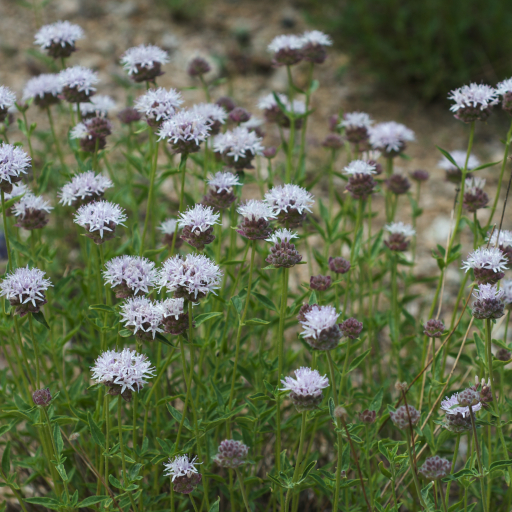
Plant Overview
Known affectionately as Mountain Coyote Mint, this aromatic subshrub is a star of the Western American highlands. Its genus name, Monardella, pays homage to Nicolas Monardes, a 16th-century Spanish physician who studied the medicinal plants of the New World. Whether you encounter it on a high-altitude hiking trail or in a xeriscape garden, its refreshing, spicy-mint scent is unmistakable and invigorating.
🔍 How to Identify
- 🍃 Aromatic Foliage: The small, oval, grey-green leaves are often covered in tiny hairs and release a potent, minty-spice fragrance when brushed or bruised.
- 🌸 Pom-Pom Blooms: The flowers are clustered in dense, rounded terminal heads that look like miniature lavender or purple fireworks bursting from a leafy base.
- 🌿 Woody Base: Unlike many soft garden mints, this is a "subshrub," meaning it develops a tough, woody base over time while the upper stems remain flexible and green.
🏡 In Your Garden
- 🪨 The Drainage King: This plant is a specialist of rocky slopes and gravelly soils. In a garden setting, it hates "wet feet"; ensure it is planted in sandy or volcanic-style soil where water can move away from the roots quickly.
- 🦋 The Pollinator Beacon: It is widely considered one of the best plants for attracting butterflies. Swallowtails, checkerspots, and hairstreaks will flock to the nectar-rich florets throughout the summer months.
- ✂️ Post-Bloom Grooming: To keep the plant from looking leggy or sparse, lightly prune the stems after the flowers fade. This encourages a denser, rounder shape for the following season.
⚠️ Safety & Toxicity
- ✅ Generally Safe: Coyote Mint is not known to be toxic to humans. In fact, it has a long history of use in traditional herbalism.
- 🍵 Historical Tea: Many Indigenous tribes in the West used the leaves to brew a refreshing medicinal tea to soothe sore throats, respiratory issues, and stomach aches.
- 🐾 Pet Safety: It is generally considered non-toxic to cats and dogs. However, because it contains concentrated essential oils, it’s best to prevent pets from grazing on it in large quantities to avoid mild digestive upset.
✨ Fun Fact
Early travelers and settlers in the Sierra Nevada mountains would often stuff Coyote Mint leaves into their pockets or boots. The crushed leaves acted as a natural "deodorant" and "breath mint" during long, dusty treks through the wilderness.

Detailed Care Instructions
To grow Monardella Odoratissima, also known as mountain pennyroyal, you can follow these steps:
- Choose a suitable location: Select a sunny spot in your garden or a well-drained area if growing in pots.
- Prepare the soil: Mountain pennyroyal prefers well-draining soil. Amend the ground by adding organic matter like compost or peat moss to improve drainage and nutrient content.
- Plant the seeds or transplants: You can either sow seeds directly into the soil or start with transplants purchased from a nursery. Plant them at the same depth as their containers, leaving enough space between plants for growth.
- Watering: Provide regular water for the first few weeks until the plants are established. Once established, they are drought-tolerant and prefer less water. Allow the soil to dry out between watering.
- Mulching: Apply a layer of organic mulch around the plants to conserve moisture, suppress weed growth, and regulate soil temperature.
- Pruning: Prune the plants back by one-third in early spring to promote bushier growth and maintain a compact shape.
- Fertilization: Mountain pennyroyal generally does not require additional fertilization. However, if your soil lacks nutrients, you can apply a balanced, slow-release fertilizer in early spring.
- Pests and diseases: This plant is generally resistant to pests and diseases. However, keep an eye out for aphids, caterpillars, or spider mites. You can handpick them or use eco-friendly insecticidal soap if necessary.
- Division: Every few years, you can divide mature plants to propagate more Monardella Odoratissima. Dig up the clump, separate it into smaller sections, and replant them in suitable spots.
- Enjoy the blooms: Monardella Odoratissima produces small, pink-purple flowers that attract butterflies and bees. Enjoy the beautiful blooms and the aromatic foliage it provides.
Remember to check the plant's specific requirements and consult local gardening resources for regional variations and tips.

Place in a bright room that is sun drenched almost all day. Or directly in a south-facing window.

The Monardella Odoratissima plant should be watered thoroughly and deeply but only when the top inch of soil is dry to the touch. It is important not to overwater as this can lead to root rot. The plant prefers well-draining soil, so it is recommended to plant it in a pot with ample drainage holes or a raised bed. When watering, it is best to avoid getting water on the leaves and instead aim for the soil around the base of the plant. During periods of drought or high heat, the plant may require more frequent watering.
To fertilize this plant, apply a slow-release granular fertilizer in early spring or late summer. Use a balanced formula with equal parts nitrogen, phosphorus, and potassium. Water the plant thoroughly after applying the fertilizer. Avoid getting the fertilizer directly on the foliage or stem, as this may cause damage. Repeat the fertilizing process once every six months as needed.
The best soil to use with this plant is a well-draining, sandy soil with good air circulation. The soil pH should be slightly acidic to neutral, between 6.0 and 7.0. Adding organic matter to the soil will also be beneficial for the plant's growth and overall health. Additionally, the plant prefers full sun exposure, so it is ideal to plant it in a location that receives direct sunlight for most of the day.
Monardella Odoratissima plants can be propagated through stem cuttings. Select a healthy stem from the plant and cut it close to the base using clean, sharp shears. Remove all of the lower leaves, leaving only a few at the stem tip. Dip the base of the stem into rooting hormone, shaking off any excess.
Then, place the cutting in a pot filled with moist potting soil. Cover the pot with a clear plastic bag or wrap to create a humid environment. Keep the soil moist and place the pot in a bright, indirect light. Check the cutting regularly and remove any dead leaves and condensation from the bag or wrap.
After a few weeks, roots should begin to form and the plant can be transferred to a larger pot or planted in the ground. Wait until the plant has established before moving it outdoors.
Common pests of the coyote mint include Aphids. Make a habit of checking your coyote mint frequently for pests so that any infestations can be caught and managed early.








