Plant Overview
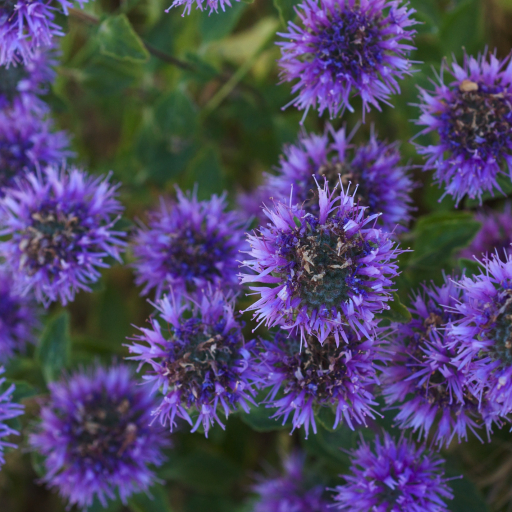
Affectionately known as Coyote Mint, this California native is a sensory delight for any water-wise garden. With its refreshing minty fragrance and pom-pom-like blooms, it has long been a staple of the coastal scrub and chaparral landscapes. Legend has it that coyotes would roll in these plants to mask their scent before a hunt, but today, it is primarily prized for its incredible ability to attract clouds of beneficial pollinators.
🔍 How to Identify
- 🍃 Leaf Texture: The leaves are small, oval, and covered in fine, silvery-white hairs (giving it the "villosa" or hairy name) that feel velvety to the touch and release a spicy scent when bruised.
- 🌸 Bloom Style: It produces dense, rounded "heads" of tiny tubular flowers, typically in shades of lavender, electric purple, or soft pink, which sit atop the foliage like colorful cushions.
- 🌿 The Stem: Like most members of the Mint family, it features distinctive square-shaped stems that become slightly woody at the base as the plant matures into a low-growing mound.
🏡 In Your Garden
- ☀️ Drainage is Vital: While this plant is incredibly hardy, its biggest enemy is "wet feet." It thrives in rocky, sandy, or well-draining soil and is a perfect candidate for rock gardens or slopes where water doesn't pool.
- 🦋 Pollinator Powerhouse: If you want to see your garden come alive, plant Monardella. It is a vital nectar source for a huge variety of butterflies, including the rare Myrtle's Silverspot, as well as native bees and hummingbirds.
⚠️ Safety & Toxicity
- ✅ Safe Status: Coyote Mint is considered non-toxic to humans, dogs, and cats. It is generally very safe to have around curious pets and children.
- 🍵 Historical Use: Native tribes and early Spanish settlers used the leaves to brew aromatic teas. However, always ensure your plant hasn't been treated with pesticides or garden chemicals before handling it extensively.
✨ Fun Fact
Native Americans used the leaves of the Coyote Mint as a natural remedy for respiratory issues and stomach aches. Because the leaves contain high amounts of aromatic oils, they were often tucked into clothing or bedding to act as a natural insect repellent against fleas and mites!

Detailed Care Instructions
To grow Monardella villosa, also known as coyote mint or mountain pennyroyal, follow these steps:
- Choose the right location: Coyote mint grows best in areas with full sun to partial shade. It can tolerate a wide range of soil types, including poor soils, but well-draining soil is essential.
- Prepare the soil: Ensure the soil is loose and well-draining. If your soil is heavy, mix in some organic matter like compost to improve drainage.
- Propagation: Monardella villosa can be grown from both seeds and plant divisions. If starting from seeds, sow them indoors in late winter or early spring about 6-8 weeks before the last frost. Make sure to lightly cover the seeds with soil and keep them consistently moist. Transplant the seedlings outdoors when they are about 2-3 inches tall and the danger of frost has passed.
- Planting: Dig a hole that is slightly larger than the root ball of the plant. Place the plant in the hole and backfill it with soil, gently firming it around the roots. Water the plant well after planting to help it establish.
- Watering: While coyote mint is drought-tolerant once established, it still requires regular watering during its initial growth period. Water the plant deeply but less frequently to encourage deep root development. Once established, it will only need occasional watering during dry periods.
- Mulching: Apply a layer of mulch around the plant to help conserve moisture and suppress weeds. A layer of 2-3 inches is sufficient.
- Pruning: Coyote mint benefits from regular pruning to maintain a compact and bushy form. Prune the plant in early spring before new growth emerges to remove any dead or damaged stems and to shape the plant.
- Fertilizing: Monardella villosa typically does not require much fertilization. However, you can apply a balanced, slow-release fertilizer in early spring to provide some nutrients for the growing season.
- Pests and diseases: Coyote mint is generally resistant to pests and diseases. However, it may attract butterflies and bees, which can be considered beneficial.
By following these guidelines, you can successfully grow Monardella villosa in your garden or landscape.

Place in a bright room that is sun drenched almost all day. Or directly in a south-facing window.

Monardella villosa is a plant that requires moderate watering to thrive. It is important to allow the plant's soil to dry out partially between waterings. The amount of water the plant needs will depend on the specific conditions in which it is growing, including the humidity and temperature of the surrounding environment.
During the warmer months, it is important to water the plant more frequently, especially if the soil dries out quickly. In general, it is recommended to water the plant once or twice per week during the growing season.
When watering Monardella villosa, it is important to avoid getting water on the plant's foliage, as this can encourage the growth of fungal diseases. Instead, water the plant at the base, making sure that the water soaks into the soil.
If the plant is growing in a container, it is important to ensure that the container has good drainage, as Monardella villosa does not like to sit in standing water. Always allow excess water to drain away after watering.
Finally, it is important to monitor the plant's soil moisture levels regularly to ensure that it is not being over or under-watered. Adjust the watering schedule accordingly.
- Begin by selecting a high-quality, organic fertilizer specifically designed for native plants.
- Apply the fertilizer during the plant's active growth period, which is typically in the spring and summer months.
- Make sure the soil is moist before fertilizing.
- Sprinkle the fertilizer around the base of the plant, evenly distributing it over the root zone.
- Be careful not to apply too much fertilizer, which can burn the plant's roots and do more harm than good.
- Water the plant thoroughly after fertilizing to help the nutrients reach the roots.
- Repeat the fertilization process every four to six weeks during the growing season, if necessary.
- Monitor the plant for signs of over-fertilization, such as leaf burn or stunted growth, and adjust the fertilization schedule accordingly.
Monardella Villosa requires a well-draining soil that is low in nutrients. A mix of sandy loam and gravel would be ideal for this plant. The soil should also be slightly acidic, with a pH between 5.5 and 6.5. It is important to avoid heavy, compacted soils that can lead to root rot and other fungal diseases. When planting Monardella Villosa, it is recommended to add a layer of mulch to the soil surface to help retain moisture and control weeds. Additionally, this plant prefers a full sun to partial shade location in the garden.
Monardella villosa can be propagated through seeds or stem cuttings. For stem cuttings, select a healthy stem that is about 4-6 inches long and has a few leaves. Remove the lower leaves from the stem and dip the cut end into rooting hormone. Plant the stem cutting into a pot filled with a mixture of equal parts perlite and peat moss. Water the cutting and keep it in a shaded area with high humidity. Roots should start to grow in a few weeks.
For seed propagation, collect seeds from a mature plant in the fall. Spread the seeds evenly on the top of a pot filled with a mixture of equal parts sand and peat moss. Cover the seeds lightly with more peat moss and water them gently. Keep the pot in a shaded area with high humidity. The seeds should germinate in a few weeks. Once the seedlings have grown to a few inches tall, they can be transplanted into their own pots or into the garden.
Common pests of the coyote mint include Spider mites, aphids, thrips. Make a habit of checking your coyote mint frequently for pests so that any infestations can be caught and managed early.








