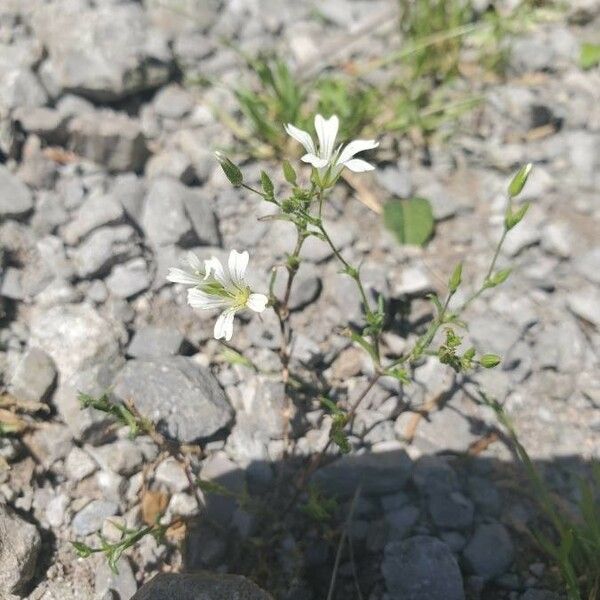
Plant Overview
Often called the Pitcher’s Stitchwort, this delicate beauty is a master of survival in the harshest rocky environments. Native to the limestone glades of North America, it looks like a dusting of tiny white stars dropped onto a rugged landscape. Its common name, "Stitchwort," hints at a long history in folk medicine where similar-looking plants were believed to cure a sudden "stitch" in the side.
🔍 How to Identify
- 🌸 The Bloom: Look for tiny, bright white flowers with five petals. Each petal is slightly notched at the tip, giving it a delicate, heart-like silhouette.
- 🌿 Wiry Stems: The plant features very slender, "spreading" stems (hence the name patula) that can appear somewhat fragile but are surprisingly resilient.
- 🌱 Needle-like Foliage: The leaves are narrow, linear, and grow in opposite pairs. They are often so thin they resemble blades of grass or tiny needles.
🏡 In Your Garden
- 🪨 Limestone Lover: This plant is a "calciphile," meaning it thrives in alkaline soils rich in calcium. It is an ideal choice for a rock garden or a crevice garden where other plants might struggle to find nutrients.
- ☀️ Sun Seeker: In its natural habitat, it clings to open rocky barrens. In a home setting, it needs plenty of direct light and absolutely hates "wet feet." If the soil stays soggy, the plant will likely melt away.
⚠️ Safety & Toxicity
- ✅ Safe Status: Mononeuria patula is generally considered non-toxic to humans and common household pets like cats and dogs.
- 🐾 Pet Friendly: Because it isn't known to contain harmful alkaloids, it is a safe choice for wilder, "nature-mimicking" gardens where curious pets might wander.
✨ Fun Fact
✨ The Name Game: The "Stitch" in its name comes from the Old English belief that the plant could cure sharp pains in the side (stitches). While modern science doesn't back this up, the name has stuck for centuries across many members of its botanical family!

Detailed Care Instructions

Place in a bright room that is sun drenched almost all day. Or directly in a south-facing window.

Water-loving plants flourish in wet or sloppy soil and near ponds. The extensive root system enables these plants to absorb plenty of water. The surface of the soil should be kept moist at all times. Place your pot in a container filled with water to guarantee that plants get enough water. If the ground becomes dry, it is recommended that you water it well. Plants in smaller pots will need to be watered more frequently. Water the soil in which the plant is standing thoroughly using a watering can.








