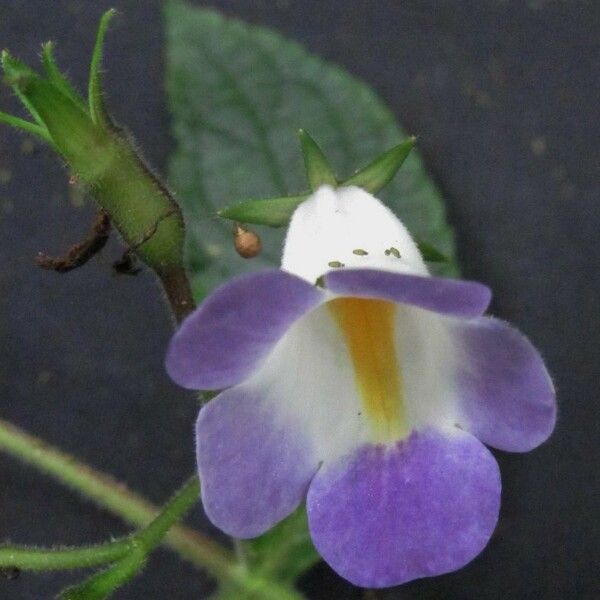
Plant Overview
Known as the "Velvety Rainforest Bell," Monopyle puberula is a hidden gem from the misty understories of Central and South American cloud forests. A proud member of the Gesneriad family—making it a cousin to the famous African Violet—this delicate herb is prized by collectors for its soft, touchable foliage and shy, elegant blooms. It is the perfect choice for enthusiasts looking to recreate a lush, tropical microclimate at home.
🔍 How to Identify
- 🌿 Velvety Foliage: The species name puberula refers to the fine, soft hairs that cover the leaves, giving them a matte, felt-like texture that catches the light.
- 🍃 Asymmetrical Leaves: Look for leaves that are slightly "lopsided" at the base, a classic trait of many forest-floor Gesneriads. They are typically a deep, vibrant green.
- 🔔 Bell-Shaped Blooms: It produces dainty, trumpet-shaped flowers, usually in shades of creamy white or pale lavender, often decorated with intricate purple or yellow "nectar guides" inside the throat.
🏡 In Your Garden
- ☁️ Humidity is Key: Because it originates in humid rainforests, this plant thrives in a terrarium or a greenhouse cabinet. It lacks the thick waxy coating of many houseplants, meaning it can wilt quickly if the air becomes too dry.
- 💧 The Goldilocks Zone: It hates the "feet-wet, head-dry" struggle. Use a porous, airy substrate like long-fiber sphagnum moss or a chunky peat mix. The goal is to keep the roots consistently moist but never sitting in stagnant water, which can lead to rapid stem rot.
- ☀️ Dappled Light: In the wild, it grows under the heavy canopy of giant trees. In your home, it prefers bright, filtered light—direct afternoon sun will scorch its sensitive, hairy leaves almost instantly.
⚠️ Safety & Toxicity
- ✅ Status: Non-Toxic.
- 🐾 Details: Monopyle puberula is generally considered safe for households with curious cats, dogs, or children. However, because the leaves are so delicate and prone to bruising, it’s best kept on a high shelf or inside a glass enclosure where it won't be bumped.
✨ Fun Fact
The genus name Monopyle comes from the Greek words for "single" and "gate," referring to the unique way its seed capsules split open along a single side to release their tiny, dust-like seeds into the damp forest air!

Detailed Care Instructions








