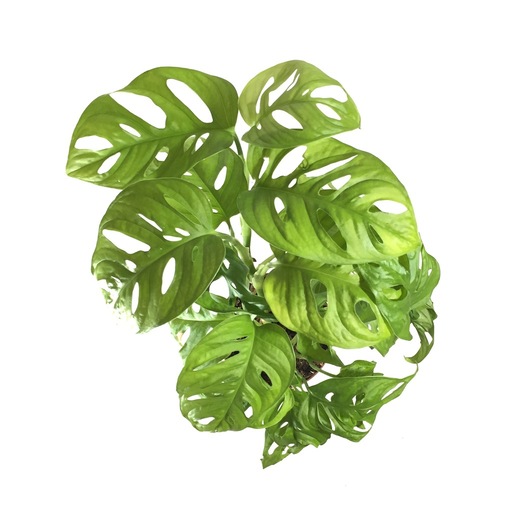
Plant Overview
Often called the "Unicorn Monstera," this plant is the ultimate "holy grail" for indoor jungle enthusiasts. While many plants are nicknamed "Swiss Cheese," the Monstera obliqua takes the concept to its extreme, producing leaves that are more air than green tissue. It is a slow-growing, delicate climber originating from the humid rainforests of Central and South America.
🔍 How to Identify
- 🌿 Wafer-Thin Foliage: Unlike the leathery leaves of a common Monstera, these leaves are incredibly thin, almost like delicate parchment paper or dried pressed flowers.
- 🕳️ Extreme Fenestration: A true Obliqua is famous for having leaves that consist of up to 90% holes. The remaining green surface looks like thin threads barely holding the leaf shape together.
- 🌱 Stolons (Runners): The plant often produces long, leafless green vines called stolons. In the wild, these "crawl" across the forest floor in search of a tree to climb before they begin producing large leaves.
🏡 In Your Garden
- ☁️ Humidity is King: This is not a typical "windowsill" plant. Because the leaves are so thin, they lose moisture rapidly. It thrives best in a glass cabinet or terrarium where humidity stays consistently above 80%.
- 🪵 The Climbing Urge: While it can trail, this plant is a natural mountaineer. Providing a moss pole allows the aerial roots to anchor themselves, which signals the plant to produce larger, more dramatic leaves.
⚠️ Safety & Toxicity
- 🚫 Toxic to Pets and Humans: Like its relatives, the Monstera obliqua contains insoluble calcium oxalate crystals.
- 👄 Irritant Details: If any part of the plant is chewed or swallowed, it can cause intense burning of the mouth, tongue, and throat, as well as swelling and digestive upset. It is best kept on a high shelf away from curious cats, dogs, and children.
✨ Fun Fact
For decades, the Monstera obliqua was so rare that botanists considered it a "phantom" species. Most plants labeled as Obliqua in local nurseries are actually the much sturdier Monstera adansonii. A true Obliqua is so specialized that its holes are thought to be an evolutionary trick to pass through heavy tropical wind without tearing!

Detailed Care Instructions
| Color | Green |
| Soil Ph | 5-7 |
| Humidity | Normal |
| Lighting | Part Sun |
| Toxicity | Poisonous |
| Soil Type | Compost Of Peat And Loam |
| Bloom Time | Spring, But Usually Only In The Wild |
| Difficulty | Medium |
| Plant Type | Perennial Vine |
| Mature Size | 20 Feet In Height, Up To 15 Foot Spread |
| Native Area | Central And South America |
| Temperature | 18°C - 29°C |
| Sun Exposure | Indirect Sunlight |
| Hardiness Zones | 9-11 |
To successfully grow Monstera obliqua plants, follow these steps:
- Choose an appropriate location: Monstera obliqua plants thrive in bright, indirect light. Avoid placing them in direct sunlight as it can burn their leaves. Ensure they are protected from drafts and cold temperatures.
- Provide the right temperature and humidity: Monstera obliqua plants prefer temperatures between 65-85°F (18-29°C). Maintain a humidity level of around 60-70% by misting the leaves regularly or using a humidifier.
- Potting and soil: Use well-draining potting mix with a good balance of organic matter. The plant appreciates slightly acidic to neutral soil. Choose a pot with drainage holes to prevent waterlogging.
- Watering: Water the Monstera obliqua plant thoroughly when the top inch of soil feels dry. Ensure the excess water drains out of the pot. Overwatering can lead to root rot, so it's important not to let the plant sit in standing water.
- Fertilizing: Feed the plant every two to four weeks during the growing season with a balanced, water-soluble fertilizer. Reduce or stop fertilization during the winter months when the plant is dormant.
- Pruning: Monstera obliqua plants can develop long, trailing vines. Prune the plant to control its shape and size. Removing yellow or dead leaves will also help promote healthy growth.
- Provide support: Monstera obliqua plants are climbers by nature, so offering a moss pole or trellis for support will encourage them to grow upward.
- Propagation: Monstera obliqua plants can be propagated by stem cuttings. Take a cutting with at least one node, remove the lower leaves, and place it in water or directly into moist potting mix until roots form.
Remember, Monstera obliqua plants can be more challenging to grow compared to other Monstera species. They require specific conditions and care, so be patient and attentive to their needs.

Place in a window with dappled sun or a spot in the middle of a room. Or directly in a window facing west or east.

Monstera Obliqua is a tropical plant that requires regular watering to thrive. To water this plant, you should first make sure that the soil is dry to the touch before watering. This will prevent overwatering, which can cause the roots to rot.
Once you have determined that the soil is dry, you should water the plant thoroughly, allowing the water to flow through the soil and out of the drainage holes at the bottom of the container. Be sure not to allow the plant to sit in standing water, as this can also lead to root rot.
In addition to regular watering, Monstera Obliqua benefits from high humidity. You can increase the humidity around the plant by misting it with water daily or placing a tray of water near the plant to evaporate into the air.
Overall, watering Monstera Obliqua is a simple process that requires paying attention to the moisture levels of the soil and providing adequate humidity. With proper care, this unique and beautiful plant can thrive in your home or garden for years to come.
To fertilize this plant, use a balanced water-soluble fertilizer with a ratio of 10-10-10 or 20-20-20. Dilute the fertilizer according to the instructions on the package and apply it to the soil once every two weeks during the growing season. Avoid fertilizing during the winter months when the plant is dormant. Additionally, make sure to flush the soil with water after fertilizing to prevent salt buildup and monitor the plant's response to the fertilizer to avoid over-fertilization.
For a Monstera Obliqua plant, it's recommended to use a potting soil that has good drainage. The soil should be able to hold enough moisture but not become waterlogged. A mix of peat moss, perlite, and coarse sand is often used to create the right texture and drainage. Additionally, adding a slow-release fertilizer or organic compost to the soil can help provide nutrition for the plant. It's also important to create a well-draining layer at the bottom of the pot before adding soil to prevent water from accumulating in the roots.
To propagate this plant, you will need to start by selecting a healthy, mature plant with several leaves and sturdy stems. Using a sterilized sharp knife or scissors, carefully cut a stem just below a node where leaves and roots can develop.
Next, prepare a pot that is filled with moist, well-draining potting soil. Make sure to create a hole in the center of the soil where the stem will be inserted. Dip the cut end of the stem into rooting hormone powder and gently press it into the soil, making sure the node is covered.
Cover the pot with a clear plastic bag or plastic wrap to create a greenhouse-like environment, which helps to retain moisture and increase humidity. Place the pot in a bright, indirect light location and keep the soil moist but not overly wet.
In about 3-4 weeks, the stem should have started to root. You can check this by gently tugging on the stem. If it resists, roots have begun to grow. At this point, you can remove the plastic covering and start to care for the new plant as you would with an established Monstera Obliqua plant.








