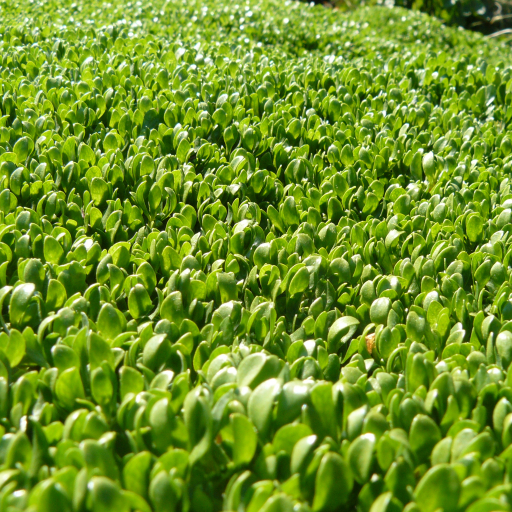
Plant Overview
Known affectionately as Water Blinks or Fountain Miner's Lettuce, this delicate wetland wonder is the shyest member of the purslane family. Its name comes from its tiny white flowers that often remain half-closed, appearing as though the plant is perpetually "blinking" at the sun. Thriving in the cool, clear water of springs and muddy banks, it acts as a soft, emerald carpet for hidden corners of the garden.
🔍 How to Identify
- 💧 The "Blinking" Blooms: Look for incredibly small, white flowers (only 2-3mm wide) that rarely fully open, tucked into the tips of the stems.
- 🍃 Succulent Foliage: The leaves are bright green, teardrop-shaped, and slightly fleshy, growing in opposite pairs along the stem.
- 🌱 Low Mat Growth: It rarely stands tall; instead, it forms tangled, creeping mats that hug the mud or float softly on the surface of shallow water.
🏡 In Your Garden
- 🌊 The Water Glutton: This isn't a plant for a standard flower bed. It requires "wet feet" at all times and is perfect for the edges of a backyard pond, a bog garden, or a damp ditch where other plants might drown.
- ❄️ Cool Temperatures: Montia fontana is a lover of the cold. It flourishes in the early spring or in high-altitude streams. If the summer heat becomes too intense, the plant will often go dormant or set seed and wither away until the temperature drops again.
⚠️ Safety & Toxicity
- ✅ Safe & Non-Toxic: Like its cousin, Miner’s Lettuce, Water Blinks is generally considered non-toxic to humans, dogs, and cats.
- 🧼 Harvesting Caution: While the plant itself is edible and has a mild, crunchy taste, it often grows in areas with runoff. If you find it in the wild, be wary of waterborne parasites (like Liver Fluke) or pollutants that may be clinging to the leaves. Always wash thoroughly!
✨ Fun Fact
The specific epithet fontana comes from the Latin word for "fountain." This refers to the plant's biological preference for growing near bubbling springs and "founts" of cold, moving water. If you see Water Blinks in the wild, it is often a sign that a clean water source is nearby!

Detailed Care Instructions
To grow Montia fontana, also known as water miners lettuce or water blinks, follow these steps:
- Choose a suitable location: Montia fontana thrives in wet or damp environments, so choose a location that receives partial shade to full sun.
- Prepare the soil: Montia fontana prefers rich, moist soil. Ensure the soil is well-draining and amend it with organic matter like compost.
- Sow seeds: The plant can be grown from seeds. Sow the seeds directly in the moist soil, preferably in early spring or fall. Lightly cover the seeds with a thin layer of soil.
- Watering: Keep the soil consistently moist but not waterlogged. Water regularly, especially during dry spells, to ensure the plant doesn't dry out.
- Thin seedlings: Once the seedlings emerge, thin them to ensure they have enough space to grow. This also helps prevent overcrowding and encourages healthier plants.
- Fertilize: Montia fontana doesn't typically require fertilization if the soil is rich in organic matter. However, you can apply a balanced, organic fertilizer once or twice during the growing season if needed.
- Mulch: Apply a layer of organic mulch around the plants to help retain moisture and suppress weeds.
- Harvesting: Montia fontana is a cool-weather annual plant that can be harvested when the leaves are young and tender. You can either cut the whole plant at the base or selectively pick the outer leaves for regular harvest. This allows for continuous growth.
- Pests and diseases: Montia fontana is generally not prone to significant pest or disease issues. However, keep an eye out for slugs, snails, or aphids and take appropriate measures if necessary.
By following these steps, you should be able to successfully grow Montia fontana and enjoy its edible leaves.

Place in a bright room that is sun drenched almost all day. Or directly in a south-facing window.

Montia Fontana plant requires a consistent watering schedule to thrive, preferably once or twice a week. When watering the plant, ensure that the soil is moist but not waterlogged. It's essential not to let the soil completely dry out as it can cause damage to the plant. Watering should be done at the base of the plant, directly onto the soil, and not on the foliage. When watering, take care not to splash water on the leaves, as this can lead to fungal infections. Use a watering can or a hose with a gentle nozzle to ensure a steady and consistent flow of water. Avoid over-watering, which can lead to root rot, and always adjust your watering schedule based on the plant's specific needs and the surrounding conditions.
To fertilize this plant, use a water-soluble fertilizer once a month during the growing season, typically between spring and summer. Dilute the fertilizer to half strength and apply it directly to the soil. Avoid over-fertilizing, as it can lead to burn and damage to the plant. Additionally, make sure to water the plant thoroughly before and after fertilizing to prevent salt buildup in the soil.
For the Montia Fontana plant, it is important to use a soil that is well-draining and rich in organic matter. The soil should also be slightly acidic with a pH level of around 6.0 to 6.5. It is recommended to mix in compost or peat moss to the soil before planting to ensure proper drainage and nutrient availability. Additionally, the plant prefers moist soil, so it is important to keep the soil consistently damp, but not waterlogged. When it comes to fertilizing, it is best to use a balanced fertilizer once a month during the growing season. Overall, the ideal soil for Montia Fontana should be nutrient-rich, well-draining, slightly acidic, and consistently moist.
Montia Fontana plant can be propagated through stem cuttings. Take a healthy stem from the parent plant and cut it with sterilized pruning shears. The cutting should be around 5-6 inches long and have at least 2-3 leaves.
Remove the lower leaves of the stem, leaving only the topmost two or three. Apply rooting hormone powder or gel to the base of the stem cutting and plant it in a well-draining potting mix. Water the cutting thoroughly and place it in a bright, shaded area.
Keep the soil moist but not waterlogged and protect the cutting from direct sunlight. It will take around 2-3 weeks for roots to develop and the plant to establish. After a few months, the propagated Montia Fontana plant can be transplanted into its permanent location.








