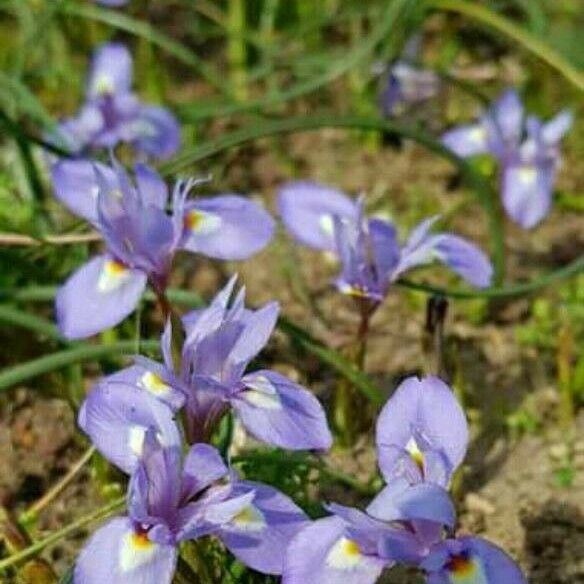
Plant Overview
Often called the Mediterranean Iris or the Afternoon Iris, this delicate treasure is a master of timing. Native to the rocky coasts and scrublands of the Mediterranean basin, it is famous for its "blink-and-you’ll-miss-it" blooming cycle. In Greek mythology and local folklore, these fleeting purple stars are often seen as symbols of ephemeral beauty, appearing suddenly as if by magic.
🔍 How to Identify
- 💜 The Bloom: Small, six-petaled flowers in shades of violet-blue or lilac. The three larger outer petals feature a distinct yellow or white "honey guide" patch at the base to attract pollinators.
- 🍃 The Foliage: Usually produces a single, long, narrow leaf that is "channeled" (U-shaped in cross-section) and often trails along the ground or twists slightly.
- 📏 The Stature: A very low-growing plant, often reaching only a few inches in height, making it look like the flowers are emerging directly from the rocky soil.
🏡 In Your Garden
- ☀️ Sun Worshiper: This plant requires a "summer bake." It thrives in full sun and needs a period of hot, dry dormancy during the summer months to mimic its Mediterranean home.
- 🪨 Drainage is Key: It hates "wet feet." If planting in a pot or garden, use a gritty, sandy, or rocky mix. It is naturally adapted to limestone crevices and poor, thin soils where other plants struggle.
- 🕰️ Afternoon Performance: Unlike many garden flowers that open at dawn, Moraea mediterranea typically waits until the afternoon sun hits to unfurl its petals, closing them forever by dusk.
⚠️ Safety & Toxicity
- 🐾 Mildly Toxic: Like many members of the Iris family and the Moraea genus, the bulbs (corms) contain compounds that can be toxic if ingested.
- 🐱 Pet Warning: Keep away from curious cats or dogs. Ingestion can lead to gastrointestinal upset, drooling, or lethargy. It is not generally considered deadly in small amounts, but it is best enjoyed visually.
✨ Fun Fact
The Moraea mediterranea is a true "one-day wonder." Each individual flower typically lasts for only 4 to 6 hours. If you go for a morning walk, you might only see green spikes; return after lunch, and the field could be transformed into a sea of purple!

Detailed Care Instructions
To grow Moraea mediterranea plants, here are some steps you can follow:
- Obtain the plant: You can purchase Moraea mediterranea seeds or bulbs from a reputable nursery or online seller.
- Planting: Choose a well-draining, sandy soil mix for planting. Fill a pot or a garden bed with the soil mix leaving enough space for the plant roots.
- Planting depth: For the bulbs, plant them 1-2 inches deep in the soil mix, with the pointed end facing upwards. If using seeds, sow them on the soil surface and lightly press them in.
- Watering: Water the soil thoroughly after planting to ensure the moisture reaches the plant's roots. However, avoid overwatering, as soggy soil can lead to root rot.
- Sunlight and temperature: Moraea mediterranea plants prefer full sun to partial shade. Place the pot or plant bed in a location that receives at least 6-8 hours of sunlight daily. Additionally, these plants thrive in warm temperatures, ideally between 65-75°F (18-24°C).
- Regular watering: Water the plants regularly, allowing the soil to dry slightly between waterings. Aim to keep the soil consistently moist but not waterlogged.
- Fertilizing: Apply a balanced, slow-release fertilizer during the growing season, following the manufacturer's instructions. This will provide nutrients for healthy growth.
- Mulching: Adding a layer of organic mulch around the base of the plants can help conserve moisture and suppress weed growth. Just make sure to keep the mulch away from the plant stems.
- Pests and diseases: Keep an eye out for common plant pests like aphids, spider mites, or snails. If any pests are detected, use appropriate organic insecticides or pesticides to control them. Additionally, ensure good air circulation to prevent the onset of fungal diseases.
- Blooming and dormancy: Moraea mediterranea typically blooms in late spring or early summer. After blooming, the foliage may gradually turn brown and die back, indicating the plant's entry into dormancy. During dormancy, reduce watering and allow the soil to dry out.
- Propagation: Moraea mediterranea plants can be propagated by division in early spring or fall. Carefully separate the bulbs and replant them in well-prepared soil.
With proper care and attention, your Moraea mediterranea plant should grow and produce beautiful flowers.
To water this particular plant, you should wait until the soil near the roots is dry to the touch before giving it water. Make sure not to overwater it, as this can cause root rot. It may also be beneficial to use a well-draining soil mix to prevent standing water around the roots. When watering, try to aim for the soil around the base of the plant rather than watering the leaves or flowers directly.
The best time to fertilize this plant is during the growing season, typically from spring to early autumn. Use a balanced liquid fertilizer with equal amounts of nitrogen, phosphorus, and potassium. Dilute the fertilizer to half strength and apply it every two weeks. Be sure to water the plant before and after fertilizing to prevent root burn. Avoid fertilizing during the dormant period, usually in late autumn to mid-winter.
Moraea Mediterranea requires well-draining soil with moderate fertility. The soil should be sandy or loamy and have a neutral to slightly acidic pH range between 6.0 and 7.5. It is important to avoid heavy or compacted soils, as this can lead to root rot and other issues. A mix of equal parts sand, perlite, and peat moss is ideal for growing this plant. Adding organic matter, such as compost, can also help to improve soil quality and fertility. Regular watering is important, but the soil should never be allowed to become waterlogged. Fertilize sparingly with a balanced fertilizer during the growing season, usually from spring to early fall.
- Start by preparing your materials. You will need clean pruning shears, small pots, potting mix, and water.
- Take a healthy stem cutting from the Moraea Mediterranea plant. Choose a stem that is about 4-6 inches long and has at least two or three leaves.
- Using your pruning shears, cut the stem at a 45-degree angle just below a node.
- Remove the lower leaves from the stem cutting, leaving only the top two or three leaves.
- Dip the cut end of the stem cutting into a rooting hormone powder. This will help encourage root growth.
- Fill a small pot with potting mix, and make a hole in the center of the soil.
- Insert the stem cutting into the hole, pressing the soil around the base of the stem to hold it in place.
- Water the soil thoroughly, making sure it is evenly moist but not soaking wet.
- Cover the pot with a plastic bag, making sure the bag does not touch the leaves of the cutting.
- Place the pot in a warm and brightly lit area, but out of direct sunlight.
- Check the soil regularly to make sure it stays moist, but not waterlogged.
- After a few weeks, check for root growth by gently pulling on the stem cutting. If you feel resistance, roots have begun to grow. If not, continue to wait and check every few days.
- Once roots have formed, remove the plastic bag and transplant the Moraea Mediterranea plant cutting into a larger pot or into the ground.








