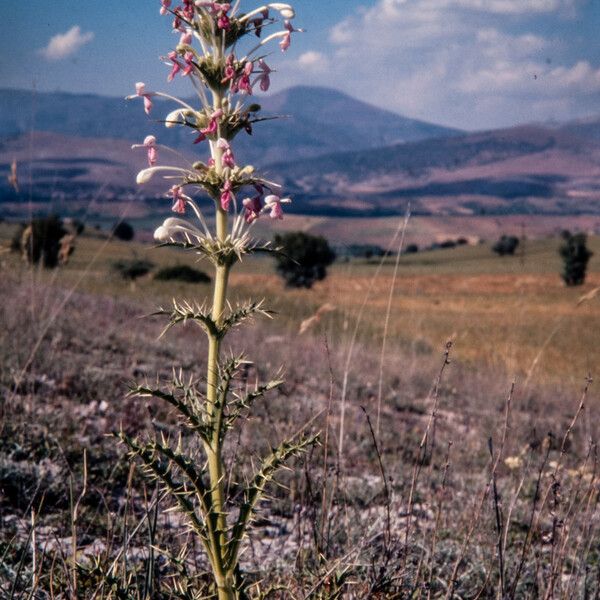
Plant Overview
The Morina persica, often known as the Persian Whorlflower, is an architectural masterpiece of the plant world. Hailing from the rugged, rocky slopes of Western Asia and the Himalayas, this perennial looks like a cross between a regal acanthus and a prickly thistle. It is beloved by gardeners for its dramatic flower spikes that seem to tell a story as they age, changing colors to communicate with the local bee population.
🔍 How to Identify
- 🍃 Thistle-like Foliage: The base of the plant consists of a lush rosette of long, narrow, dark green leaves. These leaves are deeply lobed and armed with sharp spines along the margins, giving it a fierce, protective appearance.
- 🌸 Whorled Flowers: The blossoms are arranged in distinct "whorls" (circles) around a tall, sturdy stem. Each individual flower is tubular with long, elegant stamens that peek out like delicate eyelashes.
- 🎨 Color-Changing Blooms: One of its most striking features is the color shift. Flowers typically open a pure, snowy white and gradually deepen into a rich rose-pink or crimson after they have been pollinated.
🏡 In Your Garden
- 🌱 The Taproot Rule: This plant develops a deep, thick taproot to survive its native dry climates. Because of this, it absolutely hates being moved. Choose its "forever home" carefully, as transplanting an established Morina often results in the plant failing to thrive.
- ☀️ Drainage is Key: While it is quite hardy, its biggest enemy is "wet feet" during the winter. It requires gritty, well-draining soil. If your garden has heavy clay, consider planting it on a slope or in a raised bed to keep the crown dry.
- 🐝 Pollinator Magnet: The fragrant, nectar-rich flowers are a favorite for long-tongued bees and butterflies, making it an excellent choice for a wildlife-focused gravel garden.
⚠️ Safety & Toxicity
- 🌵 Physical Warning: While Morina persica is not known to be chemically toxic to humans or pets, it is "mechanically" dangerous. The spines on the leaves are very sharp and can easily puncture skin or irritate curious paws.
- 🧤 Handling Advice: Always wear thick gardening gloves when weeding around the base of the plant or when cutting back dead flower stalks to avoid painful pricks.
✨ Fun Fact
The color change in the flowers isn't just for show—it's a biological "vacancy" sign! Once a flower is pollinated, it turns pink to tell bees, "I'm out of nectar, try the white ones next door." This helps the plant and the pollinators work together more efficiently.

Detailed Care Instructions








