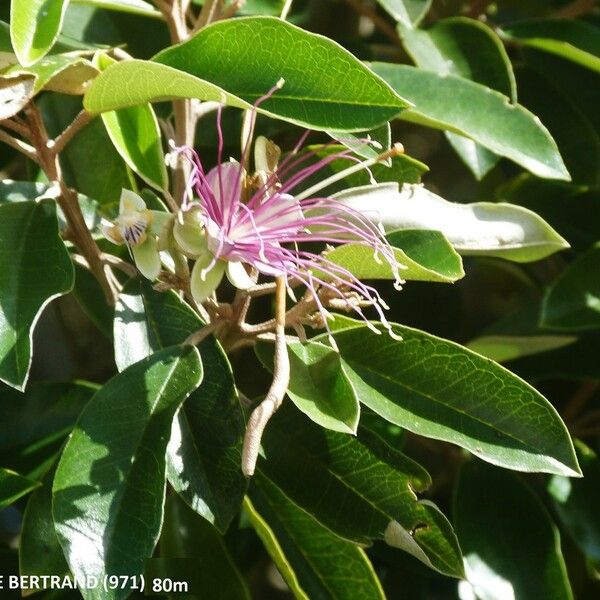
Plant Overview
Known as the Jamaica Caper, this stunning evergreen is often called the "Firework Plant" because of its spectacular, explosive floral display. Native to the coastal hammocks of Florida and the Caribbean, it is a master of transformation; its flowers change colors overnight, and its leaves hide a shimmering, bronze secret on their undersides.
🔍 How to Identify
- 🍃 Two-Toned Foliage: The elliptical, leathery leaves are a deep, glossy green on top, but if you flip them over, they reveal a beautiful, silvery-bronze or "scaly" underside that glimmers in the breeze.
- 🎆 "Firework" Blooms: The flowers feature clusters of incredibly long, wispy stamens that look like a burst of light. They emerge white or cream-colored in the evening and transition to a deep pink or purple by the following morning.
- 🫛 Dramatic Seed Pods: After flowering, the plant produces long, bean-like pods. When they ripen and split open, they reveal a startling, bright "oozing" orange interior and dark seeds.
🏡 In Your Garden
- 🧂 Coastal Specialist: This is an ideal choice for seaside gardeners. It is highly tolerant of salt spray and drought once its root system is established, making it a "plant it and forget it" favorite for warm climates.
- 🦋 Wildlife Magnet: If you want a garden full of life, this is your plant. It is a primary nectar source for various butterflies, particularly the Florida White butterfly, and birds are highly attracted to the colorful seeds.
- ✂️ Versatile Growth: Left alone, it grows into a picturesque small tree, but it responds very well to pruning. You can easily train it into a dense, formal hedge or a privacy screen.
⚠️ Safety & Toxicity
- 🌱 Low Risk Assessment: Morisonia cynophallophora is generally considered non-toxic to humans and common pets like dogs and cats.
- 🥣 Not for Consumption: While not "poisonous" in the traditional sense, the seeds and pods are not edible and may cause mild stomach upset if ingested by curious toddlers or pets. It’s best to appreciate their beauty from the branch.
✨ Fun Fact
The Jamaica Caper is a "nocturnal showoff." Its flowers typically open at night to attract moth pollinators with a sweet, delicate fragrance, only to change color and wither by the heat of the next afternoon.

Detailed Care Instructions

Place in a bright room that is sun drenched almost all day. Or directly in a south-facing window.

The presence of a dry surface layer of soil does not indicate that the plant requires water. Instead, stick your finger 1-2" (3-5 cm) deep in the soil to feel dampness or moisture content. If the soil seems dry, it's time to water your greens. If the soil is still moist, however, it is better not to water your plant and instead wait a day or two. Overwatering or waterlogging raises the risk of root rot. So if the soil takes longer than a week to dry, check the light conditions because it's likely that the plant isn't getting enough light. It's fine if the upper layer of soil is dry between waterings, but the deeper soil layer should always have some moisture.
These plant needs regular fertilizing during growing seasons. Fertilizing your plants in dormant state during the winter, might result in scorching or browning of the leaf tips. If mature plants display signs of nutrient insufficiency, fertilizer administration is necessary to restore the plant to its previous state.
You may use All Purpose Plant Food or Green Plant Food for your Black Willow
Common pests of the black willow include Spider mites, fungus gnats, aphids, thrips, whiteflies. Make a habit of checking your black willow frequently for pests so that any infestations can be caught and managed early.








