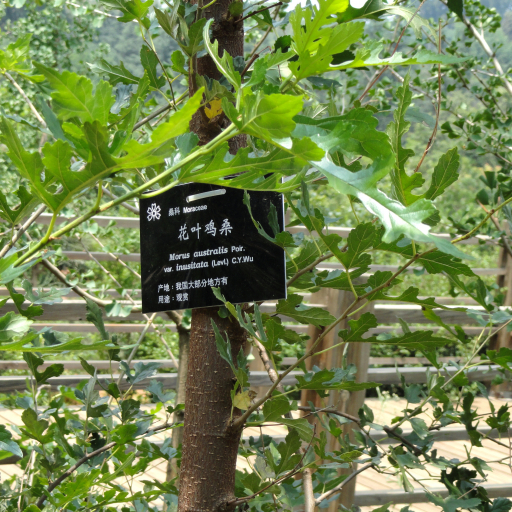
Plant Overview
The Morus australis, commonly known as the Chinese Mulberry or Korean Mulberry, is a resilient and fast-growing shrub or small tree. While its relatives are world-famous for fueling the silk industry, this specific variety is prized by gardeners for its dense, vibrant foliage and its ability to thrive where other trees might struggle. In its native East Asian habitats, it is a symbol of vitality, often found clinging to mountain slopes or bordering forest edges.
🔍 How to Identify
- 🍃 Shape-Shifting Leaves: One of its most distinctive features is "polymorphism." On the same branch, you may see simple, heart-shaped leaves alongside others that are deeply and irregularly lobed.
- 🪵 Rugged Bark: The bark is a textured grayish-brown that becomes deeply fissured or "cracked" as the tree matures, giving even young specimens a wise, aged appearance.
- 🍇 Tiny "Blackberries": It produces small, aggregate fruits that resemble elongated blackberries. They transition from a pale green to a ruby red, finally turning a deep, staining purple-black when fully ripe.
🏡 In Your Garden
- ✂️ Pruning Versatility: This plant is a "choose your own adventure" species. Because it handles heavy cutting so well, it can be trained into a massive shade tree, kept as a tight privacy hedge, or even wired into a sophisticated bonsai.
- 🌱 Root Caution: While hardy, the Chinese Mulberry has an aggressive, shallow root system. Avoid planting it too close to sidewalks, driveways, or underground pipes, as the roots have been known to lift pavement over time.
- 🐦 Pollinator Hub: If you are a bird lover, this tree is a must-have. During the fruiting season, it becomes a literal buffet for local songbirds, though you may want to keep it away from your car to avoid "purple deposits."
⚠️ Safety & Toxicity
- ✅ Fruit Status: The fully ripe, dark fruits are edible and sweet for humans and most pets. However, unripe green fruits contain higher concentrations of latex and can cause mild stomach upset or nausea if ingested.
- 🧪 Milky Sap: Like many members of the Moraceae family, the stems and leaves contain a white, milky latex. This sap can cause mild skin irritation or "contact dermatitis" for sensitive individuals or pets who like to chew on branches.
✨ Fun Fact
In traditional East Asian papermaking, the inner bark of the Chinese Mulberry was harvested and processed to create a durable, soft paper known as "Kozo." This paper is so high-quality that it is still used today for fine calligraphy and the restoration of ancient scrolls!

Detailed Care Instructions
Here are some steps to help you grow Morus Australis:
- Select a suitable location: Morus Australis prefers a sunny spot with well-draining soil. Make sure the area is protected from strong winds.
- Prepare the soil: Before planting, amend the soil with organic matter like compost or aged manure to improve its fertility and drainage.
- Obtain a healthy plant: Purchase a Morus Australis plant or propagate it from cuttings. Make sure the plant is healthy and free from diseases or pests.
- Planting: Dig a hole that is twice the size of the plant's root ball. Place the plant in the hole, ensuring that the top of the root ball is level with the surrounding soil. Backfill the hole and gently firm the soil around the plant.
- Watering: Water the newly planted Morus Australis thoroughly to ensure the soil is adequately moist. Afterward, water regularly, keeping the soil moist but not waterlogged.
- Mulching: Apply a layer of mulch around the base of the plant to help retain soil moisture and control weed growth. Mulching also helps regulate soil temperature.
- Fertilization: Feed the Morus Australis plant with a balanced fertilizer during the growing season. Follow the manufacturer's instructions for the appropriate amount and frequency.
- Pruning: Prune the plant during the dormant season to maintain its shape and remove any dead or diseased branches. Pruning also helps improve air circulation within the plant.
- Pest and disease control: Monitor the plant regularly for any signs of pests or diseases. Treat any issues promptly with appropriate organic or chemical controls.
- Harvesting: Morus Australis produces fruits called mulberries. Harvest the ripe berries when they are fully colored and easily detach from the branch.
Remember to regularly care for your Morus Australis plant by watering, fertilizing, and pruning as needed. With proper attention, your plant should thrive and produce abundant fruit.

Place in a bright room that is sun drenched almost all day. Or directly in a south-facing window.

Morus Australis is a plant that belongs to the Moraceae family and is primarily grown for its nutritious fruit. When it comes to watering this plant, there are a few important factors to consider to ensure optimal growth and health.
Firstly, it is essential to ensure that the soil is moist but not waterlogged. Overwatering can lead to root rot and other moisture-related diseases, which can ultimately kill the plant. On the other hand, underwatering can cause the leaves to wilt and eventually dry out.
To water Morus Australis, there are a few steps to follow. Firstly, check the soil for moisture by sticking your finger into it up to the first knuckle. If it feels dry, it's time to water. You can also test the soil's moisture level using a soil moisture meter.
The best time to water the plant is early in the morning or late in the day when the temperatures are cooler. This helps to reduce evaporation and allows the plant to absorb the water efficiently. It's also important to avoid getting water on the leaves as this can cause fungal growth and other diseases.
When watering, aim to water the soil directly around the base of the plant. Use a watering can or hose with a gentle spray attachment to avoid disturbing the soil or damaging the plant. Water until the soil is moist but not waterlogged, and allow the excess water to drain away.
As with all plants, it's important to monitor the soil moisture levels regularly and adjust your watering schedule accordingly. By following these steps and providing the right amount of water, your Morus Australis plant should thrive and produce delicious fruit.
- Choose a balanced fertilizer with equal amounts of nitrogen, phosphorus, and potassium.
- Apply the fertilizer in early spring before new growth appears.
- Mix the fertilizer with water according to the instructions on the package.
- Apply the fertilizer solution evenly around the base of the plant.
- Cover the fertilizer with a layer of soil or mulch to prevent it from evaporating.
- Water the plant well to ensure the fertilizer reaches the roots.
- Repeat the fertilization process every 4-6 weeks during the growing season, up to 3 times per year.
- Avoid over-fertilizing, as this can lead to excessive leaf growth and weaken the plant.
The ideal soil for growing Morus Australis plants should have a neutral pH level and be well-draining. It should be rich in organic matter and nutrients, including nitrogen, phosphorus, and potassium. The soil should have a good balance of sand, silt, and clay particles to provide a suitable texture for the roots to grow and spread. It's important to avoid soils that are too heavy or compacted, as this can restrict drainage and lead to waterlogging. Additionally, the soil should be kept moist, but not excessively wet, to ensure the roots have access to adequate moisture.
To propagate this plant, you can start by taking a cutting from a healthy and mature specimen. The best time to do so is in the early spring, before the plant begins to actively grow.
Take a cutting that is around 6-8 inches long, with at least two nodes present. Strip the leaves from the bottom half of the cutting and dip the cut end in rooting hormone.
Prepare a pot with well-draining soil mix, and make a hole in the center. Place the cutting in the hole, making sure that the soil is firmly packed around the stem to prevent it from moving.
Water the cutting and place it in a bright but indirect light, ideally near a window where it can receive sunlight for most of the day.
Be sure to keep the soil moist and check for any signs of growth. As the plant begins to grow, you can gradually acclimate it to more sunlight and increase the frequency of watering.
With proper care and attention, you should see roots forming within a few weeks, and the new plant will begin to grow into a healthy specimen over time.








