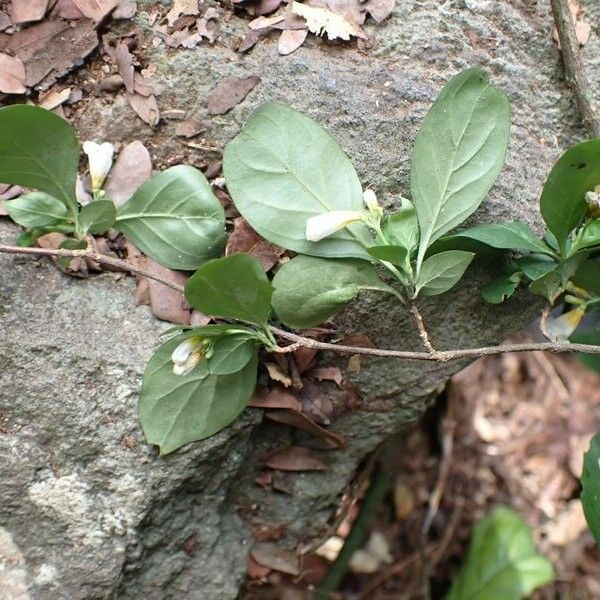
Plant Overview
Known as "Mebeng" or the "African Stimulant," Mostuea brunonis is a slender shrub that hides a potent history within the shadows of the African rainforest. While it may look like a delicate ornamental plant, it is deeply woven into the spiritual and medicinal tapestry of West and Central Africa. It is most famous for its traditional role in Gabon, where it is used as a powerful stimulant and a partner to the sacred Iboga plant in ritual ceremonies.
🔍 How to Identify
- 🍃 Leaf Structure: Small, glossy green leaves that grow in opposite pairs along thin, wiry stems; they are typically ovate or elliptical with pointed tips.
- 🌼 Trumpet Flowers: Produces small, elegant white flowers shaped like bells or funnels, sometimes featuring a faint yellow tint at the center.
- 🍒 The Fruit: After flowering, it produces small, flattened, heart-shaped or two-lobed capsules that contain tiny seeds.
🏡 In Your Garden
- ☁️ Humidity Lover: As a native of the tropical understory, this plant craves high humidity and dappled light. It will struggle in direct, scorching sun or dry, air-conditioned environments.
- 🌱 Root Sensitivity: Mostuea possesses a sensitive root system that does not take kindly to frequent repotting. It prefers "settling in" and may drop leaves if its environment or soil is disturbed too often.
⚠️ Safety & Toxicity
- 🚫 Potentially Hazardous: Use extreme caution. While it is used traditionally by indigenous cultures, Mostuea brunonis contains potent alkaloids (similar to those found in Gelsemium).
- 🐾 Vulnerable Groups: It is considered toxic to pets and children. Ingestion can cause heart palpitations, dizziness, and neurological effects. It should never be consumed without expert pharmacological knowledge.
✨ Fun Fact
In Gabonese folklore, hunters used to chew the roots of Mostuea brunonis to stay perfectly still and hyper-alert for hours while tracking prey, believing the plant sharpened their senses to a supernatural degree.

Detailed Care Instructions

Some plants require more regular watering than others, which should be done every few days. It's critical to maintain the soil moist all of the time. The water requirements of the same plant placed in pots with varying sizes will differ. Because the water in the smaller pot evaporates faster than the water in the larger pot, it will require more watering. Regardless of pot size, the surface should constantly be maintained moist.








