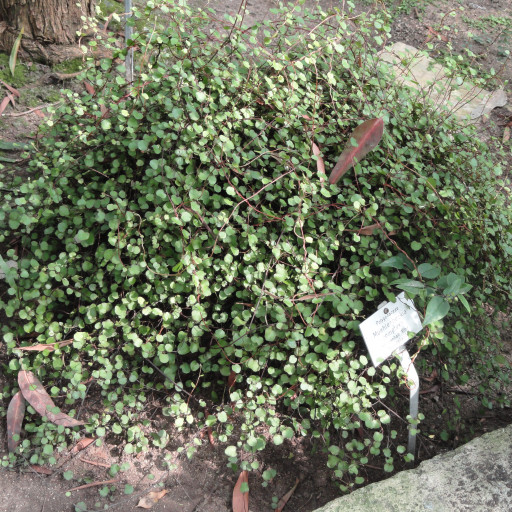
Plant Overview
Commonly known as the Maidenhair Vine, Mattress Vine, or Creeping Wire Vine, this New Zealand native is a master of texture and resilience. Its dark, interlocking stems weave together like a tangled work of art, earning it the "complexa" species name. Whether it’s spilling whimsically out of a hanging basket or climbing a trellis with its bird’s-nest-like growth, it adds a delicate, airy feel to any garden or indoor collection.
🔍 How to Identify
- 🌿 Wiry Stems: The plant is defined by its incredibly thin, dark brown to black stems that feel as tough as copper wire.
- 🍃 Lush Foliage: It features tiny, succulent-like leaves that are round or heart-shaped, usually less than half an inch wide.
- 🌼 Translucent Berries: In late summer, it may produce small, star-shaped cream flowers followed by unique, fleshy, translucent white fruits with a black seed in the center.
🏡 In Your Garden
- 🪴 Versatile Habit: This plant is a "spiller" and a "climber." Because it grows so vigorously, it is often used in topiary designs or as a dense groundcover that can effectively choke out weeds.
- 💧 The Drought Alarm: While it is surprisingly hardy, it hates to dry out completely. If the soil becomes parched, it will drop its leaves almost overnight—this is its way of telling you it needs a deep drink immediately.
- ✂️ Pruning Tolerance: Don't be afraid to be aggressive with the shears. It thrives on "haircuts," and regular trimming encourages the vine to grow much denser and more compact.
⚠️ Safety & Toxicity
- 🐾 Pet Friendly: Great news for animal lovers—the Maidenhair Vine is generally considered non-toxic to cats, dogs, and horses.
- 👶 Child Safe: It is safe for household environments with children. However, because the vines are so strong and wiry, they can become a tripping hazard if allowed to trail across walkways.
✨ Fun Fact
In its native New Zealand, Muehlenbeckia complexa is so sturdy and salt-tolerant that it is a primary plant used for stabilizing sand dunes and protecting coastal areas from wind erosion!

Detailed Care Instructions
| Color | Flowers Can Be White Or Yellow |
| Soil Ph | 5.8-6.2 |
| Humidity | High |
| Lighting | Part Sun |
| Toxicity | Non-Toxic |
| Soil Type | Sandy, Dry, And Well-Drained |
| Bloom Time | Summer |
| Difficulty | Medium |
| Plant Type | Evergreen Vine |
| Mature Size | 20 – 30 Feet |
| Native Area | New Zealand, Australia, And South America |
| Temperature | 18°C - 24°C |
| Sun Exposure | Semi-Shade To Full Sun |
| Hardiness Zones | 7-10 |
To grow Muehlenbeckia Complexa plant, also known as wire vine or maidenhair vine, follow these steps:
- Choose a suitable location: Select a spot with partial shade or filtered sunlight. This plant can tolerate direct sunlight but may not thrive in extremely hot or dry conditions.
- Soil preparation: Ensure the soil is well-draining and rich in organic matter. Amend the soil with compost or well-rotted manure to improve fertility and drainage.
- Planting: Dig a hole that is slightly larger than the root ball. Gently remove the plant from its container and place it in the hole. Backfill with soil and tamp it down gently around the plant.
- Watering: Water the plant thoroughly after planting to settle the soil and encourage root establishment. Keep the soil consistently moist but not waterlogged. Water deeply during dry spells and reduce watering during cooler months.
- Mulching: Apply a layer of organic mulch around the base of the plant to help retain moisture, suppress weeds, and maintain even soil temperatures.
- Pruning: Wire vines are vigorous growers and may require occasional pruning to maintain shape and prevent overgrowth. Prune back any dead or damaged growth, and trim to control size and promote bushiness.
- Fertilization: Feed the plant with a balanced, slow-release fertilizer in early spring. Follow the manufacturer's instructions on application rates.
- Support: If desired, provide some form of support such as a trellis, fence, or stake for the vine to climb on. Muehlenbeckia Complexa has twining stems that can wrap around support structures.
- Pests and diseases: Monitor the plant for common pests such as aphids or spider mites. Treat infestations promptly with organic insecticides or insecticidal soap. Ensure good air circulation around the plant to discourage fungal issues.
- Propagation: Muehlenbeckia Complexa can be propagated through stem cuttings. Take a 4-6 inch cutting, remove the lower leaves, and place it in a well-draining rooting medium. Keep the cutting moist and provide indirect light until roots develop.
By following these steps, you can successfully grow Muehlenbeckia Complexa and enjoy its attractive foliage and wiry vine growth habit.

Place in a window with dappled sun or a spot in the middle of a room. Or directly in a window facing west or east.

To properly water this plant, you should begin by testing the soil. Stick your finger into the soil up to the first knuckle to feel for moisture. If the soil feels dry, it is time to water. Use a watering can or hose to slowly water the plant's roots until the soil is moist but not soggy. It's best to avoid getting water on the plant's leaves, as this can lead to fungal issues and other problems. Additionally, make sure the plant is in a pot with drainage holes so that excess water can escape. Finally, be sure to monitor the soil moisture regularly and adjust your watering schedule as needed.
To fertilize this plant, begin by selecting a balanced fertilizer with a ratio of 10-10-10 or 20-20-20. Dilute the fertilizer according to the instructions on the package. Apply the fertilizer to the soil around the base of the plant, taking care not to get any on the leaves or stems. Water the plant immediately after fertilizing to ensure that the nutrients are absorbed into the soil. Fertilize every two to four weeks throughout the growing season, stopping in the fall and winter months.
The most suitable type of soil for Muehlenbeckia Complexa plant is a well-draining soil mix that is rich in organic matter. The soil should be slightly acidic to neutral, with a pH range of 5.5 to 7.0. Ideally, the soil should be porous and loose to ensure that water does not become trapped and cause root rot. It is also important to ensure that the soil has good air circulation and is not too compacted. Adding sand or perlite to the soil mix can improve drainage and prevent waterlogging. Soil should be kept moist but not waterlogged, and fertilization with a balanced fertilizer can help promote healthy growth. Consider using a mulch to help retain moisture and regulate soil temperature.
Muehlenbeckia Complexa plant can be propagated through various methods such as stem cuttings, layering, and seed propagation. To propagate the plant through stem cuttings, take a cutting from the mature stem of the plant in the early spring or summer. The cutting should be about 4-6 inches long and have a few sets of leaves. Remove the lower leaves from the cutting and dip the cut end in rooting hormone. Plant the cutting in a well-draining soil medium, keep it moist and place it in a bright but partially shaded spot until it develops roots.
For layering, select a long stem from the plant and gently bend it to the ground or into a pot of soil. Pin the stem in place with a wire or stake and cover the buried portion with soil. Water the soil to keep it moist and wait for roots to develop from the buried portion of the stem. Once the roots have developed, carefully cut the stem from the parent plant and plant it in a separate pot or in the ground.
Seed propagation can be a little more difficult, but it can be done by collecting seeds from the mature plant in the late summer or fall. Sow the seeds in a well-draining soil medium and keep the soil moist. Place the pot in a bright but partially shaded spot until the seeds germinate. Once the seedlings have developed, plant them in separate pots or in the ground.
Common pests of the maidenhair-vine include Mealybugs, spider mites, aphids. Make a habit of checking your maidenhair-vine frequently for pests so that any infestations can be caught and managed early.








