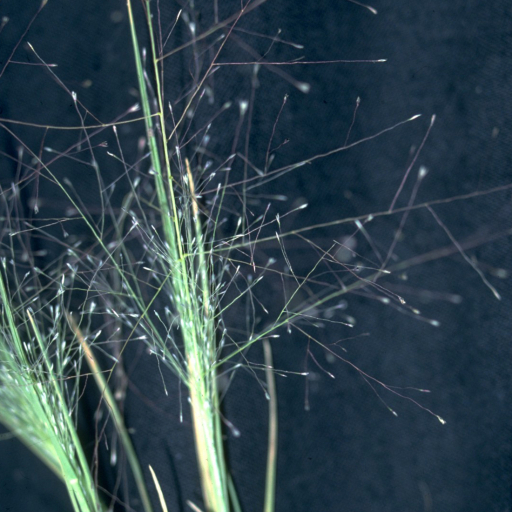
Plant Overview
Known to many as "Scratchgrass" or "Alkali Muhly," Muhlenbergia asperifolia is a resilient perennial grass that creates a hazy, ethereal look in the landscape. Often found dancing in the wind near salty marshes or damp meadows, it provides a delicate pink-to-purple "smoke" effect during its blooming season. Despite its soft appearance from a distance, its common name hints at a much more rugged, "toothy" personality.
🔍 How to Identify
- 🌾 The "Scratchy" Leaves: The leaf blades are short, flat, and notably rough to the touch (scabrous). If you run your finger along the edge, you’ll feel tiny, stiff hairs that give the plant its name.
- ☁️ Mist-like Panicles: In late summer, it produces highly branched, airy clusters of tiny flowers. These panicles are so fine they look like a purple-tinted cloud hovering just above the foliage.
- 🌱 Low Spreading Habit: Unlike taller ornamental grasses, Scratchgrass grows in low, dense mats. It spreads via scaly underground stems (rhizomes), making it an excellent ground-stabilizer.
🏡 In Your Garden
- 🧂 The Salt Champion: This grass is a specialist in alkaline and saline soils. It thrives in "impossible" garden spots where salt buildup from well water or natural deposits might kill off more sensitive ornamental plants.
- 💧 Moisture & Adaptability: While it naturally congregates near seeps, springs, and irrigation ditches, it is surprisingly drought-tolerant once its root system is established. It’s a great choice for naturalized meadows or erosion control on slopes.
⚠️ Safety & Toxicity
- ✅ Safe Status: Muhlenbergia asperifolia is generally considered non-toxic to humans, cats, dogs, and horses.
- 🌵 Mechanical Irritation: While not chemically poisonous, the microscopic "teeth" on the leaves can cause mild skin irritation or "grass cuts." It is best to wear gloves when handling large clumps or weeding around them.
✨ Fun Fact
Once the seeds are fully ripe, the entire delicate flower head often breaks off at the base. These airy puffballs then roll across the plains like tiny, delicate tumbleweeds, spreading their seeds far and wide with the help of the wind!

Detailed Care Instructions

Place in a bright room that is sun drenched almost all day. Or directly in a south-facing window.

Some plants require more regular watering than others, which should be done every few days. It's critical to maintain the soil moist all of the time. The water requirements of the same plant placed in pots with varying sizes will differ. Because the water in the smaller pot evaporates faster than the water in the larger pot, it will require more watering. Regardless of pot size, the surface should constantly be maintained moist.








