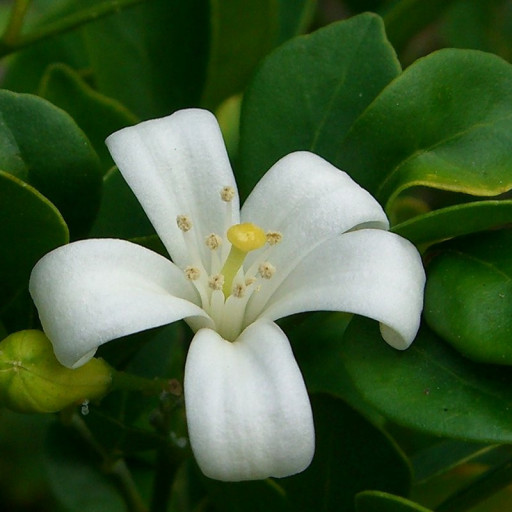
Plant Overview
Often called "Orange Jasmine," "Mock Orange," or "Honey Bush," this tropical evergreen is a sensory masterpiece. While it isn’t a true jasmine, it earns its nickname from the intoxicating, sweet citrus fragrance that wafts from its snowy blossoms. Originating from Southeast Asia and Australia, it has become a global favorite for those wanting to bring a touch of the tropics to their patio or living room.
🔍 How to Identify
- 🌿 The Foliage: Look for dense, glossy, dark-green leaflets that are teardrop-shaped and grow in an alternating pattern along the stems.
- 🌸 The Flowers: Small, waxy, five-petaled white blossoms that grow in clusters. They look remarkably like miniature orange blossoms and smell even sweeter.
- 🍒 The Fruit: After blooming, the plant produces small, oval berries that transition from a bright green to a vivid, shiny orange-red.
🏡 In Your Garden
- ✂️ The Perfect Hedge: Because it grows densely and responds beautifully to pruning, it is one of the best plants for creating "living walls" or fragrant privacy screens in warm climates.
- 🌤️ Light Nuance: While it loves the sun, it prefers "bright but filtered" light. In scorching climates, afternoon shade is essential to prevent its glossy leaves from looking bleached or burnt.
- 🌬️ Draft Sensitivity: If you keep this plant indoors, place it away from air conditioning vents or heaters; it dislikes sudden temperature swings and may drop its leaves in protest.
⚠️ Safety & Toxicity
- 🐾 Pet Friendly: Good news for pet parents—the Orange Jasmine is generally considered non-toxic to cats and dogs.
- 🚫 Berry Caution: While not high-risk, the bright red berries are ornamental and not meant for human consumption. They contain high amounts of tannins which can cause a bitter taste and minor stomach upset if swallowed by children.
✨ Fun Fact
🍋 Citrus Connection: Even though it looks like a boxwood and smells like a jasmine, Murraya paniculata is actually a member of the Rutaceae family—the same biological family as lemons, limes, and oranges!

Detailed Care Instructions
| Color | White |
| Soil Ph | 6.6 To 7.5 (Neutral) |
| Humidity | Normal |
| Lighting | Shade |
| Soil Type | Loamy, Well-Drained |
| Bloom Time | Spring |
| Difficulty | Medium |
| Plant Type | Evergreen Shrub |
| Mature Size | 8 To 12 Feet Tall And Wide |
| Native Area | Asia, Australia |
| Temperature | 18°C - 25°C |
| Sun Exposure | Full Sun To Part Shade |
| Hardiness Zones | 9, 10, 11 |
To grow Murraya paniculata, also known as orange jasmine or mock orange, follow these steps:
- Choose a suitable location: Murraya paniculata thrives in full sun or partial shade, so select a spot that receives at least 4-6 hours of direct sunlight per day. It prefers well-draining soil, but can adapt to a range of soil types.
- Prepare the soil: Ensure the soil is loose, fertile, and well-drained. If the soil is heavy or clay-like, incorporate organic matter like compost or well-rotted manure to improve drainage and fertility.
- Plant the seedling or cutting: You can start from seeds or purchase young seedlings from a nursery. If using seeds, sow them into moist, well-draining seed-starting mix, lightly cover them, and keep them in a warm, bright location. Once the seedlings are a few inches tall, transfer them to containers or directly into the ground. If using cuttings, take semi-hardwood cuttings around 4-6 inches long, remove the lower leaves, dip the cut end into a rooting hormone, and plant them in a container filled with a mixture of sand and peat moss. Keep the soil consistently moist until roots develop.
- Watering: Murraya paniculata prefers regular watering, especially during the establishment period. Keep the soil evenly moist but not waterlogged. Reduce watering frequency once the plant is well-established, but ensure it never dries out completely.
- Fertilizing: Provide regular fertilization to promote healthy growth. Apply a balanced, slow-release fertilizer in spring and again in late summer. Follow the package instructions for dosage and application.
- Pruning: Prune murraya paniculata regularly to maintain its desired shape and encourage bushier growth. Remove any dead or damaged branches and trim back long, leggy growth. Prune in early spring after the last frost.
- Mulching: Apply a layer of organic mulch around the base of the plant, keeping it 2-3 inches away from the trunk. Mulching helps retain moisture, suppress weeds, and improve soil fertility.
- Pests and diseases: Keep an eye out for common pests like aphids, scales, and mealybugs. Treat infestations with appropriate insecticides or use organic methods like soapy water sprays or neem oil. Murraya paniculata is generally resistant to diseases.
- Winter care: Murraya paniculata is not cold-hardy, so it needs protection in areas with harsh winters. If you live in a colder climate, consider growing it as a potted plant that can be moved indoors during winter or provide protective covering like burlap.
By following these care instructions, you can successfully grow Murraya paniculata and enjoy its fragrant, white flowers and glossy green foliage.

Place in a window with dappled sun or a spot in the middle of a room. Or directly in a window facing west or east.

To water this plant, first check the soil moisture by sticking your finger about 2 inches (5 cm) deep into the soil. If the soil feels dry, it is time to water. Use a watering can or hose to slowly water the soil around the plant. Be careful not to overwater the plant, which can lead to root rot. Allow the soil to dry out slightly between waterings. Additionally, make sure the plant is in well-draining soil and has good drainage to prevent waterlogged soil.
The plant should be fertilized during the growing season with a balanced fertilizer that is high in nitrogen. Fertilizer should be applied every two to four weeks at a rate of one tablespoon per gallon of water. When fertilizing, it is important to water the plant beforehand and then apply the fertilizer to the soil around the plant. Avoid getting fertilizer on the leaves or stems. Be sure to follow the manufacturer's instructions for application rates and timing.
The best soil to use for this particular plant is a well-draining soil that is rich in nutrients and organic matter. The pH level of the soil should be slightly acidic, around 5.5 to 7.0. Additionally, the soil should be able to retain moisture, but not become waterlogged. It is recommended to add compost or other organic matter to the soil to improve its fertility and structure. When planting, ensure that the soil is loosened well to promote root growth. Adequate drainage is crucial for this plant's healthy growth. The soil must not be compacted, as it can limit the movement of water and nutrients, preventing healthy growth. In conclusion, a nutrient-rich, well-draining, slightly acidic soil that retains moisture but does not become waterlogged is best suited for this plant.
Propagation of this plant can be done through seed or through vegetative means. To propagate through seed, collect fully matured fruits and extract the seed. Remove the sarcotesta and dry the seeds before planting.
Vegetative propagation can be done either through stem cuttings or air layering. To propagate through stem cuttings, take cuttings of 4-6 nodes and remove the lower leaves. Dip the cuttings in rooting hormone and plant in well-draining soil. Provide adequate light and moisture until the new roots are formed.
For air layering, select a healthy branch and remove the bark in a ring around the branch. Apply rooting hormone and moss to the exposed area and wrap it with plastic. Keep the moss moist and monitor the roots until they have sufficiently developed. Cut the air layered portion from the parent plant and plant in well-draining soil.
Common pests of the orange jasmine include Scale insect, mealybugs, spider mites, aphids. Make a habit of checking your orange jasmine frequently for pests so that any infestations can be caught and managed early.








