Plant Overview
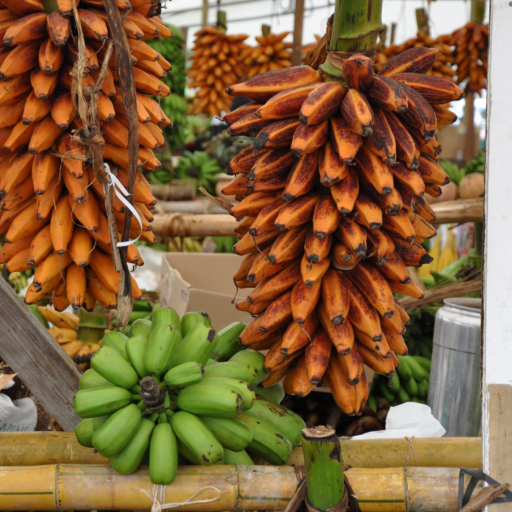
Known as the "Mountain Banana" or the Fe'i Banana, Musa troglodytarum is a striking departure from the supermarket fruit we know. Unlike common bananas that hang toward the ground, these defiant fruits point straight toward the heavens. Native to the islands of the South Pacific, they have long been a symbol of status and a staple of islander diets, celebrated for their brilliant orange flesh and royal purple sap.
🔍 How to Identify
- 🍌 The Upright Bunch: The most defining feature is the fruiting stalk that grows vertically. While other bananas succumb to gravity, the Fe'i bunch stands tall and erect in the center of the plant.
- 🍃 Majestic Foliage: The leaves are massive, glossy, and deep green. They often feature a more "paddle-like" shape than common banana plants and are prone to shredding in the wind, giving them a rugged, wild appearance.
- 💜 Violet Sap: If the stalk or trunk is cut, it exudes a vivid, fluorescent purple or violet sap. This juice is so potent it was historically used as a natural ink and dye for hair and cloth.
🏡 In Your Garden
- 🌴 Wind Protection: Because the leaves are so large and the fruit stalk is held high, this plant is very susceptible to wind damage. It thrives best in a "cradled" position—tucked away from harsh gusts but still in full sun.
- 💧 Thirsty Foundations: These plants have a high metabolic rate. They require deep, rich soil that holds moisture without becoming a swamp. They are heavy feeders and appreciate organic compost to support their rapid growth and heavy fruit.
- 🌋 Tropical Roots: This is not a "houseplant" in the traditional sense; it needs significant vertical space and high humidity. It is best suited for tropical landscapes (Zones 10-11) where it can reach its full 20-foot height.
⚠️ Safety & Toxicity
- ✅ Safe & Nutritious: The fruit is entirely safe for human consumption, though it is almost always eaten cooked (baked or boiled) rather than raw, as it is quite starchy.
- 🐾 Pet Friendly: Like most members of the Musa genus, the plant is non-toxic to cats and dogs. However, chewing on the fibrous leaves might cause minor stomach upset for curious pets.
- 🎨 The Staining Hazard: While not toxic, the purple sap is a permanent dye. It will instantly stain skin, clothing, and garden tools, so handle with care if pruning.
✨ Fun Fact
The brilliant orange color of the fruit's flesh isn't just for show—it is a sign of incredibly high levels of beta-carotene. In some Pacific cultures, the purple sap was used as a "secret ink" for writing messages that would only appear clearly once the paper dried.

Detailed Care Instructions
To grow a Musa Troglodytarum plant, also known as the Abyssinian banana plant, you can follow these steps:
- Climate: Ensure that you live in a warm, tropical or subtropical climate, as Musa Troglodytarum plants thrive in these conditions. Temperature should not drop below 50°F (10°C).
- Soil: Prepare well-draining soil that is rich in organic matter. Musa Troglodytarum plants prefer slightly acidic to neutral soil with a pH between 5.5 and 7.0.
- Planting: Choose a location with full to partial sun exposure. Dig a hole twice as wide and deep as the plant's root ball. Place the plant in the hole, making sure the top of the root ball is level with the surrounding soil. Backfill the hole and gently press the soil down to remove any air pockets.
- Watering: Provide regular and consistent watering to keep the soil moist but not waterlogged. Musa Troglodytarum plants require a lot of water, especially during the growing season. Ensure that the soil does not dry out completely between waterings.
- Fertilization: Fertilize the plant regularly during the growing season. Use a balanced, slow-release fertilizer or a balanced liquid fertilizer according to the product instructions. Feed the plant every two to four weeks to provide the necessary nutrients.
- Mulching: Apply a layer of mulch around the plant to help retain moisture, suppress weeds, and maintain an even soil temperature.
- Pruning: Regularly remove any dead or damaged leaves to maintain the plant's overall health and appearance. Thin out excessive growth to promote better air circulation.
- Protection from cold: If you live in an area with occasional cold temperatures, provide protection to your Musa Troglodytarum plant during winter. You can cover the plant with a frost blanket or move it indoors to a heated greenhouse or conservatory.
- Propagation: Musa Troglodytarum plants can be propagated through suckers. When the plant produces suckers (new shoots) around the base, carefully separate them from the parent plant using a sharp, sterilized knife. Plant the suckers in pots or directly in the ground, ensuring they have enough space to grow.
Remember that Musa Troglodytarum plants can reach significant heights, so make sure to provide adequate space for them to grow and spread. With proper care and attention, you can enjoy the lush foliage and possibly even fruits from your Abyssinian banana plant.
Musa Troglodytarum is a type of plant that belongs to the Musaceae family. As with any plant, it needs regular watering to survive and thrive. Proper watering is essential to maintain healthy growth and prevent the plant from drying out or becoming waterlogged.
To water a Musa Troglodytarum plant, it is essential to avoid overwatering and underwatering. Overwatering can lead to root rot, while underwatering can cause the leaves to wilt and turn yellow.
To water a Musa Troglodytarum plant, a watering can or a hose can be used. The soil should be moist, but not waterlogged. It is essential to check the moisture level of the soil before watering. If the top inch of soil feels dry, it's time to water. Water the plant until the soil is evenly moistened. Be sure to let the water drain away from the pot or container to prevent waterlogging.
It is also important to consider the plant's location when watering. If the plant is located in direct sunlight, it may require more frequent watering. On the other hand, if the plant is in a cooler or shaded area, it may require less frequent watering.
In addition to regular watering, it is recommended to mist the leaves of the Musa Troglodytarum plant to provide additional moisture. This can be done using a spray bottle filled with water.
Overall, watering a Musa Troglodytarum plant is a simple process that requires attention to detail and consistency. As long as the plant is properly watered, it can grow and thrive for many years.
To ensure optimal growth and health of your Musa Troglodytarum plant, follow these fertilizing instructions:
- Start by selecting a balanced, slow-release fertilizer specifically formulated for tropical plants.
- Begin fertilizing the plant in early spring, as it enters its active growth phase.
- Dilute the fertilizer according to the package instructions. Generally, a ratio of 1 tablespoon of fertilizer per gallon of water is suitable.
- Water the plant thoroughly before applying the fertilizer solution. This helps prevent fertilizer burn and ensures proper uptake.
- Apply the diluted fertilizer solution to the soil around the base of the plant, avoiding direct contact with the leaves or stem.
- Repeat the fertilization process every 4-6 weeks throughout the growing season, which typically extends from spring to early fall. Avoid fertilizing during the dormant period.
- Evaluate the condition of the plant after each application. If you notice any signs of over-fertilization (such as leaf burn or brown tips), reduce the fertilizer concentration or frequency.
- During the winter months, reduce or eliminate fertilization as the plant's growth slows down.
- Regularly monitor the soil moisture level and adjust watering as needed. Maintaining adequate soil moisture is essential for proper nutrient absorption.
- Consider supplementing the fertilizer with organic matter, such as compost or well-rotted manure, once or twice a year. This helps improve soil fertility and overall plant health.
Remember to follow the specific instructions provided with the fertilizer you choose, as different brands may have slight variations in application rates and frequency. Regularly observe your Musa Troglodytarum plant for any signs of nutrient deficiencies or excesses, and make adjustments accordingly.
The recommended soil for the plant with the genus name Musa and species name Troglodytarum should have a loose texture and good drainage. It should be rich in organic matter and have a slightly acidic pH level. The soil should be well-aerated to allow for good root development. Adding compost or aged manure to the soil before planting can improve its quality. Avoid using heavy, clay soils that can hold too much moisture and create waterlogged conditions. Additionally, adding a slow-release fertilizer can provide essential nutrients and support healthy growth.
To propagate the Musa troglodytarum plant without mentioning its common names, follow these steps:
- Select a healthy adult Musa troglodytarum plant with well-developed roots and stems. Ensure that the plant is disease-free and free from any visible damages.
- Prepare a clean and sharp gardening tool, such as a pruning shear or a knife, for making cuttings. Sterilize the tool with rubbing alcohol or a dilute bleach solution to prevent the transmission of any potential diseases.
- Find a suitable location with optimal lighting conditions for propagating the plant. Musa troglodytarum thrives in bright, indirect light, so ensure that the chosen spot meets these requirements.
- Fill a pot or container with a well-draining potting mix. The mix should contain a combination of organic matter, such as compost or peat moss, with perlite or vermiculite to enhance drainage.
- Take a cutting from the adult plant, preferably from the base or near the base of the stem. Make a clean, diagonal cut, ensuring that the cutting is at least 6-8 inches long and has at least two or three leaf nodes.
- Remove the lower leaves from the cutting, leaving only a few leaves at the top. This helps to reduce moisture loss and focuses the plant's energy on root development.
- Dip the cut end of the cutting into a rooting hormone powder or gel. The rooting hormone aids in stimulating root growth, increasing the chances of successful propagation.
- Create a hole in the prepared potting mix with a finger or a pencil. Gently insert the treated end of the cutting into the hole, ensuring that at least one or two nodes are submerged in the soil.
- Press the potting mix around the cutting to provide support and ensure good contact with the soil.
- Moisten the potting mix, but avoid overwatering. Aim for a slightly damp but not soggy environment to prevent root rot or fungal issues. Mist the leaves occasionally to provide humidity.
- Place the potted cutting in the chosen location with optimal lighting conditions. Maintain a stable temperature between 70-85°F (21-29°C), as this species prefers warm conditions.
- Monitor the cutting regularly, ensuring that the potting mix remains moist. Avoid direct sunlight, as it may cause leaf burn. Within a few weeks, you should notice new leaves emerging from the cutting, indicating successful root development.
- Once the propagated Musa troglodytarum plant has developed a healthy root system and establishes itself, it can be transferred to a larger pot or planted in the desired outdoor location.
Remember to provide adequate care and consistent moisture to help the propagated plant continue to grow and thrive.








