Plant Overview
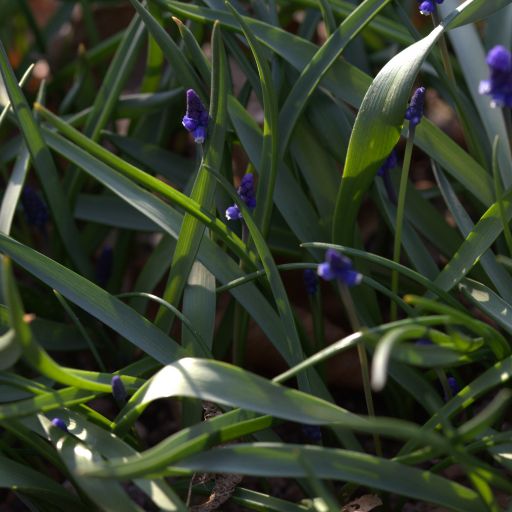
Commonly known as Aucher’s Grape Hyacinth or "Dark Eyes," this charming bulbous perennial hails from the subalpine regions of Turkey. Unlike its more aggressive cousins, Muscari aucheri is prized for its tidy, compact growth and striking bicolored blooms that resemble miniature, upside-down clusters of grapes dipped in powdered sugar.
🔍 How to Identify
- 🪻 Flower Form: Densely packed, bell-shaped florets form a conical spike. The top flowers are usually a lighter "electric" blue, while the lower fertile flowers are a deeper navy.
- ⚪ The "Eye": Each tiny floret features a distinct white rim or "teeth" at the opening, creating a high-contrast, sparkling effect.
- 🍃 Foliage: It produces narrow, strap-shaped green leaves that emerge in early spring, usually staying shorter and more upright than other Grape Hyacinth varieties.
🏡 In Your Garden
- 🌱 Naturalizing Expert: This plant is a "set it and forget it" favorite. It spreads gently via bulb offsets to create a lush blue carpet over several years, making it perfect for the edges of woodland paths or rock gardens.
- ☀️ Sun & Sleep: It thrives in full sun during its spring growth but requires a dry "summer sleep" (dormancy). It’s best to plant it among perennials like Hostas that will grow their large leaves just as the Muscari foliage begins to yellow and die back.
- 🐝 Early Pollinator Magnet: Because it blooms early in the spring, it provides a vital nectar source for bees emerging from winter hibernation.
⚠️ Safety & Toxicity
- 🐾 Mildly Toxic: Like many spring bulbs, Muscari aucheri contains small amounts of saponins. While not typically deadly, it is not edible.
- 👶 Precaution: Ingesting the bulbs or flowers can cause stomach upset, nausea, or vomiting in pets and small children. It is best kept in areas where curious "taste-testers" won't reach it.
✨ Fun Fact
The genus name Muscari comes from the Greek word muschos, meaning "musk." While some varieties have a heavy scent, Muscari aucheri has a very delicate, sweet fragrance that smells remarkably like grape soda on a warm spring afternoon!

Detailed Care Instructions
To successfully grow Muscari Aucheri plants, follow these steps:
- Planting: Choose a well-draining soil mix that is rich in organic matter. Plant the bulbs in the fall, preferably in October or November, before the ground freezes. Dig a hole about 3-4 inches deep and place the bulb in the hole, with the pointed end facing upward.
- Location: Plant the Muscari Aucheri bulbs in a location that receives full or partial sunlight. They can tolerate some shade but tend to bloom better in the sun.
- Watering: Water the newly planted bulbs thoroughly but avoid overwatering, as it can lead to bulb rot. Once established, the plants are relatively drought-tolerant.
- Soil maintenance: Ensure the soil is well-drained as constant moisture can cause bulbs to rot. Mulching the soil with organic matter, such as compost or bark chips, can help retain moisture and keep the soil cool.
- Fertilization: Apply a balanced, slow-release fertilizer once a year in early spring. Follow the instructions on the package for the correct dosage.
- Pruning: After the flowers have faded and the leaves have turned yellow, allow the foliage to die back naturally. This stage is essential for bulb growth and storing energy for the next season. Do not cut or remove the leaves until they have completely withered.
- Division: Over time, Muscari Aucheri bulbs can become overcrowded. Every few years, when the plant is dormant in summer, dig up the bulbs and separate the offsets. Replant the bulbs at the desired spacing.
- Protection: During extreme cold weather, consider covering the Muscari Aucheri plants with a layer of mulch or straw to provide insulation and protect them from freezing temperatures.
By following these tips, you should be able to successfully grow Muscari Aucheri plants and enjoy their beautiful spring blooms.

Place in a bright room that is sun drenched almost all day. Or directly in a south-facing window.

To properly water this plant, it is important to ensure that the soil is evenly moist but not waterlogged. It is recommended to water the plant deeply once a week, allowing the water to penetrate the soil deeply. However, it is important to monitor the soil moisture level and adjust the watering frequency accordingly. It is also advisable to water the plant early in the morning or late in the day to prevent evaporation. Avoid getting water directly on the foliage to prevent fungal diseases.
To fertilize the Muscari Aucheri plant, apply a balanced fertilizer with equal amounts of nitrogen, phosphorus, and potassium in the spring, just as the new growth begins to appear. Dilute the fertilizer to half the recommended strength and water the plant well after application. Only fertilize once a year, as over-fertilization can harm the plant. Avoid getting any fertilizer on the leaves, as this can cause burning.
For optimal growth and development, the Muscari Aucheri plant requires well-draining soil with a balanced pH level and adequate organic matter. It is recommended to use a soil mix that contains a combination of loam, sand, and peat moss. The soil should be airy and moist but not soggy.
The pH level of the soil should be between 6.0 and 7.5. If the soil is too acidic, it may cause nutrient deficiencies, while soil that is too alkaline can lead to iron deficiency.
Additionally, the soil should be rich in organic matter, such as compost or well-rotted manure, to provide the plant with essential nutrients and promote healthy root growth.
It is important to note that Muscari Aucheri plants prefer well-draining soil, so excess moisture can cause root rot and stunt the plant's growth. Therefore, it is essential to avoid over-watering and ensure proper drainage.
To propagate this plant, you will need to carefully remove the bulb from the soil during its dormant period. You should ensure that the bulb has produced one or two small bulbs around the base.
Once you have separated these bulbs, they can be planted in well-draining soil. It's important to plant the bulbs pointy side up, and they should only be planted around 2-3cm deep.
Be sure to provide good drainage for the newly planted bulbs and water them regularly. Overwatering can lead to the bulb rotting.
With proper care, the bulbs should start to produce small shoots in a few weeks, and the plant will continue to grow.
Common pests of the grape hyacinth include Aphids. Make a habit of checking your grape hyacinth frequently for pests so that any infestations can be caught and managed early.








