Plant Overview
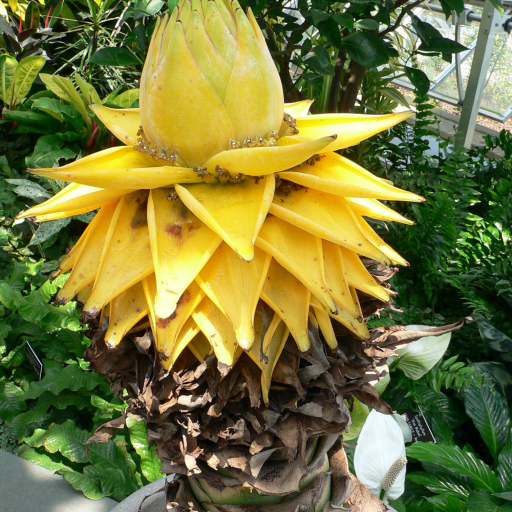
Known as the "Golden Lotus Banana," this architectural marvel is not a true tree, but a giant herb that looks like it stepped out of a prehistoric landscape. Native to the high-altitude mountains of Yunnan, China, it was once thought to be extinct in the wild before being rediscovered by botanists. In Buddhist tradition, its massive, golden bloom is a sacred symbol of purity and enlightenment, often seen planted near temples.
🔍 How to Identify
- 🌼 The "Flower": The most striking feature is the massive, bright yellow terminal bud. These are actually waxy "bracts" (modified leaves) that protect tiny, inconspicuous real flowers tucked inside.
- 🍃 Foliage: Broad, paddle-shaped leaves with a distinct silvery-blue or grey-green hue. The leaves grow in a dense, fountain-like crown atop a stout base.
- 🪵 The Pseudostem: It features a thick, conical trunk made of tightly wrapped leaf bases. Unlike edible banana trees that soar upward, this "dwarf" variety stays compact and sturdy.
🏡 In Your Garden
- 🏔️ Mountain Resilience: Because it evolved in the mountains, it is significantly more cold-hardy than tropical bananas. While the leaves may die back in a freeze, the underground rhizome can survive surprisingly low temperatures if kept dry.
- ⏳ The Marathon Bloom: Patience is rewarded with this plant. It may take two to three years of growth before it flowers, but once the "Golden Lotus" opens, it can stay in bloom for up to 250 days—one of the longest flowering periods in the plant kingdom.
- 💧 Drainage is Key: It hates "wet feet" during the winter. Ensure your soil is gritty and well-draining to prevent the base from rotting during its dormant period.
⚠️ Safety & Toxicity
- ✅ Non-Toxic: Musella lasiocarpa is generally considered safe and non-toxic for both humans and curious pets like cats and dogs.
- 🧤 Sticky Sap: When pruning or removing dead leaves, be aware that the plant contains a milky, sticky sap. While not poisonous, it can be difficult to wash off skin and may leave permanent brown stains on your favorite gardening clothes.
✨ Fun Fact
This plant is considered a "living fossil." It is the only member of its genus, Musella, and represents an ancient evolutionary link between the common banana (Musa) and the Bird of Paradise (Strelitzia).

Detailed Care Instructions
Growing Musella lasiocarpa, also known as the Chinese dwarf banana or golden lotus banana, can be a rewarding endeavor due to its unique and striking appearance. Here are some steps to help you successfully grow this plant:
1. Selecting the Right Location
- Sunlight: Musella lasiocarpa prefers full sun to partial shade. Ideally, it should receive at least 6 hours of direct sunlight daily.
- Climate: This plant is hardy in USDA zones 6-11. It can tolerate a range of temperatures but prefers a warm, tropical climate.
- Space: Ensure there is enough space for growth, as it can reach up to 3-5 feet in height and spread.
2. Soil Preparation
- Well-Draining Soil: The plant prefers well-draining, fertile soil. Amend the soil with organic matter like compost to improve fertility and drainage.
- pH Level: Aim for a slightly acidic to neutral pH (around 6.0 to 7.0).
3. Planting
- Seeds or Suckers: You can start Musella lasiocarpa from seeds, but it's commonly propagated via suckers (offshoots).
- Seeds: Soak the seeds in warm water for 24 hours before planting. Plant them in a seed-starting mix, keeping the soil warm (around 75-85°F) and moist.
- Suckers: Remove suckers from the parent plant with a clean, sharp knife. Make sure each sucker has some roots attached. Plant them in well-prepared soil.
4. Watering
- Consistent Moisture: Keep the soil consistently moist but not waterlogged. Water regularly, especially during dry periods.
- Mulching: Apply a layer of mulch around the base to help retain moisture and regulate soil temperature.
5. Fertilization
- Balanced Fertilizer: Use a balanced, slow-release fertilizer during the growing season (spring and summer). Follow package instructions for application rates.
- Organic Options: Organic compost or well-rotted manure can also support healthy growth.
6. Maintenance
- Pruning: Remove any dead or damaged leaves to keep the plant tidy and healthy.
- Pest Control: Watch out for pests like aphids, spider mites, and banana weevils. Treat infestations with insecticidal soap or neem oil.
7. Overwintering (for colder climates)
- Indoor Care: In zones lower than 6, consider bringing the plant indoors or into a greenhouse during winter.
- Mulching: For plants left outdoors, apply a thick layer of mulch around the base and cover the plant with protective material to shield it from frost.
8. Patience
- Blooming: Musella lasiocarpa is known for its stunning yellow flower (resembling a lotus) that can appear after 1-2 years of growth. The blooming period can last several months.
By following these steps, you can successfully grow Musella lasiocarpa and enjoy its unique beauty. Happy gardening!

Place in a window with dappled sun or a spot in the middle of a room. Or directly in a window facing west or east.

Musella lasiocarpa is a unique, tropical plant that requires careful attention to watering for optimal growth and health. Here’s a comprehensive guide on how to water it:
Soil Moisture: The soil should be consistently moist but not waterlogged. Overwatering can lead to root rot, while underwatering can stress the plant. Check the top layer of soil regularly; if it feels dry to the touch, it's time to water.
Watering Frequency: During the growing season (spring and summer), water the plant more frequently, typically every 2-3 days, depending on the climate and soil drainage. In cooler seasons or when the plant is dormant, reduce watering to once a week or even less.
Water Quality: Use room temperature water. If you're using tap water, let it sit for a day to allow chlorine to dissipate, as high levels of chlorine can harm the plant.
Watering Depth: Ensure the water reaches the root zone by watering deeply. This encourages deep root growth and increases drought tolerance. Water until you see it start to drain out of the bottom of the pot or through the ground if it’s planted outside.
Drainage: Ensure the plant is in a well-draining soil mix. If you’re using a container, it should have drainage holes to prevent water from pooling at the bottom. Mulching around the plant can help retain soil moisture and reduce the need for frequent watering.
Environmental Humidity: This plant thrives in high humidity. If you live in a dry climate, consider misting the leaves regularly or placing a humidity tray nearby to maintain the necessary moisture levels.
Weather Considerations: Adjust watering based on weather conditions. In hot, dry weather, the plant will need more frequent watering. Conversely, during periods of heavy rain, you may need to hold off on additional watering to avoid waterlogging.
By following these guidelines, you can provide the optimal watering conditions needed for Musella lasiocarpa to thrive.
Musella lasiocarpa is a unique and visually striking plant that enjoys a well-fertilized environment. Here are some fertilizing instructions to help keep your plant thriving:
Balanced Fertilizer: Use a balanced, water-soluble fertilizer with an N-P-K ratio of 10-10-10 or 20-20-20. This will provide an even distribution of essential nutrients.
Frequency: Apply the fertilizer every 4-6 weeks during the growing season, which is typically from spring through late summer. This will support steady growth.
Application Rate: Follow the manufacturer's instructions for the correct dilution rate and application amount. This is usually mentioned on the label of the fertilizer package.
Method: Dissolve the fertilizer in water and apply it evenly around the base of the plant. Ensure the soil is already moist before applying the fertilizer solution to prevent root burn.
Slow-Release Option: Alternatively, you may use a slow-release granular fertilizer. Apply it according to the package instructions at the beginning of the growing season and reapply mid-season. This type of fertilizer gradually releases nutrients over several months.
Organic Option: Consider using organic fertilizers, such as compost or well-rotted manure, to provide nutrients in a natural form. Apply a 2-3 inch layer around the base of the plant, making sure not to pile it against the stem.
Micronutrients: Occasionally, supplement with a micronutrient fertilizer, especially if you notice signs of deficiencies such as yellowing leaves.
Watering: Ensure adequate watering after fertilization to help distribute the nutrients through the soil and to the roots.
Remember that too much fertilizer can harm the plant, so it's important not to over-fertilize. It's always better to use less fertilizer than risk damaging the plant with too much.
Musella lasiocarpa thrives best in well-draining, fertile soil. To ensure optimal growth, consider the following key soil characteristics:
Soil Type: Use a loamy soil mixture that offers a balance of sand, silt, and clay. This type of soil provides good aeration and drainage while retaining necessary moisture and nutrients.
pH Levels: The ideal pH level for this plant is between 5.5 and 7.5. It can tolerate slightly acidic to neutral soil conditions.
Organic Matter: Incorporate organic matter such as well-rotted compost or aged manure into the soil. This enriches the soil with essential nutrients and improves its structure and water-holding capacity.
Drainage: Ensure the soil has excellent drainage to prevent waterlogging, which can lead to root rot. If planting in a container, make sure it has drainage holes to allow excess water to escape.
Moisture: While the soil should drain well, it should also retain some moisture. The soil needs to stay consistently moist but not soggy. Mulching can help retain soil moisture and regulate temperature.
Nutrient Content: Fertile soil with a good balance of key nutrients (nitrogen, phosphorus, and potassium) supports healthy growth. Consider a balanced, slow-release fertilizer to maintain nutrient levels.
By providing these soil conditions, you will create an optimal environment for Musella lasiocarpa to grow, thrive, and display its distinctive foliage and flowers.
Propagating Musella lasiocarpa can be quite rewarding. This plant is typically propagated through vegetative means rather than seeds, owing to the more predictable results. Here’s a step-by-step guide:
1. Propagating through Offsets (Pups):
Identification and Timing:
- The primary method of propagation is through the removal and replanting of offsets, also known as pups. These are small shoots that emerge from the base of the mother plant.
- The best time to remove and plant offsets is during the growing season, which is typically in spring or early summer.
Steps:
Preparation:
- Water the parent plant thoroughly a day before you plan to remove the offset. This makes the soil softer and easier to work with.
- Prepare a potting mixture in advance. A mix of well-draining soil, sand, and compost works well.
Separation:
- Carefully dig around the base of the plant to expose the pups.
- Look for an offset that has its root system and ensure it is at least a few inches tall.
- Using a clean, sharp knife or garden spade, cut the offset away from the mother plant. Make sure to include as many roots as possible.
Potting the Offset:
- Plant the offset in a pot with the pre-prepared potting mix. Bury the roots sufficiently, but ensure the base of the stem is not overly deep in the soil.
- Water the newly potted offset lightly. Keep the soil slightly moist but not waterlogged.
Aftercare:
- Place the potted offset in a location with bright, indirect light. Avoid direct sunlight initially, as it can stress the young plant.
- Maintain a moderate watering schedule, allowing the top inch of soil to dry out between waterings.
- Gradually acclimate the plant to more direct sunlight over a few weeks, if it is expected to grow outdoors.
2. Propagating from Rhizomes:
Rhizome Division:
- Divide the rhizome of a mature plant. This involves more disruption to the plant than removing offsets, but it can be effective.
Steps:
Digging Up the Plant:
- Carefully remove the plant from the ground or its pot. This is generally easier if done while the plant is dormant or before the active growing season starts.
Cutting Rhizomes:
- Identify healthy sections of the rhizome. Using a clean knife, cut the rhizome into sections, ensuring each section has at least one bud or eye. Each section should ideally have some roots.
Preparing Rhizomes:
- Allow the cut sections to dry and callous over for 24 hours. This helps prevent rot when they are replanted.
Planting:
- Plant each rhizome section in well-draining soil at a shallow depth, ensuring the bud or eye is just below the surface.
- Water sparingly until new growth is observed.
Aftercare:
- Place the newly planted rhizome sections in a warm, bright location with indirect sunlight.
- Gradually increase watering as the plant establishes and begins to grow actively.
General Tips:
- Environment: Ensure the plant environment is warm and humid, which mimics its natural habitat.
- Soil: Use well-draining, fertile soil to prevent waterlogging and root rot.
- Pests and Diseases: Monitor for pests such as aphids, spider mites, and other common plant pests. Address any issues promptly to prevent spread.
- Nutrition: Feed the plant with a balanced, slow-release fertilizer during the growing season to encourage healthy growth.
By following these steps and ensuring the plant’s needs are met, you can successfully propagate Musella lasiocarpa and enjoy its unique beauty in your garden or home.
Common pests of the chinese dwarf banana include Mealybugs, spider mites, aphids, thrips. Make a habit of checking your chinese dwarf banana frequently for pests so that any infestations can be caught and managed early.








