Plant Overview
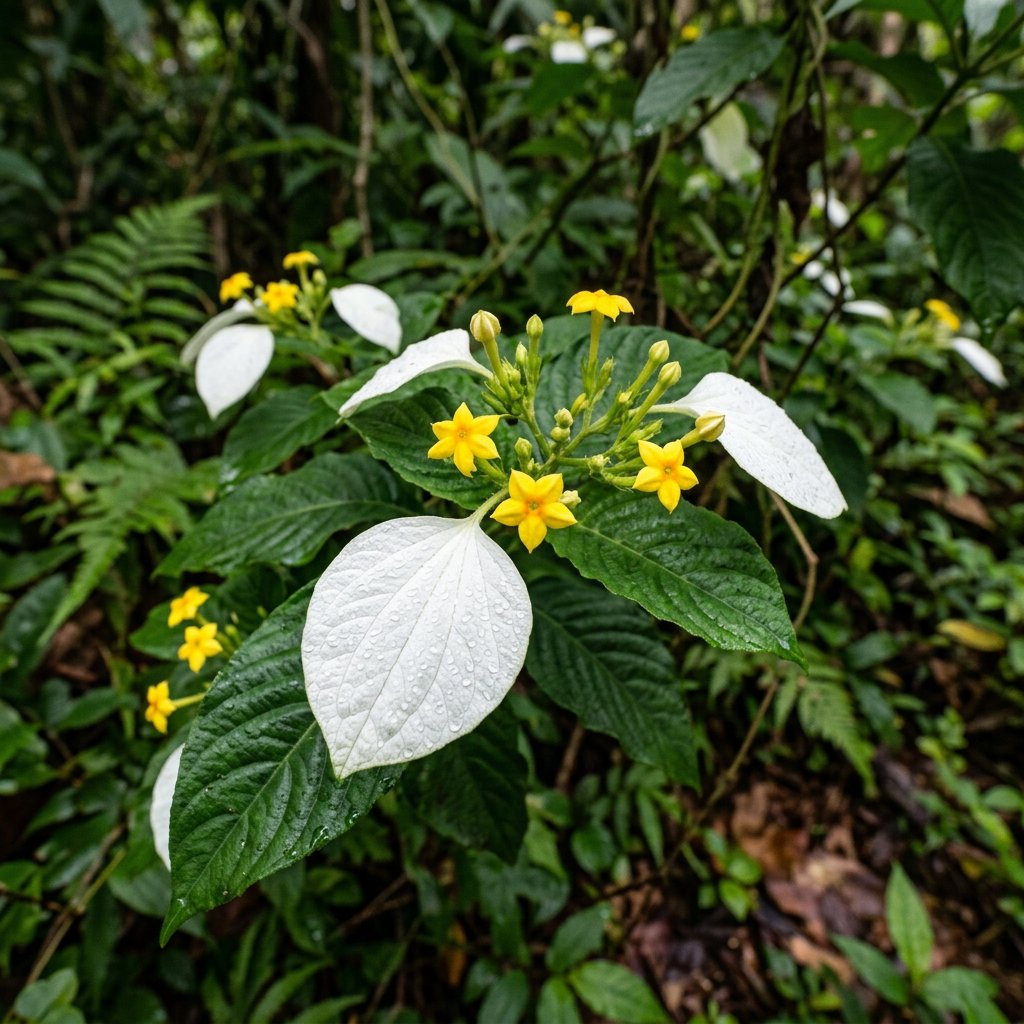
Often called the "Dhobi’s Tree" or "White Lady," Mussaenda frondosa is a show-stopping tropical shrub famous for its "trick" flowers. While it looks like it is covered in large white blossoms, those are actually enlarged sepals designed to lure in pollinators from a distance. In its native South Asian landscapes, it stands out as a bright, ghostly presence against the deep green of the forest undergrowth.
🔍 How to Identify
- 🏳️ The "Flag" Sepals: The most striking feature is the large, creamy-white leaf-like structures (bracts). Only one sepal in a flower cluster expands into this "flag," making the bush look like it’s draped in white linen.
- ⭐ True Flowers: The real flowers are tiny, star-shaped, and a vibrant orange or golden-yellow, peeking out from the center of the white bracts.
- 🌿 Fuzzy Foliage: The dark green, oval leaves are arranged in opposite pairs and are covered in fine, soft hairs that give them a velvety texture.
🏡 In Your Garden
- ☁️ Humidity is Key: As a tropical native, this plant craves high humidity. If you live in a dry climate, it appreciates regular misting or being placed near a water feature to prevent leaf-drop.
- ✂️ Managing the "Legs": Mussaenda has a sprawling growth habit and can become quite "leggy" or sparse over time. Frequent pruning after the blooming cycle is essential to maintain a compact, bushy shape.
- 🧪 Acidic Preferences: It thrives in rich, organic soil that leans toward the acidic side. If the leaves turn yellow while the veins stay green (chlorosis), it is likely a sign that the soil is too alkaline for the plant to "eat" its nutrients properly.
⚠️ Safety & Toxicity
- ✅ Status: Generally considered non-toxic to humans and common household pets.
- 🧤 Minor Irritant: The fine hairs on the leaves and stems can occasionally cause mild skin irritation or "itching" for people with sensitive skin. It is best to wear gloves during heavy pruning sessions.
✨ Fun Fact
The nickname "Dhobi’s Tree" originates from India. "Dhobi" is the term for a traditional washerman; the plant earned this name because the bright white bracts resemble freshly washed white laundry spread out over bushes to dry in the sun.

Detailed Care Instructions
To grow Mussaenda Frondosa plants, you can follow these steps:
- Choose a suitable location: Mussaenda Frondosa plants thrive in full sun to partial shade. Select a spot in your garden that receives at least 4-6 hours of direct sunlight each day.
- Soil preparation: Prepare well-draining soil that is rich in organic matter. Mussaenda Frondosa plants prefer slightly acidic to neutral soil with a pH range of 5.5 to 7.0.
- Planting: Dig a hole that is slightly larger than the root ball of the plant. Gently remove the plant from its container and place it in the hole. Backfill the hole with soil and lightly firm it around the base of the plant.
- Watering: Water the plant thoroughly after planting. Mussaenda Frondosa plants prefer slightly moist soil, so it is essential to keep the soil consistently moist but not waterlogged. Water regularly, especially during dry periods.
- Mulching: Apply a layer of organic mulch around the base of the plant to help retain moisture, suppress weed growth, and regulate soil temperature.
- Fertilization: Feed the plant with a balanced, slow-release fertilizer once every 2-3 months during the growing season. Follow the package instructions for dosage.
- Pruning: Perform light pruning to shape the plant and remove dead or damaged branches. This is best done after flowering.
- Protection: Protect the plant from extreme cold temperatures, as Mussaenda Frondosa is not frost-tolerant. If you live in a colder region, consider growing the plant in containers that can be brought indoors during winter.
- Pests and diseases: Monitor the plant for common pests such as aphids, spider mites, and whiteflies. Treat any infestations promptly with appropriate insecticides. Provide good air circulation and avoid overwatering to prevent fungal diseases.
- Propagation: Mussaenda Frondosa can be propagated through stem cuttings. Take a 4-6 inch long cutting from a healthy, mature plant and plant it in well-draining soil. Keep the cutting moist and warm until roots develop.
With proper care and attention, your Mussaenda Frondosa plant should grow and thrive, rewarding you with its beautiful flowers.

Place in a bright room that is sun drenched almost all day. Or directly in a south-facing window.

To water this plant, thoroughly soak the soil around the root zone until water begins to seep out from the drainage holes at the bottom of the container or planting area. Allow the soil to dry out slightly before watering again, as overwatering can lead to root rot and other problems. Monitor the moisture level of the soil regularly by inserting a finger into the soil to check the top inch for dryness. Water more frequently during periods of hot, dry weather or if the soil dries out more quickly than usual. Avoid getting water on the leaves or flowers of the plant, as this can lead to fungal growth and other issues. The ideal watering schedule will depend on a variety of factors, including the size and age of the plant, the type of soil, and the location and climate conditions in which it is growing.
To fertilize this plant, use a balanced fertilizer with an N-P-K ratio of 10-10-10 or 20-20-20. Apply the fertilizer every two to three months during the growing season. Carefully follow the instructions on the fertilizer package, as overdosing can harm the plant. Water the plant before and after applying the fertilizer to prevent burning of the roots.
Mussaenda frondosa is a type of flowering plant that requires well-draining soil of moderate fertility. The soil should also be slightly acidic with a pH level between 6 and 6.5. It is recommended to use soil that is mixed with peat moss, perlite, and vermiculite to create a loose and aerated soil structure. It is important to avoid soil that is heavy, dense, or compacted, as this can hinder the growth of the plant's roots. Additionally, adding organic matter such as compost or leaf litter to the soil can provide additional nutrients and improve soil texture.
Mussaenda Frondosa is a plant that can be propagated through stem cuttings. Here are the steps to follow:
- Prepare a cutting: Choose a healthy stem from the plant, about 6-8 inches long. Make a clean cut at an angle with sharp, clean pruning shears.
- Remove the leaves: Strip the leaves from the lower half of the stem to create a bare section where roots will form.
- Apply rooting hormone: Dip the cut end of the stem in rooting hormone powder to encourage root growth.
- Plant the cutting: Fill a pot with well-draining soil, and poke a hole in the center. Insert the cutting into the hole, and gently firm the soil around it.
- Water the cutting: Give the cutting a good watering, and keep the soil moist but not waterlogged.
- Provide the right environment: Place the pot in a warm, bright location, but out of direct sunlight. Cover the pot with a plastic bag or dome to create a humid environment.
- Monitor the cutting: Check the cutting regularly for signs of growth. Roots should form in 2-4 weeks. Once the cutting has rooted and begun to grow new leaves, it can be transplanted into a larger pot or planted outdoors.
Common pests of the schizomussaenda include Scale insect, mealybugs, spider mites. Make a habit of checking your schizomussaenda frequently for pests so that any infestations can be caught and managed early.








