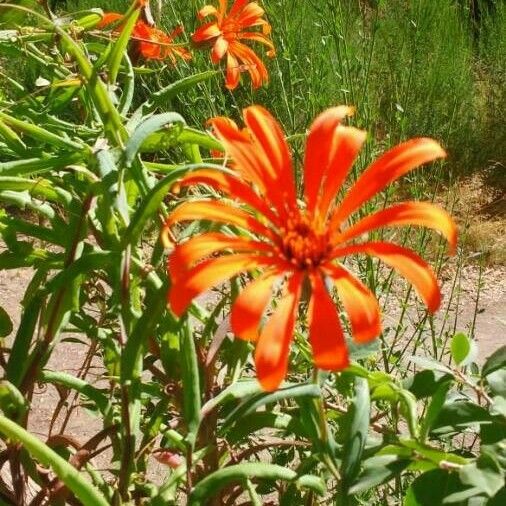
Plant Overview
Known to the Incas as Chinchilcoma, this striking climbing shrub is a vibrant jewel of the Andes mountains. Thriving in the high altitudes of Peru, Bolivia, and Chile, it is famous for its fiery, star-shaped blooms that seem to glow against the rugged rocky landscapes. It isn't just a garden beauty; it carries a deep cultural legacy, having been used for centuries in traditional Andean medicine and ritual.
🔍 How to Identify
- 🌸 The Bloom: Features long, slender ray florets in brilliant shades of orange or scarlet-red. The flowers look like a sophisticated, elongated version of a common daisy.
- 🍃 Tendril-Tipped Leaves: The leaves are "acuminate" (tapering to a long point), but the most unique feature is the leaf tip, which often transforms into a curly tendril to help the plant climb.
- 🧗 Growth Habit: It acts as a "scrambler." While it has woody stems like a shrub, it uses its tendrils to hitchhike onto nearby trees or fences, reaching heights of up to 10 feet.
🏡 In Your Garden
- 🏔️ Mountain Roots: Because it originates from rocky slopes, this plant demands excellent drainage. It thrives in "lean" soil—if the dirt is too rich or stays soggy, the roots may succumb to rot.
- ☀️ Cool Feet, Hot Head: Like many mountain climbers, it prefers its roots to stay cool and shaded (use mulch or stones) while its flowering head reaches for full, bright sunlight.
- 🧗 Structural Needs: This isn't a plant for a flat flower bed. It needs a trellis, a chain-link fence, or a sturdy neighboring shrub to weave through to truly show off its cascading orange flowers.
⚠️ Safety & Toxicity
- ✅ Safe for Humans: Mutisia acuminata is generally considered non-toxic to humans and has a long history of use in traditional Andean folk medicine, often brewed into herbal teas.
- 🐾 Pet Watch: While not listed as a major toxin for domestic animals, the fibrous nature of the leaves and stems can cause mild digestive upset if a curious cat or dog decides to have a snack.
✨ Fun Fact
The Incas prized the Mutisia so highly that they used the vibrant pigments from its flowers to create natural dyes for their world-renowned textiles, ensuring their garments matched the fiery sunset of the Andes.

Detailed Care Instructions

Water-loving plants flourish in wet or sloppy soil and near ponds. The extensive root system enables these plants to absorb plenty of water. The surface of the soil should be kept moist at all times. Place your pot in a container filled with water to guarantee that plants get enough water. If the ground becomes dry, it is recommended that you water it well. Plants in smaller pots will need to be watered more frequently. Water the soil in which the plant is standing thoroughly using a watering can.








