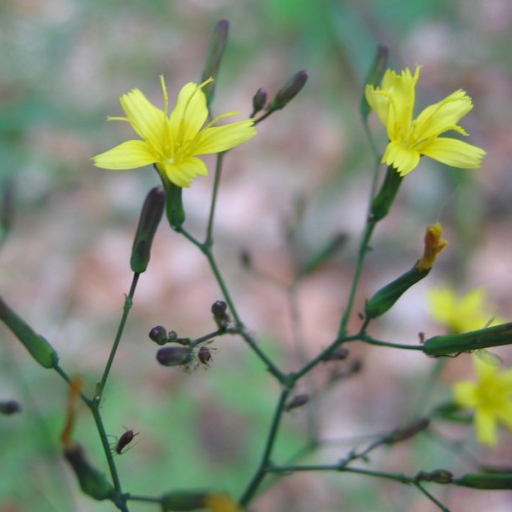
Plant Overview
Often called the Wall Lettuce, this delicate woodland native looks like a dandelion that decided to reach for the stars. It is a master of the shadows, frequently found tucked away in the cracks of old stone walls or the dappled light of ancient forests. Unlike its bolder cousins, the Wall Lettuce has a wispy, elegant structure that adds a touch of wild, ethereal charm to any shady corner.
🔍 How to Identify
- 🌿 The "Ivy-Like" Leaves: The leaves are deeply lobed with a very large, triangular lobe at the tip. They are often tinged with a subtle purple or maroon hue, especially on the undersides.
- 🌼 The Rule of Five: Each tiny yellow flower head looks like a miniature dandelion, but with a catch: look closely, and you will see it contains exactly five strap-shaped petals (florets).
- 🍼 Milky Sap: If a stem is broken, it exudes a white, milky latex. This is a signature trait of many plants in the chicory family.
🏡 In Your Garden
- 🧱 The Vertical Specialist: As the name muralis suggests, this plant loves "mural" (wall) living. It thrives in the lime-rich mortar of old stone walls and rocky crevices where other plants might struggle to find a foothold.
- 🌑 Shade Seeker: This is not a sun-worshipper. It excels in "dry shade"—one of the most difficult garden niches to fill. Because it has a thin taproot, it doesn't like being moved once it has settled into a crack.
⚠️ Safety & Toxicity
- 🐾 Pet Safety: Wall Lettuce is generally considered non-toxic to cats and dogs. However, the bitter taste usually prevents any curious nibbling.
- 🖐️ Skin Irritation: While not inherently poisonous, the milky sap can be a mild irritant to those with sensitive skin. It is best to wear gloves if you are weeding a large patch of it.
- 🥗 Not a Salad: Despite the name "Lettuce," it is not a culinary plant. It is far too bitter for human palates and is best left for the pollinators.
✨ Fun Fact
The Wall Lettuce is a favorite of geometric enthusiasts in the plant world. While most daisies and dandelions have a random or high number of petals, Mycelis muralis is famous for its strict consistency—almost every single flower head on the plant will have exactly five florets, no more and no less!

Detailed Care Instructions
To grow Mycelis Muralis, also known as Wall Lettuce or Celery-Leafed Hawk's-Beard, you can follow these steps:
- Obtain seeds: You can purchase Mycelis Muralis seeds from a local nursery or online. Alternatively, you can collect seeds from mature plants in the wild, if permitted.
- Choose a suitable location: Mycelis Muralis prefers well-draining soil and partial shade. Select a spot in your garden that receives a few hours of direct sunlight but is mostly shaded.
- Prepare the soil: The soil should be fertile, loamy, and well-draining. Remove any weeds or debris from the area and dig the soil to a depth of about 6-8 inches. Add compost or well-rotted organic matter to improve fertility.
- Sow the seeds: Scatter the Mycelis Muralis seeds evenly over the prepared soil. Lightly press them into the soil, ensuring good seed-to-soil contact, but do not cover them with a thick layer of soil.
- Watering and moisture: Water the seeds gently to keep the soil moist but not waterlogged. Provide consistent moisture during the germination period, which usually takes around 2-3 weeks. After that, you can reduce the frequency of watering but ensure the soil does not completely dry out.
- Thin the seedlings: Once the seedlings emerge and develop their first few true leaves, thin them out, leaving about 6-12 inches of space between each plant. This allows proper airflow and prevents overcrowding.
- Mulching: Apply a layer of organic mulch around the seedlings to retain moisture and suppress weed growth. This helps in conserving soil moisture and prevents competition from unwanted plants.
- Maintenance: Regularly inspect the plants for pests or diseases. Remove any weeds that may appear around the area. Water the plants during dry periods, but avoid overwatering.
- Harvesting: Mycelis Muralis can be harvested when leaves are tender and young. Simply cut the outer leaves with a pair of scissors at the desired length and allow the inner leaves to continue growing.
By following these steps, you can successfully grow Mycelis Muralis in your garden or outdoor space.

Place in a window with dappled sun or a spot in the middle of a room. Or directly in a window facing west or east.

Mycelis Muralis is a type of plant that belongs to the Asteraceae family. It requires regular watering to maintain its health and growth. To water the plant, you should follow the below-mentioned steps:
1. Determine the water requirement of the plant: The water requirement of Mycelis Muralis plant varies according to the season and climate. During summers, the plant needs to be watered more frequently as compared to winters.
2. Check the soil moisture: Before watering the plant, check the soil moisture level by inserting your finger into the soil. If the soil is dry up to a depth of 1 inch, it is time to water the plant.
3. Avoid overwatering: Overwatering can harm the plant, so make sure not to water the plant too frequently. The soil should be moist but not waterlogged.
4. Watering frequency: Water the plant once or twice a week during summers, and once a week during winters. Adjust the watering frequency according to the soil moisture level.
5. Watering technique: While watering the plant, pour water slowly and gently around the base of the plant. Avoid watering the leaves as this can lead to fungal growth and other diseases.
6. Use room temperature water: Always use room temperature water for watering the plant. Coldwater can shock the roots of the plant.
By following these tips, you can keep your Mycelis Muralis plant healthy and happy.
- Choose a well-draining soil mix: Mycelis Muralis plants prefer a soil mix that is loamy and well-draining. Ensure the soil allows water to pass through easily to prevent waterlogged roots.
- Select an appropriate location: Find a spot for your Mycelis Muralis plant where it can receive partial to full sun. This plant typically thrives in areas with ample sunlight, but it can also tolerate some shade.
- Planting depth: Dig a hole in the soil that is slightly larger than the root ball of the plant. Carefully place the Mycelis Muralis plant into the hole, ensuring that the crown of the plant (where the stems meet the roots) is level with or just slightly above the soil surface.
- Watering: After planting, thoroughly water the Mycelis Muralis plant to ensure proper establishment. Keep the soil consistently moist but not waterlogged. Watering deeply once or twice a week is usually sufficient, but adjust the frequency based on the plant's needs and the surrounding environment.
- Mulching: Apply a layer of organic mulch around the base of the plant, leaving some space around the stem to prevent moisture buildup. Mulching helps conserve moisture, regulate soil temperature, and suppress weed growth.
- Fertilizing timing: Fertilize your Mycelis Muralis plant in spring when new growth appears, and again in early summer if desired. Avoid fertilizing during the dormant winter months.
- Fertilizer type: Use a balanced, slow-release fertilizer that is suitable for the specific needs of the Mycelis Muralis plant. Alternatively, you can use a diluted liquid fertilizer during regular watering sessions. Follow the manufacturer's instructions for the appropriate dosage and application method.
- Fertilizing frequency: Apply the fertilizer as recommended by the product instructions. Generally, fertilize every 4-6 weeks during the active growing season. Remember to avoid over-fertilizing, as excess nutrients can harm the plant.
- Pruning: While not directly related to fertilizing, regular pruning can promote healthy growth. Trim back any dead or damaged leaves, stems, or flowers to maintain the plant's overall shape and vigor.
- Monitoring: Keep an eye on the foliage of your Mycelis Muralis plant for any signs of nutrient deficiencies or excesses. Monitor for leaf discoloration, stunted growth, or other abnormalities, as these may indicate imbalances in the soil or fertilizer application. Adjust your fertilizing routine accordingly to promote optimal health and growth.
Remember to always follow the specific care requirements of Mycelis Muralis, as individual plants may have varying needs.
The ideal soil for the Mycelis Muralis plant is a well-draining, nutrient-rich soil with a pH range of 6.0 to 7.5. It should be composed of a mixture of organic matter, such as compost or aged manure, and mineral-based materials, such as sand or perlite, to provide good drainage. The soil should be moist but not waterlogged, as excessive moisture can lead to root rot. In addition, this plant prefers soil that is slightly alkaline, so adding lime or wood ash to the soil may be beneficial.
To propagate this plant, you will need to take stem cuttings from a mature plant. Start by identifying a healthy stem on the plant that is at least 4 inches long and has several sets of leaves. Use a clean, sharp knife or pair of scissors to cut the stem at a 45-degree angle, just below a node where a leaf is attached.
Remove the lower leaves from the stem, leaving only a few at the top. Dip the cut end of the stem into a rooting hormone powder, then insert it into a pot filled with moist potting soil.
Cover the pot with a plastic bag or dome to create a humid environment for the cutting. Place it in a brightly lit but indirect spot, and keep the soil moist but not waterlogged. Within a few weeks, the cutting should develop roots and begin to grow new leaves.
Once the cutting has established itself and is growing well, you can transplant it to a larger pot or into your garden. Keep in mind that Mycelis Muralis prefers moist, well-draining soil and partial to full shade.








