Plant Overview
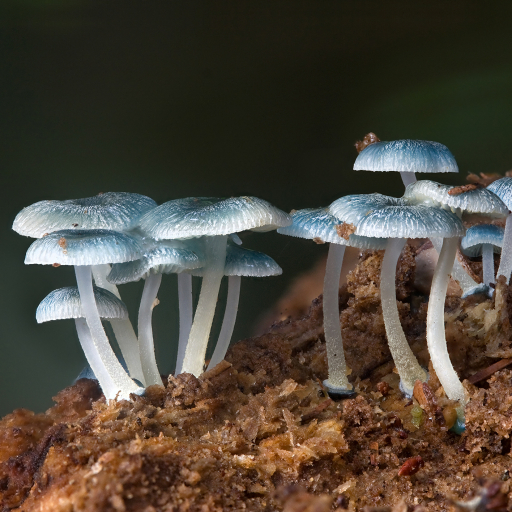
Often called the Pixie’s Parasol, Mycena interrupta is a tiny, cyan-blue gem that looks like it was plucked straight from a fairy tale illustration. While it may be mistaken for a plant due to its stationary nature, it is actually a delicate fungus native to the cool, temperate rainforests of Australia, New Zealand, and parts of South America. Its vibrant neon hue makes it one of the most photographed mushrooms in the Southern Hemisphere.
🔍 How to Identify
- 🍄 The Cap: Tiny (usually under 2cm wide), convex, and a brilliant "electric" blue. The surface is often sticky or slimy to the touch, especially in humid conditions.
- ⚪ The Gills: Underneath the cap, the gills are white or very pale blue and are widely spaced, creating a beautiful contrast with the bright exterior.
- 🧪 The Stem: The stalk is slender, translucent, and usually lacks the ring (annulus) found on other mushrooms. It attaches to wood via a small, flattened blue disc.
🌲 Habitat & Ecology
- 🪵 Woodland Recycler: This fungus is saprotrophic, meaning it spends its life breaking down dead organic matter. You will almost exclusively find it growing on rotting logs, particularly in damp Beech or Eucalyptus forests.
- 💧 Moisture Lover: Unlike hardier fungi, the Pixie’s Parasol is highly sensitive to dry air. It appears most frequently after heavy rains in shaded, mossy gullies where the humidity remains high.
⚠️ Safety & Toxicity
- 🚫 WARNING: Do not consume. While Mycena interrupta is not currently listed as a "deadly" mushroom, its edibility is unknown, and most species in the Mycena genus contain toxic compounds that cause severe gastrointestinal distress.
- 🐾 Pets & Children: Because of its bright, candy-like color, it can be very attractive to pets and toddlers. It should be treated as toxic; ingestion may lead to vomiting or neurological symptoms.
✨ Fun Fact
The vibrant blue color of the Pixie’s Parasol is "interrupted" as it ages—hence its scientific name interrupta. As the mushroom matures, the center of the cap often fades to a whitish or pale grey, leaving only a brilliant blue ring around the edge.

Detailed Care Instructions
To grow Mycena Interrupta plants, also known as pixie's parasol or fairy bonnets, follow these steps:
- Spore germination: Start by obtaining spores of Mycena Interrupta. These can be purchased from specialized mushroom suppliers or collected from wild mushrooms. The spores are usually found on the underside of the mushroom cap.
- Prepare the growing medium: Mycena Interrupta typically grow on decaying wood or leaf litter. Create a growing medium by mixing organic materials such as wood chips, sawdust, or a combination of straw and wood shavings. The medium needs to be sterilized to prevent contamination. You can achieve this by heating it in an oven or pressure cooker.
- Inoculation: Once the growing medium has cooled down, place it in a sterile container or tray. Sprinkle the spores evenly on the surface of the medium. Spores are microscopic, so it’s important to handle them carefully. Place a clear lid or plastic wrap over the container to maintain humidity.
- Incubation: Keep the container in a warm and dark environment, ideally between 65-75°F (18-24°C). Maintain a high humidity level by misting the surface regularly with distilled water. Avoid direct sunlight and temperature fluctuations.
- Colonization and mycelium growth: After a few days to weeks, the spores should germinate and start developing into mycelium. The mycelium will appear as a network of white filaments. This stage is crucial for the colonization of the growing medium.
- Transplanting: Once the mycelium has colonized the growing medium completely, usually in 4-6 weeks, you can transfer it to a suitable environment for fruiting. This could be a terrarium, greenhouse, or outdoor garden bed.
- Fruiting conditions: Mycena Interrupta require specific environmental conditions to produce mushrooms. They prefer cool temperatures between 50-65°F (10-18°C) and high humidity levels, around 70-90%. Provide indirect or diffused light, avoiding direct sunlight. Use a humidifier or mist the area regularly to maintain humidity levels.
- Harvesting: Mushrooms will start to grow from the mycelium. Harvest them before the caps fully open and the gills are exposed. Use a sharp knife or scissors to carefully cut them from the base of the stem.
Remember to research and understand the specific requirements of Mycena Interrupta, as these instructions provide general guidelines. Good luck with growing your Mycena Interrupta plants!
To water this plant, you should first check the soil moisture level by inserting your finger about an inch into the soil. If the soil feels dry, it is time to water the plant. Fill a watering can with room temperature water and slowly pour it onto the soil until it begins to drain out of the bottom of the pot. Avoid getting water on the leaves or stem of the plant as this can lead to rot. Allow the soil to drain completely before placing the plant back in its location. Water this plant when the top inch of soil feels dry to the touch.
To fertilize this plant, it is recommended to use a balanced, water-soluble fertilizer with equal amounts of nitrogen, phosphorus, and potassium. It should be applied approximately every two weeks during the growing season, following the manufacturer's instructions for dosage. Be sure to water the plant thoroughly before and after fertilizing to prevent root burn. It is also important to avoid over-fertilizing, as this can lead to plant burn and reduced growth.
The best soil to use for the Mycena Interrupta plant is a well-draining soil mixture that is rich in organic matter. This type of soil allows for proper water absorption while preventing stagnant water from accumulating at the roots. Additionally, the soil should be slightly acidic with a pH level between 5.0 and 6.0. It is also important to ensure that the soil is airy and loose, as this helps promote healthy root growth. Finally, the soil should be kept moist but not overly wet, as this can lead to root rot.
To propagate this plant, you need to collect spores from the cap of a mature fruiting body. Use a sterile blade to cut the cap and place it gill-side down on a clean, white paper. Cover the cap with a glass or plastic container to prevent contamination. Leave the container in a dark, cool, and humid place for a few days until the spores drop onto the paper. Transfer the spores to a petri dish containing a nutrient-rich agar medium. Allow the spores to germinate and form mycelium. Once the mycelium has grown, transfer it to a sterile substrate, such as sawdust or grain, and allow it to colonize. After a few weeks, the substrate will be fully colonized, and you can use it to inoculate new growing mediums like a jar of sterilized rice. This will allow you to keep your own supply of Mycena Interrupta.







