Plant Overview
Often called the Boobialla or "Native Juniper," this coastal champion is Australia's answer to a living privacy screen. Known for its lush, succulent-like foliage and incredible resilience against salty sea sprays, it is a staple for seaside gardeners. It carries a sense of ancient permanence, often seen hugging the windswept dunes of southern coastlines where other plants would wither.
🔍 How to Identify
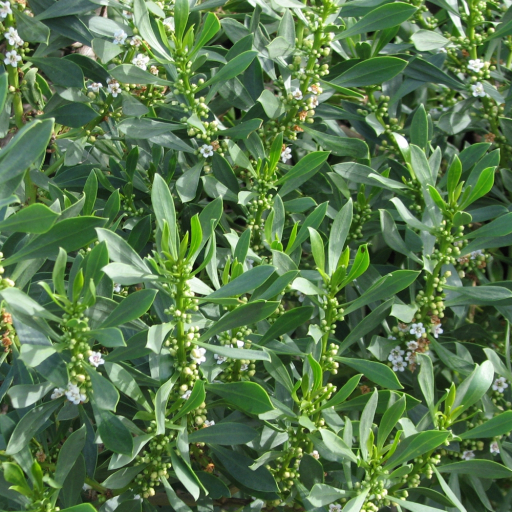
- 🍃 The Leaves: Look for thick, lance-shaped leaves that feel slightly fleshy to the touch. They are a vibrant, glossy green and arranged alternately along the stems.
- ✨ Oil Glands: If you hold a leaf up to the sun, you will see tiny, translucent "windows." These are oil glands that give the plant its botanical name.
- 🌸 Starry Blooms: In spring and summer, the plant is dotted with small, bell-shaped white flowers. If you look closely, you’ll see they are delicately freckled with tiny purple spots.
- 🔮 Dark Berries: Following the flowers, the plant produces smooth, rounded fruits that transition from green to a deep, glossy purple-black when ripe.
🏡 In Your Garden
- 🌊 Coastal Warrior: This plant thrives where others fail—specifically in salt-heavy air and sandy soils. It is the ultimate "first line of defense" for coastal properties, acting as a sturdy windbreak.
- ✂️ Living Walls: Because it grows rapidly and has a dense branching habit, it is perfect for "hedging and edging." It responds well to pruning, allowing you to shape it into a tight, green wall.
- 🦅 Wildlife Hub: The Boobialla is a bustling neighborhood for local fauna. Honeyeaters love the nectar-rich flowers, while various native birds flock to the berries during the fruiting season.
⚠️ Safety & Toxicity
- 🐾 Livestock Warning: While often found in nature, gardeners with farms should be cautious. The plant contains ngaione, a toxin that can cause significant liver damage in cattle, sheep, and horses if eaten in large quantities.
- 🐶 Pet & Child Safety: The berries are generally considered low-risk for humans (and were historically eaten by Indigenous Australians), but the leaves can cause stomach upset in curious dogs or cats. It is best to discourage pets from chewing on the foliage.
✨ Fun Fact
The name Myoporum is derived from the Greek words myein (to shut) and poros (a pore). This refers to the plant's unique ability to "close" its appearance through those tiny translucent oil glands on the leaves, which help it retain moisture in harsh, windy environments!

Detailed Care Instructions

Place in a bright room that is sun drenched almost all day. Or directly in a south-facing window.

When the top few inches of soil dry out, water your plants. If the top few inches of soil are still moist, do not water your plant. Wait a few days, then poke your finger into the soil to see if anything has changed. Overwatering poses a disease risk, such as the development of fungal diseases in the roots. These plants have adaptations in there leaves that allow them to survive in low water supply.








