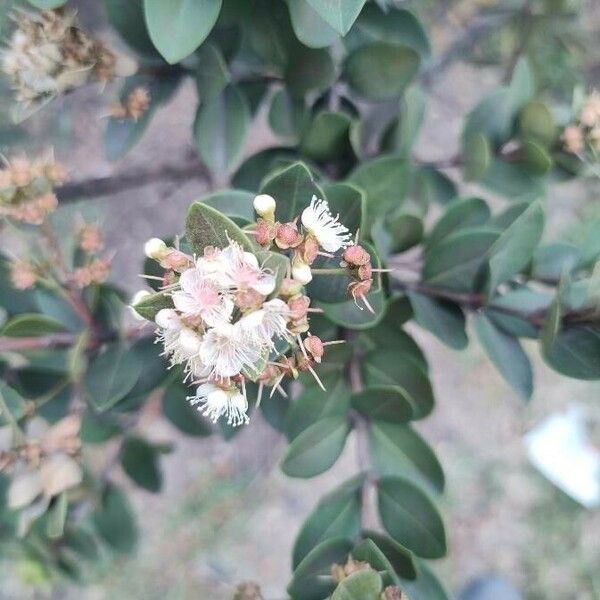
Plant Overview
Known as the Guayabillo or White Arrayán, this elegant evergreen is a star of the Andean high forests. Its name leucoxyla literally translates to "white wood," referencing its beautiful, smooth, pale trunk that stands out in a dense thicket. Often found clinging to misty mountainsides, it brings a touch of wild cloud-forest magic to any botanical collection.
🔍 How to Identify
- 🍃 Glossy Foliage: The leaves are small, leathery, and elliptic with a deep green shine. If you crush one between your fingers, you’ll be rewarded with a refreshing, spicy-sweet aroma.
- ☁️ Cloud Flowers: The blooms are delicate and white, featuring a "fuzzy" appearance caused by a mass of long, protruding stamens. They look like tiny explosions of light against the dark leaves.
- 🪵 Pale Bark: True to its name, the bark is smooth and light-colored, often peeling slightly in older specimens to reveal a creamy, tan texture underneath.
🏡 In Your Garden
- 🏔️ Mountain Roots: Because it originates from high-altitude regions, it appreciates cooler nights and consistent humidity. It is not a fan of stagnant, waterlogged soil—think "moist but airy" to mimic its native slopes.
- 🕊️ Wildlife Magnet: This plant is a literal bird feeder. The small, dark berries that follow the flowers are a favorite for local avian species, while the fragrant blooms act as a banquet for bees and butterflies.
⚠️ Safety & Toxicity
- ✅ General Safety: The Guayabillo is generally considered non-toxic to humans and common household pets.
- 🐾 Digestive Note: While not poisonous, the high concentration of essential oils in the leaves can cause mild stomach upset in curious cats or dogs if chewed in large quantities.
- 🫐 Berry Wisdom: The fruits are technically edible and used in some traditional South American preserves, but they should only be consumed when fully ripe and properly identified.
✨ Fun Fact
The Myrcianthes leucoxyla is a member of the Myrtaceae family, making it a close cousin to the common Guava and the aromatic Clove! In its native regions, its wood is so dense and durable that it was historically prized for making high-quality tool handles and walking sticks.

Detailed Care Instructions

Place in a bright room that is sun drenched almost all day. Or directly in a south-facing window.

When the top few inches of soil dry out, water your plants. If the top few inches of soil are still moist, do not water your plant. Wait a few days, then poke your finger into the soil to see if anything has changed. Overwatering poses a disease risk, such as the development of fungal diseases in the roots. These plants have adaptations in there leaves that allow them to survive in low water supply.








