Plant Overview
Often called the "Pineapple Tree" or "Monkey Fruit," Myrianthus arboreus is a striking tropical evergreen native to the lush forests of Central and West Africa. It is beloved for its dramatic, oversized foliage and its bizarre, knobby fruit that tastes surprisingly like a zesty, sweet-and-sour pineapple. In many African cultures, it is a "forest pharmacy," providing both nutrition and traditional remedies.
🔍 How to Identify
- 🖐️ The "Giant Hand" Leaves: The most striking feature is its massive, palmate leaves. They are deeply divided into 5 to 7 leaflets, radiating from a single point like the fingers of a giant’s hand.
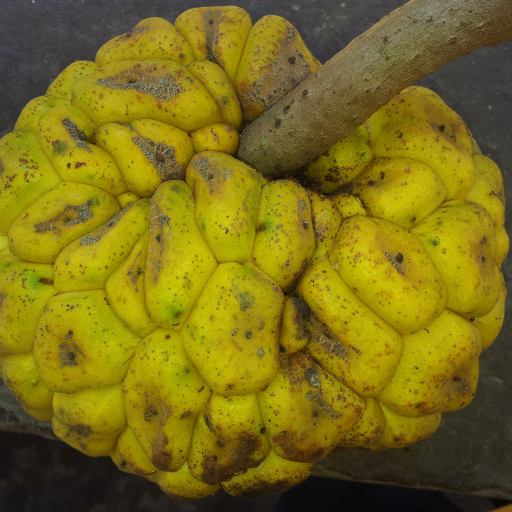
- 🍍 Brain-like Fruit: The fruit is a yellowish-orange, lumpy syncarp. It looks somewhat like a cross between a pineapple and a golden brain, composed of many small, fleshy segments.
- 🌳 Sprawling Form: It typically grows as a medium-sized tree with a spreading, low-branching crown, often reaching about 10–15 meters in the wild.
🏡 In Your Garden
- 💧 A Thirsty Tropical: This plant is accustomed to the humidity of the African rainforest. It thrives in moist, well-draining soil and will struggle significantly if the air or soil becomes too dry.
- ☁️ Shade Comfort: Unlike many fruiting trees that demand full sun, Myrianthus arboreus is an understory specialist. It prefers dappled light or partial shade, making it a great choice for "food forest" layers beneath taller canopy trees.
- 🌱 Rich Soil Focus: Because it grows rapidly, it requires soil rich in organic matter. Mulching heavily with leaf litter helps mimic its natural forest floor habitat.
⚠️ Safety & Toxicity
- 🍎 Safe for Consumption: The pulp surrounding the seeds is edible and highly nutritious, often eaten fresh or used in preserves.
- 🥦 Leaf Safety: The very young, tender leaves are frequently boiled and eaten as a vegetable in West African soups.
- 🐾 Pet Caution: While the fruit is non-toxic to humans, there is limited data on its effects on domestic pets (cats/dogs). As with any exotic tropical plant, keep curious chewers away to avoid digestive upset.
✨ Fun Fact
In some regions of Nigeria and Cameroon, the young leaves of the Pineapple Tree are used to treat heart-related ailments and high blood pressure, earning it the nickname "The Heart Tree" in local folk medicine.

Detailed Care Instructions
To grow Myrianthus Arboreus, also known as the West African Twin Mantombo or Giant Stinging Nettle, you can follow these steps:
- Climate requirements: The plant thrives in tropical and subtropical regions. It prefers warm temperatures between 21 to 35°C (70 to 95°F). Ensure that you live in an appropriate zone for this plant.
- Soil: The plant prefers moist, well-draining soil with a slightly acidic to neutral pH. It does well in sandy loam or loamy soils.
- Planting: Start by selecting a healthy nursery-bought plant or propagate from a cutting. Dig a hole twice as wide and deep as the plant's root ball. Place the plant in the hole, backfill with soil, and gently firm it around the roots.
- Watering: Keep the soil evenly moist but not overly saturated. Water the plant regularly, especially during dry spells. However, avoid waterlogging the soil.
- Sunlight: Myrianthus Arboreus prefers partial shade to full sunlight. Make sure it receives at least 4-6 hours of direct sunlight each day.
- Fertilization: Use a balanced fertilizer during the growing season, typically spring to summer. Follow the manufacturer's instructions and apply it around the base of the plant. Avoid getting fertilizer on the leaves or stem.
- Pruning: Prune your Myrianthus Arboreus plant to control its size and shape. Remove any dead or damaged branches and keep a tidy appearance. Pruning can be done in late winter or early spring.
- Pests and diseases: Watch out for pests such as aphids or mealybugs, which can infest the plant. Treat them with insecticidal soap or a suitable pesticide if necessary. Ensure good airflow around the plant to prevent fungal diseases.
- Trellis or support: As the plant grows, it may benefit from a trellis, stakes, or similar support to keep it upright.
- Propagation: Myrianthus Arboreus can be propagated from stem cuttings. Take a cutting with a node, remove the lower leaves, and place it in a well-draining potting mix. Keep the soil moist and provide partial shade until new growth emerges.
Remember, Myrianthus Arboreus produces stinging hairs, so handle it with care using gloves when necessary. Observing these steps should help you grow this impressive plant successfully.
When watering Myrianthus Arboreus, it is important to consider two key factors: frequency and volume. First, let's discuss the frequency of watering. This plant generally prefers a consistent watering schedule, which means you should water it regularly throughout the year. However, during the growing season (usually spring and summer), you may need to increase the frequency slightly.
Now, let's talk about the volume of water. It is crucial to ensure that the soil around the plant is evenly moist, but not overly saturated. To achieve this, water the plant until you see water draining out of the drainage holes at the bottom of the pot. This ensures that the water has penetrated deeply enough into the soil. However, avoid letting the plant sit in standing water as it can lead to root rot.
To assess if your Myrianthus Arboreus needs water, you can perform a simple test. Stick your finger about an inch or two into the soil. If it feels dry at that depth, it's time to water. However, if it still feels slightly moist, you can wait another day or two before watering again.
Remember, it is essential not to overwater or underwater this plant. Finding the right balance will help keep it healthy and thriving.
To fertilize the Myrianthus Arboreus plant, follow these instructions:
- Start fertilizing the plant in early spring, just as new growth begins to appear.
- Choose a balanced, slow-release fertilizer with equal proportions of nitrogen, phosphorus, and potassium (N-P-K). A 10-10-10 or 20-20-20 fertilizer will work well.
- Dilute the fertilizer according to the package instructions, usually at a rate of 1 tablespoon per gallon of water.
- Water the plant thoroughly before applying the fertilizer to prevent root burn.
- Pour the diluted fertilizer solution evenly around the base of the plant, avoiding direct contact with the foliage.
- Repeat the fertilization process every four to six weeks throughout the growing season, which typically lasts until late summer or early fall.
- During the dormant winter period, suspend fertilization to allow the plant to rest.
- Monitor the plant for any signs of over-fertilization, such as leaf burn or discoloration. If this occurs, discontinue fertilizing for a few months and flush the soil with water to remove excess nutrients.
- Additionally, consider incorporating organic matter, such as compost or well-rotted manure, into the soil during planting or as a top dressing. This will provide long-term slow-release nutrients and improve soil quality.
Remember to adjust the fertilization routine based on your plant's specific needs and the recommendations of a local gardening expert if necessary.
When choosing soil for Myrianthus arboreus, it is important to consider certain characteristics to support proper growth. This plant thrives in a well-draining soil mix that is nutrient-rich. A suitable soil composition for Myrianthus arboreus consists of a combination of organic matter, minerals, and the right pH level.
Firstly, it is ideal to use a soil mix that has good drainage capacity. This allows excess water to flow out of the soil, preventing waterlogging, which can lead to root rot and other issues. Adequate drainage ensures that the plant's roots have access to the oxygen they need for healthy growth.
Secondly, incorporating organic matter into the soil is crucial. Organic matter, such as compost or well-rotted manure, improves the soil structure, enhances nutrient retention, and promotes microbial activity. This supports the plant's overall health and provides the necessary nutrients for robust growth.
Additionally, the soil pH is a vital factor to consider. Myrianthus arboreus prefers a slightly acidic to neutral pH range between 5.5 and 7.0. It is advisable to test the pH of the soil and adjust it accordingly using soil amendments if needed. This ensures optimal nutrient availability for the plant's root uptake.
Furthermore, it is recommended to avoid heavy clay soils, as they tend to retain excessive moisture and impede proper root development. These types of soils can hinder the growth and vigor of Myrianthus arboreus. However, if the native soil is clay-based, it can be amended with organic matter, such as compost or peat moss, to improve its structure and drainage ability.
In summary, the ideal soil for Myrianthus arboreus should be well-draining, nutrient-rich, and have a slightly acidic to neutral pH. Incorporating organic matter into the soil helps improve its structure, nutrient retention, and microbial activity. By considering these factors, you can provide the optimal soil conditions for Myrianthus arboreus to thrive and reach its full potential.
Myrianthus arboreus is a species of plant that can be propagated through various methods, including:
- Seed Propagation: Collect mature seeds from the plant. Gently remove the pulp surrounding the seeds and wash them thoroughly. Fill a tray or a pot with a well-draining seed-starting mix, and sow the seeds on the surface. Lightly cover the seeds with a thin layer of soil and mist with water. Maintain a warm and humid environment by covering the tray with a plastic bag or using a propagator. Keep the soil moist but not soggy until germination occurs, which typically takes several weeks. Once the seedlings have developed a few sets of true leaves, they can be transplanted into individual pots.
- Stem Cuttings: Take 6 to 8-inch-long stem cuttings from a healthy and mature Myrianthus arboreus plant. Make the cut just below a node, ensuring the cutting has at least two nodes. Remove leaves from the lower half of the cutting and dip the cut end in a rooting hormone to enhance root development. Insert the cutting into a well-draining potting mix or a mix of peat moss and perlite. Place the pot in a warm and bright location but avoid direct sunlight. Mist the cutting regularly to maintain humidity levels and avoid letting the soil dry out completely. Roots will typically develop within 4-6 weeks, at which point the cutting can be potted into its own container.
- Division: Divide a mature Myrianthus arboreus plant that has developed multiple clumps or shoots. Gently remove the plant from the pot or ground and carefully separate the clumps or shoots into individual sections. Ensure that each division has a sufficient amount of roots attached. Plant the divided sections into separate pots filled with well-draining soil. Water thoroughly and place the pots in a warm and shaded area. Over time, the plants will establish their root systems and can be grown as separate individuals.
Overall, Myrianthus arboreus can be easily propagated through seed propagation, stem cuttings, and division techniques. It is essential to provide appropriate care, including suitable soil, sufficient light, and proper watering, to ensure successful propagation.








