Plant Overview
Known for its lush, feathery texture that looks like it belongs in a prehistoric jungle, Myriophyllum aquaticum—commonly called Parrot’s Feather—is a dual-natured aquatic beauty. While its delicate, lime-green plumes are a favorite for pond hobbyists looking to add height to the water’s surface, it is a persistent traveler from the Amazon that can quickly take over any space it occupies.
🔍 How to Identify
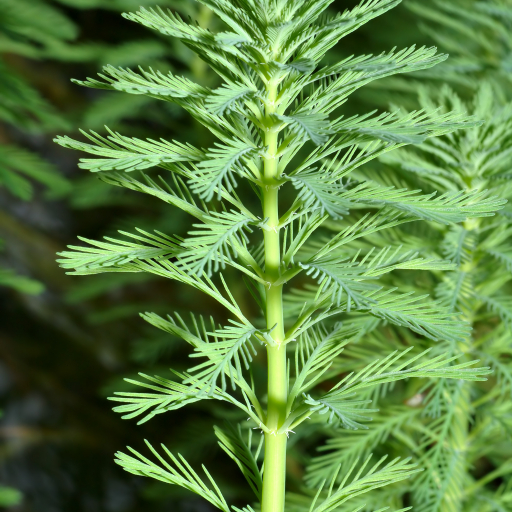
- 🪶 Feathery Foliage: The leaves are finely divided into thread-like segments, giving the plant a soft, "fuzzy" appearance similar to a bird's feather.
- 🌀 Whorled Arrangement: Leaves grow in circles (whorls) of four to six around a central, somewhat stiff stem.
- 💧 Emergent vs. Submerged: Unlike many aquatic plants, Parrot's Feather grows both underwater (where leaves are limp) and up to a foot above the water's surface (where leaves are stiff, waxy, and water-repellent).
🏡 In Your Garden
- 🌿 Growth Control: This plant grows aggressively via fragmentation. In a backyard pond, it is a fantastic oxygenator and provides a safe haven for fish fry, but you must be prepared to prune it regularly to keep it from choking out other species.
- 🌊 Stagnant Water Specialist: It thrives in quiet, slow-moving water and isn't picky about soil. It can even grow as a "floating" plant if its stems are long enough to reach the nutrients in the water column, though it prefers to root in the pond's silty bottom.
⚠️ Safety & Toxicity
- 🟢 Non-Toxic Status: Parrot's Feather is generally considered non-toxic to humans, dogs, cats, and horses. It is a popular choice for goldfish and koi ponds as it provides shade and hiding spots.
- 🚫 Environmental Hazard: The primary "danger" of this plant is ecological. It is highly invasive in many regions. Never discard trimmings into local waterways or storm drains, as a single tiny fragment can start a massive new colony that smothers local ecosystems.
✨ Fun Fact
The emergent leaves of the Parrot's Feather are coated in a special waxy cuticle that makes them completely waterproof. If you submerge the top of the plant and pull it back out, the water will bead off instantly, leaving the leaves perfectly dry!

Detailed Care Instructions
| Lighting | Full Sun |
| Toxicity | Poisonous |
| Hardiness Zones | Max 13 |
To grow Myriophyllum aquaticum (also known as parrot feather), you can follow these steps:
- Choose a suitable container: Select a container with a wide base and at least 6-8 inches deep. Make sure it has good drainage holes.
- Fill the container with aquatic soil: Rinse the soil to remove any impurities. Fill the container about halfway with the soil.
- Plant the parrot feather: Gently place the parrot feather plant in the soil, ensuring that the roots are covered but the crown remains above the soil surface. You can use your fingers or tweezers for precise placement.
- Add water: Slowly fill the container with water until it covers the roots and crown of the plant. It can be tap water, but allowing it to sit out for a day or two before using will help dissipate any chlorine.
- Provide adequate lighting: Place the container in a location that receives bright, indirect light. Ideally, the plant should have access to 8-10 hours of light per day. If you're growing indoors, you may need to use artificial aquarium lights.
- Maintain water temperature: Parrot feather grows best in water temperatures between 60-80°F (15-27°C). Avoid extreme temperature fluctuations as it can stress the plant.
- Monitor and adjust water levels: Check the water level daily, ensuring it covers the roots and crown of the plant. Top up with water as needed to maintain the desired level.
- Fertilize regularly: Use a liquid aquarium fertilizer specifically formulated for aquatic plants. Follow the instructions on the packaging to determine the appropriate dosage.
- Prune as necessary: Parrot feather can grow rapidly and may require regular pruning to maintain its shape and prevent overcrowding. Trim back any excessive growth from the top of the plant as needed.
- Control algae growth: To prevent excessive algae growth, ensure the water is clean and not exposed to direct sunlight. You can also introduce algae-eating fish or snails to help keep it in check.
- Avoid introducing parrot feather into natural water bodies: Parrot feather is considered an invasive species in many regions, so it's important not to release it into natural water bodies to prevent ecological damage.
By following these steps, you should be able to successfully grow your Myriophyllum aquaticum plant.

Place in a window with dappled sun or a spot in the middle of a room. Or directly in a window facing west or east.
Myriophyllum Aquaticum is an aquatic plant that requires regular watering to thrive. To water the plant, it is recommended to fill the aquarium or pond it is planted in with clean, fresh water that is free from any harmful chemicals. The water should be at a temperature between 70-82°F (21-28°C) to promote healthy growth. It is important to keep the water level consistent and at a depth that allows the entire plant to be submerged. The plant should receive at least six hours of direct sunlight each day, which will help it to grow and stay healthy. If necessary, additional lighting can be added to ensure the plant receives enough light. Regularly checking the water quality and pH level is also essential to ensure the plant grows properly. Adding fertilizer or plant food to the water can help to provide the plant with essential nutrients it needs to thrive. Overall, proper watering, lighting, and nutrient management are key to maintaining a healthy Myriophyllum Aquaticum plant.
To fertilize this aquatic plant, first determine the nutrient content of your water source. If the water is low in nutrients, consider adding a fertilizing solution that is high in phosphorous and nitrogen. This can be applied directly to the water or to the substrate. Be sure to monitor nutrient levels regularly and adjust fertilizer dosage accordingly. Additionally, provide adequate lighting and ensure the plant has access to CO2 for optimal growth and health. Finally, perform routine water changes to maintain water quality and prevent nutrient buildup.
The best soil for the plant in question should be rich in nutrients and have a neutral to slightly acidic pH level. It should also be able to retain moisture without becoming waterlogged. A mixture of peat moss, perlite, and vermiculite is a suitable choice, as it provides good drainage and aeration while also retaining moisture. Avoid using heavy soils or those that contain high levels of sand or clay, as they can compact and prevent oxygen from reaching the plant's roots.
To propagate this aquatic plant, you can start by taking cuttings from healthy stems. The cuttings should be at least 4-5 inches long and have several leaves. Then, remove the lower leaves from the cutting to expose the nodes where the roots will grow.
Place the cutting in a jar or vase filled with water, making sure the nodes are fully submerged. Change the water every couple of days to keep it fresh and oxygenated.
After a few days, you should see small roots emerging from the nodes. Once the roots are at least 2-3 inches long, you can transplant the cutting into a pot or directly into your aquarium substrate.
Make sure to provide sufficient lighting and nutrients to encourage healthy growth. Over time, your propagated cuttings will grow into new, full-sized plants.








