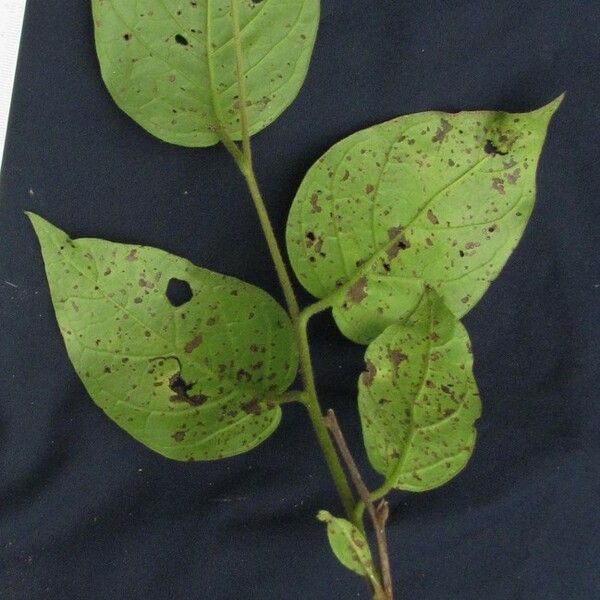
Plant Overview
Known as the Chigger-nut or Soldier Bush, this resilient woody vine is a master of the scramble. Native to the coastal hammocks of Florida, the Caribbean, and Central America, it is often found weaving its way through thickets to reach the sun. While its name might sound a bit itchy, this plant is actually a vital sanctuary for tropical butterflies and a staple of wild, coastal landscapes.
🔍 How to Identify
- 🌀 The "Scorpion" Blooms: The tiny, greenish-white flowers grow along one side of a branching stem that curls at the tip, mimicking the shape of a scorpion's tail.
- 🍃 Elliptic Leaves: The leaves are pointed, slightly fuzzy to the touch, and grow in an alternating pattern along the wiry, rambling stems.
- 👁️ Dotted Berries: It produces small, fleshy white fruits (drupes) that feature distinct black spots, making them look like tiny, prehistoric eyes peering out from the foliage.
🏡 In Your Garden
- 🧗 The Scrambler: Unlike vines that use tight tendrils, the Chigger-nut is a "scrambling" shrub. It uses its stiff, woody branches to lean on and grow over neighboring plants, making it an excellent choice for a wild-looking privacy screen or a "living fence."
- 🦋 Wildlife Hub: If you want a butterfly garden, this is a must-have. It is a high-value nectar source for various species, including the dainty Hairstreaks and the vibrant Julia Heliconian.
- 🏜️ Coastal Toughness: It is incredibly salt-tolerant and drought-resistant once established, thriving in the sandy, well-draining soils where other ornamental plants might struggle.
⚠️ Safety & Toxicity
- 🐾 Pet & Child Safety: While not famously deadly, the berries are not edible for humans or pets. Ingestion can lead to mild stomach upset or nausea, so it’s best kept out of reach of curious toddlers or nibbling dogs.
- 🐜 Misleading Name: Despite being called "Chigger-nut," the plant does not actually produce or attract chiggers. The name likely refers to the small, nut-like appearance of the fruit or its presence in the dense, scrubby areas where these mites are often found.
✨ Fun Fact
The genus name Myriopus is derived from the Greek words for "ten thousand" and "foot." This is a nod to the plant's sprawling growth habit—it looks as though it has ten thousand little wooden feet walking over the surrounding landscape!

Detailed Care Instructions

Place in a bright room that is sun drenched almost all day. Or directly in a south-facing window.

Some plants require more regular watering than others, which should be done every few days. It's critical to maintain the soil moist all of the time. The water requirements of the same plant placed in pots with varying sizes will differ. Because the water in the smaller pot evaporates faster than the water in the larger pot, it will require more watering. Regardless of pot size, the surface should constantly be maintained moist.








