Plant Overview
Often called the Leathery Myrsine, this resilient evergreen is a champion of the Americas, stretching from the misty mountains of Mexico to the vibrant forests of Argentina. It is a favorite among birdwatchers because its tiny, jewel-like berries act as a natural buffet for local wildlife. With its glossy, tough foliage and "pioneer" spirit, it brings a touch of wild, tropical elegance to any landscape it inhabits.
🔍 How to Identify
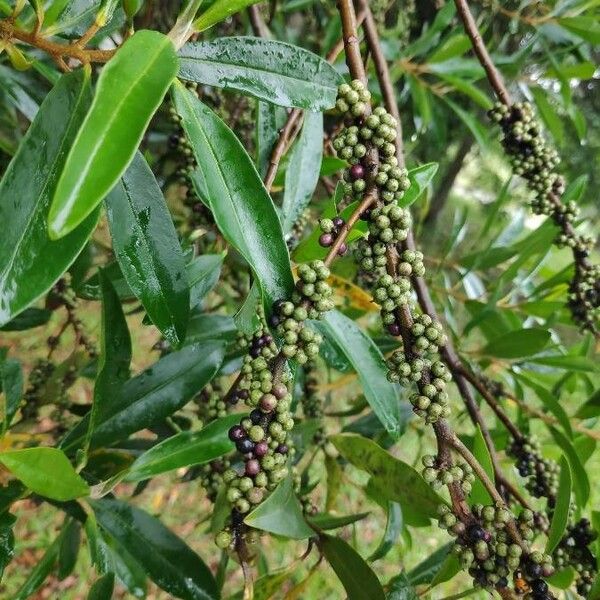
- 🍃 The Foliage: True to its name (coriacea), the leaves are thick, leathery, and oblong. They feature a smooth, waxy surface that helps the plant shrug off intense sun and wind.
- 🌸 Cluster Flowers: It produces tiny, inconspicuous flowers that are greenish-white or cream-colored. Interestingly, they often grow in tight clusters directly along the woody branches rather than just at the tips.
- 🔮 Beaded Berries: The fruit is a small, round drupe. These berries transition from a pale green to a deep, dark purple or black when ripe, looking almost like polished beads pinned to the stems.
🏡 In Your Garden
- 🌱 Restoration Hero: In the wild, this plant is a "pioneer species," meaning it is one of the first to grow back in cleared or damaged areas. In a garden setting, this translates to a hardy, adaptable plant that helps stabilize soil and creates a lush privacy screen.
- 🐦 Wildlife Magnet: If you are looking to start a backyard sanctuary, this is a top-tier choice. The berries are high in energy for migratory birds, and the dense branching provides excellent nesting sites for smaller species.
⚠️ Safety & Toxicity
- 🟢 General Status: Myrsine coriacea is generally considered non-toxic to humans and is not known for aggressive allergens.
- 🐾 Pet Caution: While not listed on major "deadly" lists, the consumption of any ornamental berries can cause mild gastrointestinal upset (vomiting or diarrhea) in curious cats and dogs. It is best to admire the berries on the branch rather than in the bowl.
✨ Fun Fact
The specific epithet coriacea comes from the Latin word corium, meaning "leather." This "leather-leaf" adaptation is a clever evolutionary trick that allows the plant to thrive in both humid rainforests and drier, wind-swept mountain ridges!

Detailed Care Instructions
Myrsine Coriacea, also known as downy myrsine, is a tropical plant native to Hawaii. Here are some tips on how to successfully grow and care for this plant:
- Light: Myrsine Coriacea prefers partial to full sun. Make sure it receives at least 4-6 hours of bright, indirect sunlight each day.
- Soil: Use a well-draining potting mix that is rich in organic matter. A mix of peat moss, perlite, and sand works well for Myrsine Coriacea.
- Watering: Keep the soil consistently moist but not waterlogged. Water your plant when the top inch of soil feels dry to the touch. Avoid letting the soil dry out completely.
- Temperature and Humidity: Myrsine Coriacea thrives in warm, humid conditions. Keep the plant in a room with temperatures between 60-85°F (15-29°C) and a humidity level of at least 50%.
- Fertilization: Feed your Myrsine Coriacea with a balanced liquid fertilizer every 2-4 weeks during the growing season (spring and summer). Dilute the fertilizer to half strength to prevent burning the roots.
- Pruning: Regularly prune your Myrsine Coriacea to maintain its shape and promote bushy growth. Remove any dead or yellowing leaves and trim back any leggy or overgrown branches.
- Pests and Diseases: Keep an eye out for common houseplant pests like spider mites, mealybugs, and aphids. If you notice any signs of infestation, treat the plant with insecticidal soap or neem oil.
- Repotting: Repot your Myrsine Coriacea every 1-2 years in the spring. Choose a slightly larger pot with good drainage and fresh potting mix.
By following these tips, you can successfully grow and care for Myrsine Coriacea plant. Enjoy watching it thrive and flourish in your home!

Place in a window with dappled sun or a spot in the middle of a room. Or directly in a window facing west or east.

Myrsine Coriacea plants should be watered thoroughly but infrequently to mimic their natural watering patterns in their native habitat. When watering, make sure to water the soil evenly and allow excess water to drain out of the bottom of the pot. Avoid overwatering as this can lead to root rot and other problems.
To determine when to water your Myrsine Coriacea plant, check the top inch of soil for dryness. If the soil feels dry to the touch, it's time to water. During the growing season, typically spring and summer, your plant may require more frequent watering. In the dormant season, usually fall and winter, you can reduce the frequency of watering.
It's important to water your Myrsine Coriacea plant in the morning to allow the foliage to dry out during the day and reduce the risk of fungal diseases. Avoid watering the leaves directly, as this can also increase the chances of disease. Instead, aim to water the soil around the base of the plant.
In addition to regular watering, consider using a humidifier or placing a tray of water near your plant to provide additional moisture in the air. This is especially important if you live in a dry climate or if your plant is kept indoors. Proper watering is essential for the health and vigor of your Myrsine Coriacea plant, so be sure to monitor its moisture levels regularly.
To fertilize the plant, use a balanced, slow-release fertilizer in the early spring before new growth appears. Follow the instructions on the fertilizer packaging for proper application rates. Apply the fertilizer evenly around the base of the plant, taking care not to let it come into contact with the foliage. Water the plant well after fertilizing to help the nutrients penetrate the soil. Repeat this process once or twice throughout the growing season, but avoid fertilizing in late fall or winter as the plant is not actively growing during this time.
Myrsine coriacea plants prefer well-draining soil with a slightly acidic pH level. A good soil mixture for these plants would be a combination of peat moss, perlite, and pine bark. This type of soil will allow for proper drainage while also retaining some moisture for the plant's roots. Additionally, adding some organic matter, such as compost or aged manure, can help provide essential nutrients for healthy growth. It is important to avoid heavy clay soils, as they can cause waterlogged conditions that are detrimental to Myrsine coriacea plants.
Myrsine Coriacea plants can be propagated by taking stem cuttings. Here is a step-by-step guide:
- Select a healthy and mature plant from which to take cuttings.
- Use a sharp, clean pair of garden shears to cut a 4-6 inch piece of stem from the plant. Make sure the cutting has at least 2-3 leaf nodes on it.
- Remove the lower leaves from the cutting, leaving only a few leaves at the top.
- Dip the cut end of the stem cutting into rooting hormone to encourage root growth.
- Plant the cutting into a small pot filled with well-draining soil. Make sure the cutting is planted deep enough so that it stands upright.
- Water the cutting thoroughly and place it in a warm, bright location with indirect sunlight.
- Keep the soil evenly moist, but not waterlogged, and mist the leaves regularly to maintain humidity.
- After a few weeks, the cutting should develop roots. Once roots are established, transplant the cutting into a larger pot or into the garden.








