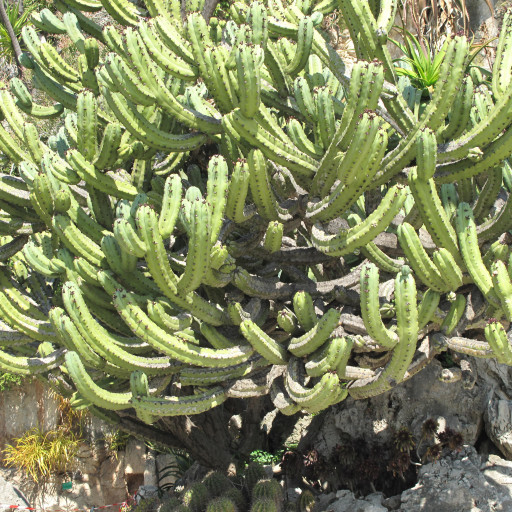
Plant Overview
Known as the Blue Candle Cactus or Whortleberry Cactus, this striking succulent is a masterpiece of natural geometry. Originating from the high deserts of Mexico, it is beloved for its architectural "candelabra" shape and its distinct, glaucous blue-gray skin that looks like it has been dusted with fine powder. In its native habitat, it isn't just an ornamental plant; it’s a generous provider of sweet, dark fruits that are a staple in local markets.
🔍 How to Identify
- 🌵 The Stem: Thick, upright branches with a distinct waxy, blue-green coating (bloom) that helps the plant reflect intense sunlight.
- 📐 The Ribs: Typically features 5 to 8 deep, angular ribs that create a clean, geometric silhouette, giving the plant its species name geometrizans.
- 🕷️ The Spines: Small, dark, almost black spines grow from neat areoles along the ribs. They are relatively short compared to other cacti, often appearing like tiny stars.
- 🍇 The Fruit: In summer, it produces small, dark purple berries that look remarkably like blueberries or whortleberries.
🏡 In Your Garden
- ☀️ Sun & Color: The famous blue hue is actually a protective layer. If the plant is kept in too much shade, it will turn a standard forest green; it needs bright, indirect light to maintain its "Blue Candle" glow.
- 📈 Growth Habit: This is one of the fastest-growing columnar cacti. While it starts as a single "candle," it will eventually branch out from the base to create a massive, tree-like structure.
- 💧 Winter Rest: Unlike tropical plants, this cactus enters a deep dormancy in winter. It prefers to stay completely dry during cold months to prevent root rot, as its metabolism slows down significantly.
⚠️ Safety & Toxicity
- 🛡️ Status: Generally non-toxic and safe for households.
- 🌵 Physical Hazard: While the spines are short, they are very sharp and stiff. Place the plant away from high-traffic areas where children or pets might accidentally brush against the geometric ribs.
- 😋 Edibility: The small purple fruits (known as Garambullos) are completely edible and delicious, often used in Mexico for jams, ice cream, and juices.
✨ Fun Fact
In Mexico, the Myrtillocactus geometrizans is often used as a "living fence." Because of its fast growth and sturdy, branching habit, farmers plant them in rows to create a beautiful, blue, and very prickly security wall!

Detailed Care Instructions
| Humidity | Dry |
| Lighting | Full Sun |
| Toxicity | Non-Toxic |
| Difficulty | Easy |
| Hibernation | Cold Period |
| Temperature | 20°C - 35°C |
| Hardiness Zones | Min 9B |
To successfully grow Myrtillocactus geometrizans (also known as the Blue Candle or Bilberry Cactus), follow these steps:
- Variety selection: Choose a healthy plant from a reliable nursery or reputable seed source. Look for a Myrtillocactus geometrizans that has a thick, upright stem and no signs of disease or damage.
- Planting: Select a well-draining pot or container deep enough to accommodate the long roots of the cactus. Use a cactus-specific potting mix or create your own using equal parts of standard potting soil, sand, and perlite. Ensure the container has drainage holes to prevent waterlogged soil.
- Positioning: Myrtillocactus geometrizans thrives in full sun or bright, indirect light. Place the plant near a south-facing window or outdoors in an area that receives at least six hours of direct sunlight daily.
- Watering: Water the cactus sparingly, only when the soil is completely dry. During the growing season (spring and summer), water roughly every two weeks and reduce watering frequency in winter. Overwatering can lead to root rot, so ensure the excess water drains out of the pot.
- Temperature and humidity: This cactus variety can tolerate a range of temperatures but prefers temperatures between 65°F and 85°F (18°C to 29°C). It can also tolerate lower temperatures briefly, but avoid exposing it to freezing temperatures. Moderate humidity levels are suitable for Myrtillocactus geometrizans, so no extra humidity adjustments are necessary.
- Fertilization: Feed the cactus once every two to three months with a balanced cactus or succulent fertilizer during the growing season. Follow the package instructions for the proper amount to apply.
- Pruning and maintenance: Prune out any dead or damaged branches using clean, sterilized pruners. Be cautious of the sharp spines on the cactus while pruning. Overly long branches can also be trimmed to maintain a desired shape or size.
- Propagation: Myrtillocactus geometrizans can be propagated through stem cuttings. Allow the cut end of the cutting to dry and callus over for a few days before planting it in well-draining soil. Keep the cutting in a warm, bright location and mist occasionally to prevent dehydration. Rooting typically occurs within a few weeks.
Remember, cacti are slow-growers, so be patient. Providing the correct growing conditions and minimal interference will help your Myrtillocactus geometrizans plant thrive and grow over time.

Place in a bright room that is sun drenched almost all day. Or directly in a south-facing window.

To properly water this plant, you should first start by checking the soil's moisture level. Stick your finger into the soil to feel how dry or wet it is. Only water the plant when the top layer of soil feels dry to the touch.
When watering, use room temperature water and pour it onto the soil around the base of the plant, making sure not to get water on the leaves or stem. Allow the water to fully soak in, but make sure not to overwater. It's crucial not to let the plant sit in standing water, so make sure the pot has drainage holes to allow excess water to escape.
During the winter months, reduce watering as the plant goes into dormancy and won't need as much water. Monitor the soil's moisture level regularly to prevent underwatering or overwatering.
- Choose a well-draining pot or soil for planting.
- Add a slow-release fertilizer to the soil before planting.
- During the growing season, fertilize with a balanced fertilizer every two to three weeks.
- Use a cactus or succulent fertilizer with low nitrogen levels.
- Water the plant thoroughly before fertilizing to avoid burning the roots.
- Apply fertilizer according to the instructions on the label.
- Reduce fertilization during the winter months when the plant is dormant.
- Monitor the plant for signs of over-fertilization, such as yellowing or wilting leaves.
Myrtillocactus Geometrizans plant thrives in a well-draining soil mix that is rich in organic matter and nutrients. It is important to use a soil that provides good aeration and drainage to prevent waterlogging and root rot.
One suitable soil mix for this plant can include a combination of perlite, coarse sand, peat moss, and loamy soil. This mix helps to create a porous soil that allows excess moisture to drain away from the plant's roots.
It is important to ensure that the chosen soil is free from harmful chemicals or contaminants that could affect the plant's growth. Additionally, the soil pH should be maintained between 6.0 and 7.5 to provide optimum conditions for the plant's growth.
When planting the Myrtillocactus Geometrizans plant, it is recommended to add some slow-release fertilizer to the soil to supply nutrients for the plant's growth. It is also important to water the plant regularly but avoid over-watering to prevent soil saturation.
Overall, selecting the right soil mix for the Myrtillocactus Geometrizans plant is critical to its health and growth, and can help to ensure a thriving, beautiful plant in your garden or home.
To propagate this plant, you will need to obtain a stem cutting that is at least 4 inches long. Use a sharp, sterile knife to make a clean cut at a 45-degree angle. Allow the cutting to dry for a few days to prevent it from rotting.
Once the cutting has dried, you can plant it in a well-draining cactus mix. Ensure that the mix is moist but not waterlogged. Bury the cutting about an inch deep, and gently press the soil around it.
Place the potted cutting in bright, indirect light and keep it at a temperature of 70-80°F. In about 2-3 weeks, you should start to see roots forming. After about a month, the cutting should have established roots and begun to grow.
Once the new plant has grown a few inches tall, you can move it to a larger pot or plant it in your garden. Water the plant sparingly, only when the soil is dry to the touch. With proper care, your propagated plant will grow into a beautiful new addition to your garden.
Common pests of the bilberry cactus include Scale insect, mealybugs, spider mites, thrips. Make a habit of checking your bilberry cactus frequently for pests so that any infestations can be caught and managed early.








