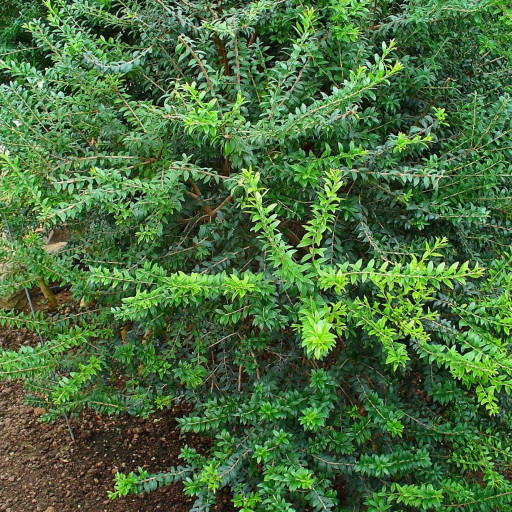
Plant Overview
Known as the "Common Myrtle," this aromatic evergreen has been a symbol of love, peace, and immortality for millennia. In ancient Greece and Rome, it was sacred to the goddesses Aphrodite and Venus, often woven into crowns for poets and brides. Today, it remains a garden favorite for its elegant "star-burst" white blossoms and the spicy, refreshing fragrance its leaves release whenever they are brushed.
🔍 How to Identify
- 🍃 Glossy Foliage: The leaves are small, pointed, and lance-shaped, growing in opposite pairs along the stem. They are a deep, lustrous green and contain tiny translucent oil glands that are visible when held up to the light.
- 🌸 Fuzzy Flowers: In mid-to-late summer, the plant produces delicate white flowers. They are easily recognized by their massive cluster of long, protruding stamens, which give the bloom a soft, "exploded" star appearance.
- 🫐 Blue-Black Berries: After flowering, the plant develops small, oblong berries that turn a deep purplish-black (or occasionally white) as they ripen in the autumn.
🏡 In Your Garden
- ☀️ Sun-Drenched Roots: Originating from the Mediterranean, Myrtle craves heat and bright light. While it is relatively hardy, it performs best when planted against a warm, south-facing wall which mimics the sun-soaked rocky hillsides of its native home.
- ✂️ The Art of Shaping: Because it grows at a moderate pace and has dense, small foliage, it is one of the premier choices for topiary or formal hedging. It tolerates heavy pruning, though over-trimming can reduce the number of fragrant flowers you’ll see in the summer.
- 🚿 Drainage is Vital: This plant hates "wet feet." It requires gritty, well-draining soil to prevent root rot. Once established, it is remarkably drought-tolerant, making it an excellent choice for xeriscaping or low-water gardens.
⚠️ Safety & Toxicity
- ✅ Safe Status: Myrtus communis is generally considered non-toxic to humans, dogs, and cats. It is a much safer alternative for households with pets than many other "evergreen" shrubs.
- 👅 Astringent Taste: While the berries and leaves are technically edible and used in Mediterranean cooking and liqueurs, they are very bitter and astringent when raw. This natural bitterness usually prevents children or pets from consuming any significant amount.
✨ Fun Fact
The British Royal Family has a 180-year-old tradition involving this plant. Every royal bride since Queen Victoria—including Queen Elizabeth II and the Princess of Wales—has carried a sprig of Myrtle in her wedding bouquet, all sourced from the same bush planted from Victoria's own wedding bouquet in 1845.

Detailed Care Instructions
| Color | White |
| Soil Ph | Neutral To Acidic (Below 8.3) |
| Humidity | Normal |
| Lighting | Part Sun |
| Soil Type | Well-Draining |
| Bloom Time | Summer |
| Difficulty | Hard |
| Plant Type | Evergreen Shrub/Tree |
| Hibernation | Cold Period |
| Mature Size | 3 To 15 Ft. Tall, 10 Ft. Wide |
| Native Area | Mediterranean |
| Temperature | 13°C - 24°C |
| Sun Exposure | Full Sun |
| Hardiness Zones | 8-11 |
To grow a Myrtus Communis plant (also known as common myrtle), you can follow these steps:
- Choose the right location: Myrtus Communis prefers full sunlight, so select a spot in your garden that receives at least 6-8 hours of direct sunlight every day. The plant can also tolerate some partial shade.
- Prepare the soil: Myrtus Communis prefers well-draining soil with a pH level between 5.5 and 7.5. If your soil is heavy or clayey, add some organic matter like compost or well-rotted manure to improve drainage and fertility.
- Planting: Dig a hole in the prepared soil that is slightly larger than the size of the pot the plant is currently in. Gently remove the plant from the pot, place it in the hole, and backfill with soil, firming it gently around the roots.
- Watering: After planting, water the Myrtus Communis thoroughly to settle the soil and eliminate air pockets. Water the plant regularly, keeping the soil evenly moist but not waterlogged. Adjust the watering frequency based on the weather conditions, as the plant may require more water during hot and dry periods.
- Pruning: Pruning helps to maintain the shape and size of the Myrtus Communis plant. You can prune it after flowering to remove any dead or diseased branches, as well as to shape the plant. Avoid heavy pruning, as it may diminish flowering.
- Mulching: Apply a layer of organic mulch around the plant to help retain moisture, suppress weed growth, and regulate soil temperature. This can be done annually.
- Fertilization: Apply a balanced, slow-release fertilizer formulated for shrubs in the spring to promote healthy growth and flowering. Follow the instructions on the fertilizer packaging for proper application rates.
- Pests and diseases: Common pests that can affect Myrtus Communis include aphids, scale insects, and spider mites. Regularly inspect your plants and treat any infestations promptly. Address any diseases, such as powdery mildew or leaf spot, by removing affected foliage and treating with appropriate fungicides if necessary.
- Winter protection: If you live in a region with cold winters, young Myrtus Communis plants may require winter protection. Apply a layer of mulch around the base of the plant to protect its roots from freezing temperatures.
By following these steps and providing proper care, your Myrtus Communis plant should thrive and grow into a healthy and beautiful addition to your garden.

Place in a bright room that is sun drenched almost all day. Or directly in a south-facing window.

Myrtus Communis is a plant that requires regular watering, especially during hot, dry weather. When watering this plant, it is important to avoid over-watering, as this can lead to root rot and other issues. Instead, you should aim to give the plant a moderate amount of water, allowing the soil to dry out slightly between each watering.
The best way to water Myrtus Communis is to use a watering can or hose with a gentle spray nozzle. Apply water to the soil at the plant base, taking care to avoid wetting the leaves or stem. Water slowly and evenly, allowing the water to soak into the soil before adding more.
During hot weather or periods of prolonged drought, you may need to water your Myrtus Communis more frequently. In these cases, it can be helpful to mulch around the base of the plant to help retain moisture in the soil.
It is important to note that Myrtus Communis is a Mediterranean plant that is adapted to relatively dry conditions. As such, it is important not to over-water this plant, as this can lead to root rot and other problems. Instead, aim to water this plant in a way that replicates its natural growing conditions.
- Choose an appropriate fertilizer for the plant, such as one with a balanced NPK ratio.
- Ensure that the plant is well-watered before fertilizing.
- Apply the fertilizer according to the package instructions, taking care not to over-fertilize.
- Spread the fertilizer evenly around the base of the plant, avoiding contact with the foliage.
- Water the plant thoroughly after fertilizing to help distribute the nutrients.
- Repeat the fertilization process every 4-6 weeks during the growing season.
- Monitor the plant for signs of nutrient deficiencies or excesses and adjust the fertilization schedule accordingly.
For optimal growth and health, Myrtus Communis plants should be planted in a well-draining soil that is rich in organic matter and nutrients. It is best to use a soil mix that is specifically formulated for Mediterranean plants, as this will contain the ideal combination of sand, loam, and peat moss to create the perfect growing environment. The pH of the soil should be slightly acidic, with a range of 5.5 to 6.5, and it should be kept moist but not overly wet. Adding a layer of mulch around the base of the plant will help to retain moisture and regulate soil temperature. When planting, be sure to position the plant in a location that receives full sun to partial shade, as Myrtus Communis requires plenty of light to thrive.
To propagate this plant, start by collecting cuttings from the tips of healthy, mature branches. Using a sterilized sharp knife, cut a 4-6 inch piece of stem that has several nodes on it. Remove the leaves from the bottom half of the stem and dip the cut end into rooting hormone.
Prepare a well-draining potting mix, and make a hole in the soil with a pencil. Insert the cutting into the soil, gently press it down, and water it until the soil is moist. Cover the pot with a clear plastic bag to create a humid environment.
Place the pot in a spot with bright, indirect light and maintain a temperature between 65-75°F. Keep the soil moist but not waterlogged, and mist the cutting occasionally to prevent it from drying out.
After a few weeks, check for roots by gently tugging on the cutting. If you feel resistance, roots have formed and you can remove the plastic bag. Continue to care for the plant by providing adequate light, water, and nutrients.
Common pests of the common myrtle include Scale insect, mealybugs, spider mites, aphids, thrips, whiteflies. Make a habit of checking your common myrtle frequently for pests so that any infestations can be caught and managed early.








