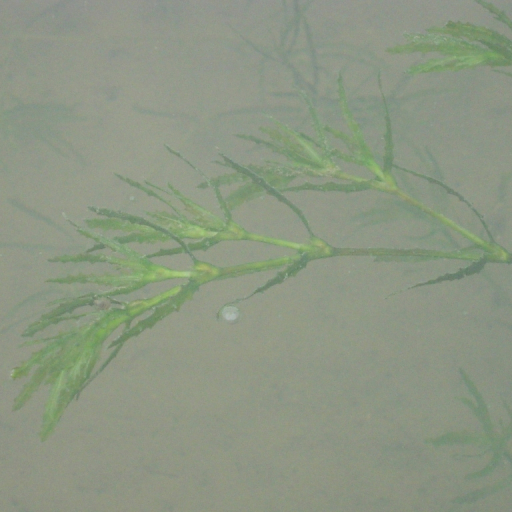
Plant Overview
Known as the Holly-leaved Naiad or Spiny Naiad, Najas marina is a striking underwater resident that brings a touch of "spiky" personality to freshwater and brackish ecosystems. While it might look like a miniature underwater holly bush, it is a sophisticated aquatic plant that acts as a vital sanctuary for fish and aquatic life. It is particularly famous for its brittle nature—if you try to bend it, it often snaps with a satisfying "crunch."
🔍 How to Identify
- 🌿 Holly-Like Leaves: The most distinct feature is the stiff, dark green leaves that have large, visible "teeth" along the edges, remarkably similar to a holly leaf.
- 🌵 Prickly Stems: Unlike many smooth aquatic plants, the stems of the Spiny Naiad are often covered in small, sharp prickles or bumps.
- 💎 Brittle Texture: The entire plant is notably rigid and brittle. It does not limp when taken out of the water; instead, it maintains its branched shape until it breaks.
🏡 In Your Garden or Pond
- 💧 Water Chemistry: This plant is a specialist. It thrives in alkaline (hard) water and can even handle brackish (salty) conditions where other freshwater plants would wilt.
- 🐟 Wildlife Nursery: If you have a large garden pond, this plant is a "biological skyscraper." Its dense, prickly branches provide excellent protection for fish fry and tadpoles, keeping them safe from larger predators.
- 🌱 Growth Habit: Because it is so brittle, broken fragments can easily drift away and start new colonies. In a contained environment, it is easy to manage, but in the wild, it can become quite dominant.
⚠️ Safety & Toxicity
- 🟢 Status: Non-toxic but physically abrasive.
- ✋ Details: Najas marina is not poisonous to humans, dogs, or cats. However, the serrated "teeth" on the leaves and the prickles on the stems can be surprisingly sharp. If you are cleaning a pond or handling large amounts of it, wear gloves to avoid minor skin irritation or tiny scratches.
✨ Fun Fact
Najas marina is a pioneer of "underwater romance." It is one of the few plants that is completely submerged throughout its entire life cycle—including pollination. It releases its pollen directly into the water currents, where it travels like a tiny submarine to find a female flower.

Detailed Care Instructions
To grow Najas marina (also known as water nymph or brittle naiad), you can follow these steps:
- Acquire Najas marina plants: You can often find Najas marina sold at aquarium stores or online. Look for healthy specimens with bright green leaves.
- Choose an appropriate container: Najas marina can be grown in a fish tank or a container with water. Make sure the container is large enough to accommodate the plant's growth, as Najas marina can get quite tall.
- Provide the right water conditions: Najas marina prefers to grow in temperatures between 68-82°F (20-28°C) and a pH level of 6.0-7.5. It also requires good water circulation and sufficient lighting.
- Plant the Najas marina: Gently plant the Najas marina in the substrate of the container or aquarium. Make sure the roots are covered and the plant is secure.
- Provide adequate lighting: Najas marina requires bright light for photosynthesis. You can use fluorescent or LED aquarium lights for this purpose. Aim to provide at least 10-12 hours of light per day.
- Maintain water quality: Monitor and maintain the water quality by regularly testing the pH, ammonia, nitrate, and nitrite levels. Keep the water clean and free from debris.
- Fertilize the plant: Najas marina is a nutrient-hungry plant and will benefit from regular fertilization. Use a liquid or substrate fertilizer designed for aquatic plants, following the recommended dosage.
- Prune as needed: Najas marina can grow rapidly and may need occasional pruning to prevent it from becoming overcrowded. Trim any excess growth to maintain the desired shape and ensure light reaches all parts of the plant.
- Keep an eye out for pests: Monitor for any signs of pests or diseases, such as algae growth or insect infestations. If necessary, treat the plant accordingly using appropriate methods and products.
By following these steps and providing the suitable growing conditions, your Najas marina plant should thrive and grow successfully.

Place in a bright room that is sun drenched almost all day. Or directly in a south-facing window.

To effectively water this plant, it is important to consider its growing conditions and the surrounding environment. Najas Marina plants typically thrive in aquatic environments, so it is crucial to keep the water level consistent and maintain proper filtration and/or aeration.
When watering, make sure to use clean, nutrient-rich water that is free from contaminants that could harm the plant. Monitor the water quality regularly and adjust the pH and nutrient levels as needed.
In addition to maintaining the water quality, it is also important to ensure that the plant receives enough light and nutrients to promote healthy growth. Consider placing the plant in a location that receives ample natural light, or provide artificial lighting if necessary. Adding a liquid or slow-release fertilizer to the water can also provide the necessary nutrients to support the plant's growth.
Lastly, watch for any signs of stress or disease, such as yellowing leaves or wilting, and adjust watering and care accordingly. With proper attention and care, Najas Marina can thrive and add beauty to any aquatic setting.
To fertilize this aquatic plant, use a high-quality plant fertilizer designed for aquatic plants. Follow the instructions on the package for dosage, but generally, you should add a small amount of fertilizer every 1-2 weeks. Avoid using too much fertilizer as this can harm the plant. Additionally, make sure the water in the tank is well-aerated, as this can improve nutrient uptake by the roots. Finally, consider adding some organic matter to the substrate, such as mulch or compost, to provide additional nutrients for the plant.
Najas Marina requires an aquatic substrate that is rich in nutrients and does not contain any sharp or abrasive materials that may damage its delicate roots. The ideal soil for this plant would be a fine-grained, nutrient-rich, and well-aerated aquatic substrate that provides a stable base for the plant to anchor and grow.
A good soil for Najas Marina would also have a neutral to slightly alkaline pH, as this plant thrives in a slightly alkaline environment. Additionally, the substrate should be able to retain moisture and provide good drainage, as Najas Marina does not tolerate waterlogged soil or stagnant water.
Some examples of suitable soil for Najas Marina include aquatic potting soils, aquatic plant gravel, and nutrient-rich clay or loamy soils. It is important to avoid using soils that contain sharp or abrasive materials such as sand or gravel, as this can damage the plant's delicate roots.
Overall, the key to successfully growing Najas Marina is to provide it with a nutrient-rich, well-aerated, and moisture-retentive substrate that promotes healthy root growth and provides a stable base for the plant to thrive.
To propagate this aquatic plant, one can take stem cuttings from the parent plant and replant them in a suitable aquatic environment. The stem cutting should be taken from the healthier and larger portion of the parent plant and trimmed to about 2-3 inches in length. It should be ensured that each stem cutting has 3-4 nodes.
The cuttings should be planted in a substrate that is rich in nutrients. It is recommended to use nutrient-rich substrates, such as clay, peat, or sand, as they provide essential nutrients to the plant. The cuttings should be planted in a container that is at least two-thirds filled with the substrate, and water should be added until the substrate is moist.
The container with the cuttings should be placed in an area that receives adequate sunlight and proper temperature. The temperature should be maintained at around 22-26°C. The water level should be kept at about an inch above the substrate surface, and the container should be placed in a location where the water receives enough sunlight.
After about two weeks, the cuttings should start developing roots. Care should be taken to ensure that the water level is maintained, and the substrate is moist. Once the roots have developed, the cuttings can be transplanted into the main tank.
Overall, propagating this aquatic plant is relatively straightforward, and it can be a rewarding experience for aquarium plant enthusiasts.








