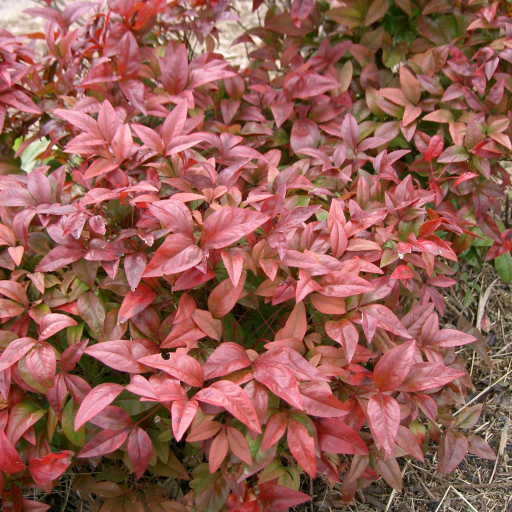
Plant Overview
Often called "Heavenly Bamboo," this elegant evergreen isn't actually a bamboo at all—it’s a member of the Barberry family. It earned its nickname from its upright, reed-like stems and delicate, lacy foliage that rustles in the wind. Originating from East Asia, it has been a garden staple for centuries, prized for its dramatic seasonal color shifts and vibrant clusters of winter berries.
🔍 How to Identify
- 🍃 Lacy Foliage: The leaves are bi-pinnately compound, giving them a delicate, fern-like appearance. They emerge bronze-red in spring, turn a lush green in summer, and transform into brilliant shades of crimson or purple when the winter chill hits.
- 🎋 Reed-like Stems: The plant grows in upright, unbranched clumps. The stems are slender and woody, mimicking the segmented look of bamboo canes.
- 🔴 Winter Berries: In late fall, the plant produces large, heavy panicles of bright red, marble-sized berries that persist through the coldest months, providing a splash of color against the snow.
🏡 In Your Garden
- 🌞 The Sun-Color Connection: While Nandina is incredibly hardy and can survive in deep shade, its famous "heavenly" colors are light-dependent. To get the most intense red and purple hues in the winter, it needs plenty of direct sunlight.
- ✂️ Strategic Pruning: Avoid "top-down" hedging. Because it grows from the base, the best way to maintain its shape is to cut the oldest, tallest canes back to the ground. This encourages fresh, leafy growth from the bottom and prevents the plant from looking "leggy."
- 🌱 Root Awareness: It spreads via underground runners (rhizomes). While it isn't as aggressive as true bamboo, it can be persistent once established, so choose your planting spot carefully.
⚠️ Safety & Toxicity
- 🚫 High Toxicity: All parts of the plant, especially the berries, contain cyanogenic glycosides (which can produce cyanide).
- 🐦 Warning for Birds: This is a major concern for wildlife lovers. While birds eat the berries, some species (like Cedar Waxwings) can fatally overdose on them if they gorge on the fruit during the winter.
- 🐾 Pets & Children: Keep this plant away from curious pets and toddlers. Ingestion can cause vomiting, labored breathing, and increased heart rate.
✨ Fun Fact
In its native Japan, Nandina is known as the "plant of friendship" and is traditionally planted near the doorways of homes. It is believed to have the power to "dispel bad dreams"—legend says that if you wake up from a nightmare, you should tell it to the Nandina outside your door to ensure the bad luck doesn't follow you.

Detailed Care Instructions
To grow a Nandina plant, also known as heavenly bamboo, you can follow these steps:
- Select a suitable planting location: Nandina plants prefer full sun to partial shade. Choose a well-drained area that is sheltered from strong winds.
- Prepare the soil: Loosen the soil and add organic matter such as compost to improve fertility and drainage. Nandina plants can tolerate a wide range of soil pH levels.
- Plant the Nandina: Dig a hole that is slightly larger than the plant's root ball. Place the plant in the hole and backfill with soil. Make sure the crown of the plant (where the roots meet the stem) is level with the soil surface.
- Water thoroughly: After planting, water the Nandina deeply to settle the soil around the roots. Provide regular water during the first year or two until the plant establishes itself.
- Mulch around the plant: Apply a layer of organic mulch, like shredded bark or wood chips, around the base of the Nandina to conserve moisture, suppress weeds, and moderate soil temperatures.
- Pruning: Nandina plants often benefit from light pruning to maintain their size and shape. Prune them in late winter or early spring before new growth begins. Remove any dead, damaged, or crossing branches, and thin out crowded growth.
- Fertilize: Feed the Nandina plant with a balanced, slow-release fertilizer in early spring and again in late summer or fall to promote healthy growth. Follow the instructions on the fertilizer package for application rates.
- Monitor for pests and diseases: Keep an eye out for common pests such as aphids, scale insects, and spider mites. If necessary, treat the plant with an appropriate insecticide or use natural methods like spraying with soapy water.
By following these steps and providing proper care, your Nandina plant should grow and thrive.

Place in a bright room that is sun drenched almost all day. Or directly in a south-facing window.

To water this plant, one should first check the soil moisture by inserting their finger about 1-2 inches into the soil. If the soil feels dry, it is time to water the plant. One should then slowly pour water directly onto the soil surrounding the base of the plant, making sure to avoid getting water on the foliage. The plant should be watered deeply, so that the water reaches the entire root zone. Once the water has been absorbed by the soil, any excess water should be drained away to prevent the roots from becoming waterlogged. It is important to water this plant regularly, especially during dry periods, but be careful not to overwater as this can cause root rot.
To fertilize your Nandina plant:
- Choose a balanced fertilizer with equal amounts of nitrogen, phosphorus, and potassium (N-P-K) or a slightly higher nitrogen content.
- Read the fertilizer package instructions to determine the appropriate dosage based on the size and age of your Nandina plant.
- Apply the fertilizer around the base of the plant, avoiding direct contact with the stems or leaves.
- Gently work the fertilizer into the top layer of soil using a garden trowel or cultivator, ensuring it is evenly distributed.
- Water the plant thoroughly after fertilizing to help the nutrients penetrate the soil and reach the roots.
- Repeat the fertilization process once or twice during the growing season, following the package instructions for frequency.
- Avoid over-fertilizing, as excessive nutrients can cause damage to the plant. Follow the recommended dosage and frequency to prevent this.
- Regularly monitor the plant's health and growth to determine if further fertilization is necessary.
- If you notice any signs of nutrient deficiency or poor growth, consider adjusting the fertilizer application to meet the plant's needs.
- When in doubt, consult with a local gardening expert or extension office for more specific fertilizing recommendations for Nandina plants in your region.
For optimal growth and health of the Nandina plant, it is recommended to use well-draining soil that is rich in organic matter. The soil should be slightly acidic with a pH range between 5.0 to 6.5. It is important to avoid using heavy clay soils or soils that are constantly waterlogged as they can harm the plant's root system. Mixing in compost or other organic matter can help improve soil texture and fertility. Additionally, the plant prefers a site that receives partial to full sun exposure and regular watering to keep the soil moist but not saturated.
Nandina plant can be propagated through a process called vegetative propagation, which involves taking a cutting from an existing plant and encouraging it to develop roots and grow into a new plant. Here's a step-by-step guide on how to propagate Nandina:
- Choose a healthy and mature Nandina plant from which to take the cutting. Select a stem that is about 4-6 inches long and has a few leaves attached to it.
- Using a sharp and sterilized knife or garden shears, make a clean and angled cut just below a leaf node (the point on the stem where a leaf is attached).
- Remove any leaves from the lower half of the cutting, leaving only a few at the top. This helps reduce the moisture loss.
- Dip the cut end of the stem into a rooting hormone powder or gel. This enhances the chances of successful rooting.
- Prepare a small nursery pot or container with well-draining soil mix. Moisten the soil, but avoid making it too soggy.
- Create a hole in the soil with a pencil or your fingertip, and gently insert the treated end of the cutting into the hole, burying it about an inch deep.
- Firmly press the soil around the cutting to ensure good contact and stability.
- Place the newly potted cutting in a warm and bright location, but away from direct sunlight. Maintain a consistent temperature between 65-75°F (18-24°C) for best results.
- Mist the cutting regularly to maintain high humidity levels around it. Alternatively, you can cover the pot with a clear plastic bag or use a mini greenhouse to create a humid environment.
- Keep the soil consistently moist but not waterlogged. Check the moisture regularly and water as necessary.
- After a few weeks, the cutting should start developing roots. You can gently tug the stem to check for resistance, which indicates the formation of roots.
- Once a strong root system has developed (usually after 8-12 weeks), you can transplant the new Nandina plant into a larger container or directly into the garden, if weather conditions permit.
Remember to provide proper care and maintenance to support the growth of your newly propagated Nandina plant.







