Plant Overview
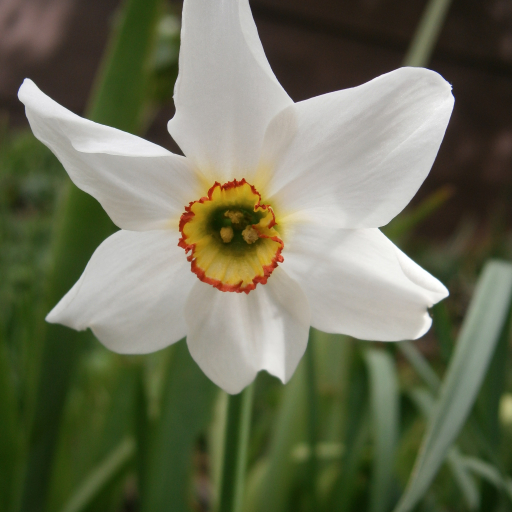
Known widely as the Poet’s Daffodil or Pheasant’s Eye, Narcissus poeticus is one of the most ancient and storied flowers in botanical history. Often linked to the Greek myth of the youth who fell in love with his own reflection, this elegant wildflower is prized for its intoxicating, spicy-sweet fragrance. Unlike the common yellow trumpet daffodil, this species offers a sophisticated, minimalist beauty that has inspired poets from Virgil to Wordsworth.
🔍 How to Identify
- ❄️ The Petals: Pure, snowy white petals that are often slightly reflexed (bending backward), giving the flower a wind-swept, delicate appearance.
- 👁️ The "Pheasant’s Eye": A very small, flat central cup (corona) that is bright yellow with a distinct, thin red or deep orange rim.
- 🍃 The Foliage: Long, narrow, strap-like leaves with a grayish-green (glaucous) tint that grow in upright clumps.
🏡 In Your Garden
- 💧 Moisture Lovers: While many daffodils prefer well-drained slopes, the Poet’s Daffodil is unique because it thrives in damp, clay-heavy soils and moist meadows. It is the perfect choice for those "tricky" spots in the garden that stay a bit soggy in the spring.
- ⏳ The Late Show: This species is a "late bloomer," usually waiting until late spring (May or June) to unfurl its petals. Planting these alongside earlier varieties allows you to enjoy a "daffodil season" that lasts several weeks longer.
⚠️ Safety & Toxicity
- 🚫 Status: Toxic to humans and animals.
- 🐾 Details: Like all members of the Narcissus family, the bulbs and leaves contain the alkaloid lycorine. If ingested, it can cause severe stomach upset, vomiting, and lethargy in cats, dogs, and horses.
- 🧤 Skin Care: The sap contains calcium oxalate crystals, which can cause "Daffodil Itch"—a mild skin irritation for gardeners with sensitive skin. Wearing gloves while cutting stems is recommended.
✨ Fun Fact
The scent of Narcissus poeticus is so potent and complex that it is still commercially harvested in the mountains of France for high-end perfumery. It takes approximately 500 kilograms of flowers to produce just one kilogram of "Narcissus Absolute" oil!

Detailed Care Instructions
| Lighting | Full Sun |
To grow Narcissus poeticus plants, commonly known as Poet's Narcissus or Pheasant's Eye Daffodil, follow these steps:
- Choose a suitable location: These plants prefer a sunny or partially shaded spot with well-draining soil. They can tolerate a range of soil types but prefer slightly acidic to neutral soil.
- Purchase bulbs: Buy Narcissus poeticus bulbs from a reputable nursery or online supplier. Choose healthy, firm bulbs that are free from any signs of damage or decay.
- Timing: Plant the bulbs in the fall, around October or November, before the ground freezes. This allows the bulbs to establish roots during winter and bloom in spring.
- Prepare the soil: Ensure the planting area has good drainage to prevent waterlogging. Loosen the soil and remove any weeds or debris. Add organic matter, like compost, to improve soil structure and fertility.
- Planting depth: Dig a hole or trench that is about 4-6 inches (10-15 cm) deep. Place the bulbs in the hole with the pointed end facing upwards. Space them about 4-6 inches (10-15 cm) apart.
- Soil amendment: If your soil is heavy or clay-like, you can mix it with sand or well-rotted compost to improve drainage.
- Watering: Water the bulbs after planting to settle the soil and provide moisture. Afterward, water sparingly unless the soil becomes excessively dry. Overwatering can lead to bulb rot.
- Mulching: Apply a layer of organic mulch, like straw or wood chips, to protect the bulbs from extreme temperatures and suppress weed growth.
- Maintenance: Narcissus poeticus plants are generally low-maintenance. Ensure they receive at least 6 hours of sunlight daily. Water during dry spells and cut back spent flowers to divert energy into bulb growth.
- Division and propagation: After a few years, when clumps become crowded, divide the bulbs in late summer. Replant the separate bulbs immediately.
- Pest and disease control: These daffodils are generally resistant to pests and diseases. However, keep an eye out for slugs, snails, and bulb-rotting fungal infections. Use appropriate deterrents or treatments if necessary.
By following these steps, you can grow Narcissus poeticus plants and enjoy their beautiful white flowers with a prominent yellow cup and sweet fragrance in late spring.

Place in a bright room that is sun drenched almost all day. Or directly in a south-facing window.

Narcissus Poeticus is a kind of flowering plant that needs to be watered regularly to grow healthily. To water this plant, you should first check the soil to make sure it is dry to the touch. If it is, you can pour water onto the soil around the base of the plant, being careful not to get water on the foliage or flowers.
Make sure to water the plant deeply, allowing the water to soak into the soil and reach the roots. But be careful not to overwater the plant, as this can lead to root rot. It is best to wait until the soil has dried out before watering again.
During the growing season, the plant may need to be watered more frequently, especially if the weather is hot and dry. You can also add a layer of mulch to help retain moisture in the soil.
As the plant matures and finishes blooming, you can gradually reduce the amount of water it receives, as it will enter a dormant phase. Once the foliage has died back completely, you can stop watering the plant until spring when new growth appears.
To ensure optimal growth and blooming of this plant, it is recommended to fertilize it during the growing season. Add a balanced fertilizer, preferably one with phosphorus, to the soil in early spring as soon as the plant starts to grow. Be sure to follow the instructions on the packaging carefully to avoid over-fertilizing, which can damage the plant. Water the plant well after application to help distribute the fertilizer evenly throughout the soil. Avoid fertilizing the plant after it has finished blooming as this can harm the bulbs.
The Narcissus Poeticus plant prefers well-drained soil that is moderately fertile and neutral to slightly acidic in pH. It is recommended to mix the soil with organic matter, such as compost or well-rotted manure, to improve its texture and nutrient content. Avoid using heavy clay soils or waterlogged soils, as they can lead to root rot and other problems. In addition, it is important to ensure that the soil is not too compacted, as this can impede root growth and affect the overall health of the plant.
To propagate this plant, you will need to collect the seeds from the mature flowers in the late spring or early summer. Let the seed pods dry out on the plant before removing them.
Next, separate the seeds from the dried pods and plant them in a well-draining soil mix in a small pot or tray. Water the seeds and keep them in a bright, warm location with indirect sunlight. Make sure to keep the soil moist but not soggy.
The seeds should germinate within a few weeks, and the seedlings can be transplanted into individual pots when they have developed a few leaves. As the plants mature, they can be planted outside in a sunny location with well-draining soil, and they will continue to grow and bloom each year.
Common pests of the poet's narcissus include Spider mites, aphids, thrips. Make a habit of checking your poet's narcissus frequently for pests so that any infestations can be caught and managed early.








