Plant Overview
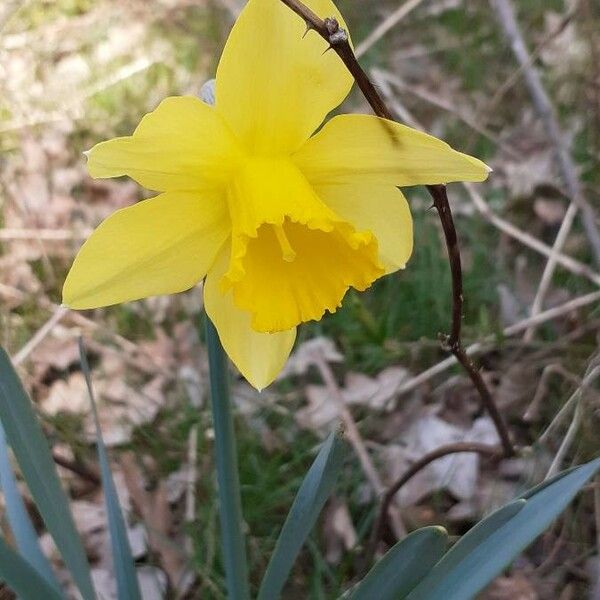
Often referred to as the Nonesuch Daffodil, Narcissus x incomparabilis is a stunning natural hybrid that captures the best of both worlds. Born from the cross between the wild Trumpet Daffodil and the delicate Poet’s Daffodil, this heirloom favorite has been gracing European meadows and English gardens since the 16th century. It is the "goldilocks" of the narcissus family—not too small, not too large, but perfectly balanced with a poetic charm.
🔍 How to Identify
- 🌼 The Corona (Cup): Unlike the long trumpets of typical daffodils, this variety features a "half-length" cup that is beautifully ruffled and often a more intense orange or yellow than the surrounding petals.
- 🌸 The Petals: It typically displays six broad, overlapping petals (tepals) that range from creamy butter-yellow to a soft, moonlight white.
- 🌿 Growth Habit: Each sturdy, leafless stem bears exactly one large, slightly nodding flower, rising above a clump of strap-like, grayish-green foliage.
🏡 In Your Garden
- 🌱 The "Wait" Rule: While it is tempting to tidy up after the flowers fade, you must leave the green foliage alone until it turns yellow. This period is when the bulb "recharges" its energy for next year’s bloom; cutting it too early leads to "blind" bulbs that won't flower.
- 💧 Drainage is Key: This hybrid is incredibly hardy, but it has one weakness: "wet feet." It thrives in soil that stays moist in spring but dries out slightly in the summer while the bulb is dormant.
- 🔄 Naturalizing: Because it is a hybrid of two resilient species, the Nonesuch is excellent for naturalizing in lawns or under deciduous trees, where it will slowly multiply and create a sea of color over the years.
⚠️ Safety & Toxicity
- 🚫 Status: Toxic to humans and pets.
- 🐾 Details: All parts of the plant, especially the bulb, contain the alkaloid lycorine. If ingested, it can cause severe stomach upset, vomiting, and lethargy in dogs and cats.
- 🧤 Skin Irritation: The sap contains calcium oxalate crystals, which can cause "Daffodil Itch"—a mild skin rash for some gardeners. It is best to wear gloves when cutting the stems for bouquets.
✨ Fun Fact
The name "Nonesuch" literally means "without equal." In the Victorian Language of Flowers, giving someone a Narcissus x incomparabilis was a way of saying that their beauty and character were unmatched by anyone else!

Detailed Care Instructions
Narcissus x incomparabilis, commonly known as the daffodil, is a hybrid daffodil that is popular for its bright, cheerful blooms in the spring. Here are some tips to successfully grow this beautiful plant:
Planting
- Timing:
- Plant the bulbs in the fall (September to November) before the ground freezes, allowing them to establish roots.
- Plant the bulbs in the fall (September to November) before the ground freezes, allowing them to establish roots.
- Location:
- Choose a sunny location, as Narcissus x incomparabilis thrives in full sun to partial shade. Ideally, they should receive at least 6 hours of sunlight a day.
- Choose a sunny location, as Narcissus x incomparabilis thrives in full sun to partial shade. Ideally, they should receive at least 6 hours of sunlight a day.
- Soil Preparation:
- Daffodils prefer well-drained soil that is rich in organic matter. You can improve soil quality by mixing in compost or well-rotted manure.
- Daffodils prefer well-drained soil that is rich in organic matter. You can improve soil quality by mixing in compost or well-rotted manure.
- Planting Depth:
- Plant the bulbs about 6 to 8 inches deep, with the pointed end facing up. Space the bulbs about 6 inches apart to allow room for growth.
Care
- Plant the bulbs about 6 to 8 inches deep, with the pointed end facing up. Space the bulbs about 6 inches apart to allow room for growth.
- Watering:
- Water the bulbs well after planting to help them settle in, but avoid overwatering. Once established, daffodils are relatively drought-tolerant and typically only need watering during prolonged dry spells.
- Water the bulbs well after planting to help them settle in, but avoid overwatering. Once established, daffodils are relatively drought-tolerant and typically only need watering during prolonged dry spells.
- Mulching:
- Apply a layer of mulch after planting to help retain moisture and suppress weeds.
- Apply a layer of mulch after planting to help retain moisture and suppress weeds.
- Fertilization:
- A balanced fertilizer can be applied in early spring as new growth begins. Follow the manufacturer’s instructions for application rates.
Maintenance
- A balanced fertilizer can be applied in early spring as new growth begins. Follow the manufacturer’s instructions for application rates.
- Post-Bloom Care:
- After flowering, allow the foliage to remain until it turns yellow. This process helps the plant store energy for next year’s blooms. Do not cut back the leaves until they have fully died back.
- After flowering, allow the foliage to remain until it turns yellow. This process helps the plant store energy for next year’s blooms. Do not cut back the leaves until they have fully died back.
- Pest and Disease Control:
- Be on the lookout for pests like aphids and diseases such as bulb rot. Good gardening practices, including proper spacing and watering, can prevent many issues.
Division
- Be on the lookout for pests like aphids and diseases such as bulb rot. Good gardening practices, including proper spacing and watering, can prevent many issues.
- Propagation:
- Daffodils can be divided every few years if they become overcrowded. This is typically done in the late summer to early fall when the foliage has died back.
By following these guidelines, you will be well on your way to successfully growing Narcissus x incomparabilis and enjoying their beautiful blooms in your garden each spring!
- Daffodils can be divided every few years if they become overcrowded. This is typically done in the late summer to early fall when the foliage has died back.

Place in a bright room that is sun drenched almost all day. Or directly in a south-facing window.

To water this plant, you should first verify the soil moisture level by inserting your finger into the soil up to the first knuckle. If the soil feels dry to the touch, it is time to water the plant. Use a watering can or hose with a gentle stream to wet the soil thoroughly, making sure to water around the base of the plant and avoiding getting water on the leaves. Allow any excess water to drain away from the pot or planting area. Repeat this process when the soil feels dry again, usually every 7-10 days depending on the environment and soil type. It is important not to overwater the plant as this can lead to root rot and other issues.
To effectively fertilize Narcissus X Incomparabilis, follow these guidelines:
- Timing: Fertilize in early spring as new growth begins to appear. This is when the plant requires nutrients to support flowering and overall growth.
- Type of Fertilizer: Use a balanced, slow-release granular fertilizer with an N-P-K ratio around 10-10-10 or 14-14-14. Alternatively, a fertilizer specifically formulated for bulb plants can also be beneficial.
- Application Rate: Follow the manufacturer’s instructions for the appropriate application rate, typically around 1-2 tablespoons per square foot of planting area.
- Method of Application:
- Spread the granular fertilizer evenly around the base of the plant, avoiding direct contact with the stems and leaves to prevent burning.
- Gently work the fertilizer into the top inch of soil with a rake or hand tool, ensuring it is well-distributed.
- Spread the granular fertilizer evenly around the base of the plant, avoiding direct contact with the stems and leaves to prevent burning.
- Watering: After application, water the area thoroughly to help dissolve the fertilizer and facilitate nutrient uptake by the roots.
- Frequency: You may apply a second round of fertilizer after blooming has finished, usually in late spring or early summer, to support the plant as it prepares for dormancy.
- Soil Testing: If possible, perform a soil test beforehand to determine nutrient levels, adjusting your fertilization strategy accordingly.
By following these instructions, you can promote healthy growth and flowering for your Narcissus X Incomparabilis plants.
The ideal soil for the Narcissus X Incomparabilis plant is one that is well-draining and rich in organic matter. It should have a pH level of around 6.0-7.0 and be loamy in texture. A mixture of sandy soil and peat moss can be used to meet these requirements. The soil should also be kept consistently moist but not waterlogged to prevent root rot. The plant prefers a slightly acidic soil and can benefit from the addition of bone meal or other slow-release fertilizers. Avoid using heavy clay soils or soils that have a tendency to become compacted, as this can lead to poor drainage and stunted growth.
To propagate Narcissus X Incomparabilis, you can use several methods including division and seed propagation. Here are the details for each method:
Division
- Timing: The best time to divide the bulbs is after the foliage has died back in late spring or early summer when the plant is dormant.
- Digging: Carefully dig up the bulbs using a spade or fork. Take care not to damage the bulbs during this process.
- Separation: Gently remove the soil and separate the bulbs. You should be able to see the smaller bulblets attached to the main bulb. These can be separated and replanted. Ensure that each bulblet has some roots attached.
- Inspection: Check the bulbs for any signs of rot or disease. Discard any unhealthy bulbs to prevent spreading disease to the new plants.
- Replanting: Plant the separated bulbs (and bulblets) immediately or store them in a dry, cool place until you are ready to plant. When planting, position the bulbs at a depth of about 2-3 times their height, typically between 4-6 inches deep.
- Watering: Water the newly planted bulbs well, but avoid oversaturation. Ensure the soil drains well to prevent bulb rot.
Seed Propagation
- Seed Collection: If you want to propagate through seeds, allow the flowers to mature and form seed pods. Once the pods have dried, collect the seeds.
- Preparation: Clean the seeds and allow them to dry for a few days. You may choose to stratify the seeds by placing them in the refrigerator for about 6-8 weeks to mimic winter conditions, although this step isn’t strictly necessary.
- Sowing: Sow the seeds in a suitable seed-starting mix. Plant them at a shallow depth, covering them lightly with soil.
- Watering: Water the seeds gently to keep the soil moist but not soggy.
- Light and Temperature: Place the seed trays in a warm area with indirect sunlight. The ideal temperature for germination is around 60-70°F (15-21°C).
- Transplanting: Germination can take several weeks to a few months. Once seedlings are large enough to handle and have developed a few true leaves, transplant them into individual pots or garden beds.
- Patience: Note that plants grown from seeds might take several years before they produce flowers.
General Tips
- Soil Requirements: Ensure that any soil used for planting is well-draining, as bulbs are susceptible to rot in overly moist conditions.
- Location: Choose a planting site that receives full sun to partial shade. Good air circulation can also help prevent disease.
- Pest Management: Keep an eye out for pests like aphids and snails, which can affect the growth of your propagules. Use organic methods or barriers to manage them without harming the plants.
Using these methods, you can successfully propagate Narcissus X Incomparabilis and enjoy its beauty in your garden for years to come.
Common pests of the nonesuch daffodil include Spider mites, aphids, thrips. Make a habit of checking your nonesuch daffodil frequently for pests so that any infestations can be caught and managed early.








