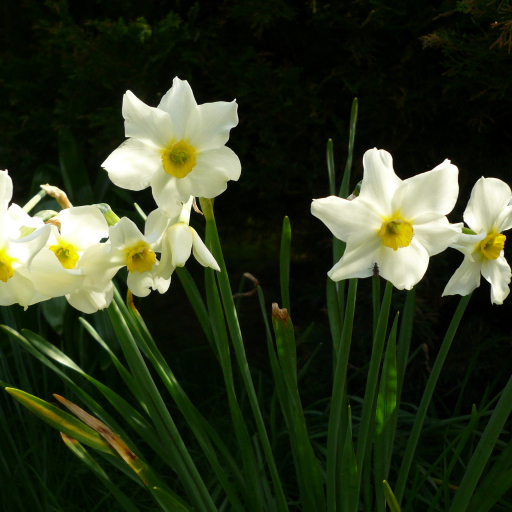
Plant Overview
Often called the "Primrose Peerless" or the "Two-flowered Narcissus," this elegant heirloom is a natural hybrid that has been gracing European gardens for centuries. Unlike the boisterous, giant yellow daffodils of early spring, this plant offers a more poetic, delicate presence with a hauntingly sweet fragrance. It is a cross between the Poet’s Daffodil (N. poeticus) and the Bunch-flowered Daffodil (N. tazetta), combining the best of both worlds.
🔍 How to Identify
- 🌼 The Twin Blooms: True to its name, this variety typically produces exactly two flowers per sturdy, upright stem, creating a balanced and symmetrical look.
- 🎨 Color Palette: The perianth (petals) is a soft, milky white or creamy ivory, surrounding a very short, disc-shaped cup (corona) that is a pale, primrose yellow.
- 🌿 Folliage: The leaves are long, strap-like, and possess a distinct glaucous (blue-green) tint that contrasts beautifully against the pale flowers.
- 👃 Scent: It carries a potent, sophisticated perfume—richer than common daffodils but less overwhelming than pure tazetta varieties.
🏡 In Your Garden
- ⏳ Late Season Performer: While other daffodils are fading in early spring, the Primrose Peerless is just beginning its show. It is perfect for extending the "Narcissus season" well into late April or May.
- 🌱 Naturalizing Expert: This plant is incredibly "tough" and is known for surviving in old, abandoned homesteads for decades. It prefers well-drained soil but is far more tolerant of heavy clay than its fancy modern cousins.
- ✂️ The "Wait to Mow" Rule: To ensure it returns next year, you must leave the green foliage alone after the flowers fade. The leaves act as solar panels, pumping energy back into the bulb for next year’s bloom.
⚠️ Safety & Toxicity
- 🚫 Status: Toxic to humans and pets.
- 🐾 Pet Warning: Like all members of the Narcissus family, the bulbs contain lycorine and calcium oxalate crystals. If ingested by dogs or cats, it can cause severe vomiting, diarrhea, and heart arrhythmias.
- 🧤 Skin Sensitivity: Some gardeners experience "Daffodil Itch," a mild skin irritation caused by the sap in the stems. It’s best to wear gloves when cutting them for bouquets.
✨ Fun Fact
This plant is a true "living antique." It was first formally described by botanists in the late 1500s and was a favorite in the Royal Gardens of England during the Elizabethan era. Because it is a sterile hybrid, every Primrose Peerless you see today is a genetic clone of those original ancient plants!

Detailed Care Instructions
To grow Narcissus X Medioluteus (also known as the Hoop petticoat daffodil), follow these steps:
- Choose a planting location: Narcissus X Medioluteus prefers a sunny to partly shaded spot in well-draining soil.
- Prepare the soil: Loosen the soil in the planting area and add organic matter like compost or aged manure to improve fertility and drainage.
- Plant the bulbs: Plant the bulbs in the fall, usually around September or October. Dig holes that are about 6 inches deep and place the bulbs with their pointed ends facing up. Space the bulbs about 4-6 inches apart.
- Water the bulbs: After planting, water the bulbs thoroughly to settle the soil around them. However, avoid overwatering, as excessive moisture can cause rotting.
- Mulch the area: Apply a layer of mulch around the planted bulbs, such as straw or shredded leaves, to help retain moisture in the soil and suppress weed growth.
- Provide regular watering: During the growing season, water the plants regularly, keeping the soil moist but not soggy. Daffodils are relatively drought-tolerant but still need consistent watering.
- Fertilize as needed: Apply a balanced slow-release fertilizer in early spring when you see the first shoots emerging. Follow the instructions on the package for proper application rates.
- Deadhead spent flowers: Once the flowers start to fade, remove the spent blooms by snipping off the flower stalk near the base. This helps direct energy back into the bulb and encourages future growth.
- Allow foliage to wither naturally: After flowering, let the foliage turn yellow and wither before cutting it back. This allows the plant to store energy for the following year's growth. Avoid tying up or braiding the leaves, as this can reduce the bulb's ability to replenish nutrients.
- Divide bulbs when necessary: After several years, clumps of narcissus bulbs may become crowded. To maintain their vigor, lift and divide the bulbs every 3-4 years during their dormant period (usually in summer). Replant the separated bulbs in new spots or share them with friends.
By following these steps, you can effectively grow Narcissus X Medioluteus and enjoy its charming yellow blooms.

Place in a bright room that is sun drenched almost all day. Or directly in a south-facing window.

Narcissus X Medioluteus plant should be watered regularly to keep the soil moist but not waterlogged. It is important to ensure that the water penetrates deep into the soil around the roots. Watering should be done during the early morning or late evening hours to minimize water loss due to evaporation. Over-watering can lead to root rot and should be avoided. It is also important to avoid getting water on the leaves and flowers to prevent fungal infections. When watering, it is recommended to use a watering can or a drip irrigation system.
- Choose a balanced fertilizer with equal N-P-K ratios.
- Apply the fertilizer in the spring when the plant is actively growing.
- Use a granular or slow-release fertilizer for optimal results.
- Avoid over-fertilizing as it can cause the plant to produce more foliage and fewer flowers.
- Water the plant thoroughly after fertilizing to help distribute the nutrients.
- Follow the manufacturer's instructions for the appropriate amount and frequency of fertilizer application.
The ideal soil to use with this plant would be well-draining and rich in organic matter. It should have a pH level of 6.0-7.0 and be permeable to allow good root growth. It is recommended to mix in compost or aged manure before planting to improve soil structure and nutrient content. Avoid using heavy or poorly-draining soils, as this can lead to root rot and other issues. Furthermore, it is crucial to ensure that the soil is moist but not waterlogged, as excess moisture can also cause root rot.
To propagate this plant, you can begin by harvesting seeds from the mature plant. Once you have collected the seeds, fill a planting tray with rich, well-draining soil and sow the seeds thinly on the surface. Lightly cover the seeds with a thin layer of soil, water them gently, and cover the tray with a clear plastic cover to create a humid environment.
Place the tray in a well-lit area that receives indirect sunlight, such as a windowsill or greenhouse. Keep the soil moist but not waterlogged, and remove the plastic cover once the seedlings begin to emerge.
After several weeks, when the seedlings have grown to about 3-4 inches in height, gently transplant them into individual pots using fresh, nutrient-rich soil. Ensure that each pot has good drainage holes, and water the plants thoroughly after transplanting.
Keep the young plants in a sunny area but avoid direct sunlight, and continue to water them regularly to promote healthy growth. After several months, once the plants have become established and have developed a good root system, you can then consider transplanting them into the garden or larger pots if desired.
Common pests of the primrose-peerless include Spider mites, aphids, thrips. Make a habit of checking your primrose-peerless frequently for pests so that any infestations can be caught and managed early.








