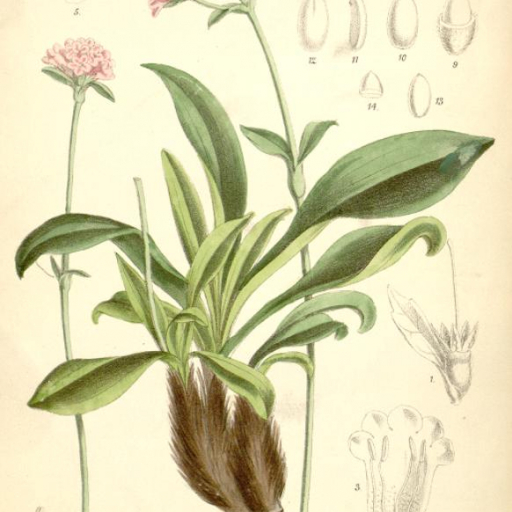
Plant Overview
Often called the "Himalayan Spikenard" or "Muskroot," Nardostachys jatamansi is a botanical treasure steeped in ancient mysticism. For millennia, this herb has been prized in Ayurvedic and Unani medicine for its grounding, sedative properties. Its most striking feature is its rhizome, which is covered in thick, dark fibers that resemble matted hair—earning it the Sanskrit name "Jatamansi," which translates to "locks of hair."
🔍 How to Identify
- 🧔 The Hairy Rhizome: The most distinct feature is the woody, underground stem covered in dense, brown, hair-like fibers. It looks almost like a small mammal's tail or a clump of hair.
- 🌸 Cluster Flowers: It produces delicate, bell-shaped flowers that range from pale pink to deep purple. These grow in dense, rounded clusters at the top of a smooth stalk.
- 🍃 Spatulate Leaves: The plant features a rosette of elongated, leaf-like foliage at the base, with smaller leaves appearing in pairs along the flowering stem.
🏡 In Your Garden
- 🏔️ The Alpine Specialist: Jatamansi is native to the high altitudes of the Himalayas (up to 15,000 feet). Because it thrives in cold, rocky, and moist environments, it is notoriously difficult to grow in standard backyard gardens unless you can mimic mountain conditions.
- 🌱 Conservation Note: This plant is currently listed as Critically Endangered due to over-harvesting for its precious oil. If you are a hobbyist, ensure any seeds or plants are sourced from certified nurseries rather than wild-collected stock.
- 🌿 Soil Preference: It demands extremely well-draining, gritty soil rich in organic humus. It hates "wet feet" and will rot quickly if the soil stays soggy.
⚠️ Safety & Toxicity
- 🟢 General Safety: The plant is generally non-toxic to touch and has been used topically for centuries.
- 🐱 Pet Sensitivity: Like many plants used for potent essential oils, the concentrated scent can be overwhelming or irritating to sensitive pets, particularly cats, if they ingest the foliage or are exposed to high concentrations of the oil.
- 💊 Internal Use: While famous as a supplement for sleep and anxiety, it should never be ingested without professional guidance, as it can interact with other sedative medications.
✨ Fun Fact
The oil derived from Jatamansi is the "Spikenard" mentioned several times in the Bible. It was considered so valuable in the ancient world that it was used to anoint kings and was the expensive perfume Mary of Bethany used to wash the feet of Jesus.

Detailed Care Instructions
To grow Nardostachys Jatamansi, also known as spikenard, follow these steps:
- Climate: Ensure that you live in a suitable climate for growing spikenard. It thrives in cool temperate regions with altitudes ranging from 2,500 to 5,000 meters.
- Soil: Choose well-draining soil with a pH level between 6.0 and 8.0. Loamy soil is preferred, but spikenard can also grow in sandy or rocky soil.
- Propagation: Spikenard can be propagated through seeds or rhizome divisions. Seeds should be sown in a nursery during early spring. Ensure the seeds are soaked in water for 24 hours before sowing. For rhizome division, divide healthy rhizomes during early spring or early autumn.
- Seedling Care: If starting from seeds, ensure a container or seed tray is filled with seed starting mix or compost. Sow the seeds at a depth of about 1 cm and cover lightly with soil. Water the container regularly to maintain moist conditions. Once the seedlings are a few inches tall, they can be transplanted to the final growing location.
- Planting: Select a location with partial shade to full sun. Dig a hole for the plant, ensuring it is large enough to accommodate the root system. Place the plant in the hole and backfill it with soil. Water thoroughly after planting.
- Watering: Spikenard requires regular watering to keep the soil consistently moist but not waterlogged. Water deeply and regularly, especially during dry spells. Mulching around the plant can help retain moisture.
- Fertilizing: Apply organic fertilizers during the growing season to promote healthy growth. This can be achieved by adding compost, well-rotted manure, or a balanced organic fertilizer.
- Maintenance: Remove weeds regularly to prevent competition for nutrients. Prune the plants in late winter or early spring to remove any dead or damaged parts. This will promote new growth and maintain the overall health of the plant.
- Harvesting: Spikenard roots are harvested after three to six years of growth. Dig up the rhizomes during early spring or autumn. Clean, dry, and store the roots in a cool, dark location for future use.
Remember to check for any local regulations or restrictions on growing Nardostachys Jatamansi, as it may be protected or regulated in some regions due to its popularity in traditional medicine.

Place in a window with dappled sun or a spot in the middle of a room. Or directly in a window facing west or east.

To water Nardostachys Jatamansi plant effectively, you should consider the following guidelines:
1. Observe the soil: Before providing water, examine the soil moisture content by inserting your finger about an inch into the soil. Ensure that it is dry or slightly damp, rather than completely wet.
2. Watering frequency: Nardostachys Jatamansi plants prefer evenly moist soil without being waterlogged. Water the plant when the top inch of soil feels dry to the touch. This frequency might vary depending on environmental factors such as humidity, temperature, and the plant's location.
3. Watering method: Use a watering can or a gentle stream of water to slowly and evenly moisten the soil. Avoid harsh or forceful watering, as it can disturb the plant's roots or cause erosion. Direct the water towards the base of the plant to minimize evaporation and ensure the roots receive adequate moisture.
4. Soil drainage: Nardostachys Jatamansi plants require well-draining soil to prevent waterlogging, which can lead to root rot. If the plant is potted, ensure the container has drainage holes to allow excess water to escape. For outdoor cultivation, amend heavy or clay-like soil with organic matter to improve drainage.
5. Water quality: Nardostachys Jatamansi plants prefer clean, filtered water or rainwater without any chemicals or additives. Avoid using chlorinated or heavily treated water, as it can negatively impact the health of the plant over time.
6. Seasonal adjustments: Adjust the watering routine based on seasonal changes. In warmer months or during the plant's active growth period, watering frequency may need to increase. Conversely, in colder months or during the plant's dormant phase, reduced watering is typically required.
Remember, these watering guidelines are general recommendations, and factors such as the plant's specific growing conditions, container size, and climate may require adjustments. It's important to closely monitor the moisture level of the soil and tailor the watering routine accordingly to ensure your Nardostachys Jatamansi plant thrives.
To fertilize the Nardostachys Jatamansi plant successfully, follow these instructions:
- Choose a balanced, slow-release fertilizer with equal proportions of nitrogen (N), phosphorus (P), and potassium (K). Avoid high-nitrogen fertilizers as they may encourage excessive leaf growth instead of promoting overall plant health.
- Begin fertilizing in early spring when new growth emerges. This plant benefits from regular feeding throughout the growing season, typically from spring to late summer or early fall.
- Dilute the fertilizer according to the manufacturer's instructions or use a weaker solution to avoid over-fertilization. Generally, mixing 1/4 to 1/2 strength of the recommended dosage should be sufficient.
- Apply the fertilizer evenly around the base of the plant, keeping it away from the stems and leaves to prevent burning. Gently work the fertilizer into the top layer of soil using a hand tool or rake.
- Water the plant thoroughly after fertilizing to ensure the nutrients reach the root zone. This step helps prevent fertilizer buildup in the soil and minimizes the risk of burning the plant.
- Repeat the fertilization process once every 4-6 weeks during the active growth period. Adjust the frequency and dosage based on the plant's response and general health.
- Monitor the foliage for any signs of nutrient deficiency or excess. Yellowing leaves could indicate a lack of nitrogen, while stunted growth or brown leaf tips might signal excessive fertilization. Adjust the fertilizer regimen accordingly to optimize plant performance.
Remember, while fertilizers can aid in promoting healthy growth, it is equally important to provide the plant with proper sunlight, well-draining soil, and adequate water to maintain overall plant well-being.
The soil requirements of Nardostachys Jatamansi plant include a well-draining and slightly acidic soil. It prefers a soil that is rich in organic matter, which helps provide necessary nutrients and improves moisture retention. The pH level of the soil should ideally be between 5.5 and 6.5.
In terms of texture, a sandy loam soil is desirable as it promotes good drainage while still allowing the roots to access sufficient moisture. However, the plant can tolerate a variety of soil types ranging from sandy to clayey, as long as they are not excessively compacted or waterlogged.
To enhance soil fertility, incorporating well-rotted organic matter such as compost or well-decomposed cow dung can be beneficial. Additionally, adding a layer of organic mulch around the base of the plant helps in conserving moisture, regulating soil temperature, and suppressing weed growth.
Regular monitoring of soil moisture levels is essential for the proper growth and development of Nardostachys Jatamansi. Overwatering should be avoided, as it can cause root rot and other diseases. Therefore, watering the plant when the top inch of the soil feels slightly dry is recommended.
Overall, a nutrient-rich, slightly acidic, well-draining soil is crucial for cultivating a healthy and thriving Nardostachys Jatamansi plant.
Nardostachys jatamansi, a perennial herb belonging to the Valerianaceae family, can be propagated through several methods. Here's a detailed guide on how to propagate this plant:
- Seeds: Obtain fresh seeds either by harvesting them from mature plants or acquiring them from a reliable source. Start by filling a seed tray or small pots with a well-draining potting mix. Moisten the soil slightly before sowing the seeds.
- Sow the seeds on the surface of the soil and press them lightly into the soil. Keep the seeds evenly spaced to provide adequate room for growth.
- Cover the seeds with a thin layer of vermiculite or finely sieved soil. This helps maintain moisture levels and enhances germination.
- Place the tray or pots in a warm, well-lit area. The ideal temperature for germination is around 20-25°C (68-77°F). Ensure the seeds receive sufficient indirect sunlight during this stage.
- Mist the soil surface regularly to keep it slightly moist, but avoid overwatering, which may lead to damping-off disease. Germination may take between 2-3 weeks.
- Once the seedlings have developed a few sets of true leaves and are sturdy enough, they can be transplanted into individual containers or directly into the garden. Make sure the soil is loose, well-draining, and rich in organic matter.
- Vegetative Propagation: Nardostachys jatamansi can also be propagated through division, using its rhizomes. Dig up an established plant during the dormant season (preferably in early spring or late fall) when growth is slow.
- Carefully separate the rhizomes into sections, ensuring each division has a healthy root system and viable growing points.
- Replant the divisions immediately into prepared soil or pots. Ensure the growing points are facing upward and the rhizomes are buried just beneath the soil surface.
- Provide regular watering to keep the soil moist but not overly saturated. Avoid disturbing the newly divided plants for a few weeks, allowing them time to establish and adjust.
- Provide the propagated plants with suitable growing conditions, including partial shade to full sunlight depending on your regional climate. Nardostachys jatamansi thrives in well-draining soil with a slightly acidic to neutral pH range (around 6.0-7.5).
- Regularly monitor the plants for pests and diseases, treating any issues promptly. Maintain a consistent watering schedule and provide occasional organic fertilization to promote healthy growth.
- With proper care and maintenance, the propagated Nardostachys jatamansi plants will establish themselves and, over time, reach maturity, at which point they can be harvested for various medicinal purposes or simply enjoyed in the garden for their aromatic foliage and attractive flowers.








