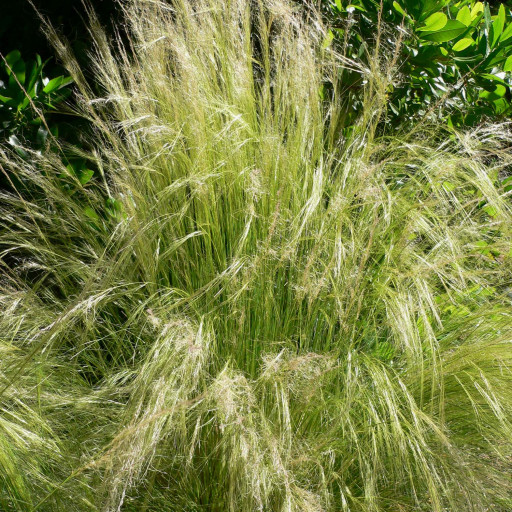
Plant Overview
Known as the "Mexican Feather Grass" or "Ponytail Grass," this ethereal ornamental is the ballerina of the garden world. It brings a sense of fluid movement and "haute couture" texture to dry landscapes, dancing and whispering softly at the slightest breeze. Native to the rocky slopes of North and South America, it has become a favorite for modern xeriscaping due to its low-maintenance elegance.
🔍 How to Identify
- 🌾 Foliage: Exceptionally fine, hair-thin green leaves that form dense, fountain-like clumps that sway with the lightest air current.
- 🌬️ Seed Heads: Silky, silvery-green plumes emerge in late spring, transitioning to a soft, sun-bleached golden-blonde as they mature.
- 💃 Growth Habit: A compact and mounding silhouette, typically reaching about 1 to 2 feet in height with a graceful, weeping posture.
🏡 In Your Garden
- ☀️ Drainage is Key: This grass thrives on neglect but demands "warm feet" and excellent drainage. It will quickly decline in heavy clay or waterlogged soil, making it perfect for rock gardens or raised beds.
- ✂️ The "Comb" Method: Unlike many ornamental grasses, it does not like being chopped to the ground. To keep it tidy, simply "comb" through the plant with gloved hands or a small rake in early spring to remove dead thatch.
- 🌱 Self-Seeding: Be aware that it is a prolific self-sower. While this is great for filling in gaps, it can become a bit too "friendly" in small garden spaces.
⚠️ Safety & Toxicity
- ✅ Status: Generally non-toxic to humans, cats, and dogs.
- 🐕 Pet Irritant: While not poisonous, the needle-like seeds (awns) are designed to "drill" into the earth. They can easily become lodged in a pet's fur, ears, or between paw pads, potentially causing skin irritation or abscesses.
- 🌍 Ecological Note: In certain regions like California and parts of Australia, it is considered invasive because it outcompetes native flora. Always check local environmental lists before planting.
✨ Fun Fact
- ✨ The seeds of Nassella tenuissima are "hygroscopic." They feature a long tail that twists and untwists in response to changes in humidity, physically drilling the seed into the soil to ensure it finds a place to grow!

Detailed Care Instructions
To grow Nassella Tenuissima plants, also known as Mexican Feather Grass or Ponytail Grass, you can follow these steps:
- Location: Choose a sunny location with well-draining soil as Nassella Tenuissima prefers full sun and doesn't tolerate excessive moisture or shade.
- Soil Preparation: Prepare the soil by removing any weeds or grass and amending it with compost or organic matter to improve drainage and fertility.
- Planting: Dig a hole slightly larger than the root ball of the Nassella Tenuissima plant. Place the plant in the hole, ensuring the top of the root ball is level with or slightly above the soil surface. Backfill the hole with soil, gently firming it around the plant.
- Watering: Water the plant thoroughly after planting to settle the soil. Afterward, water deeply once a week during the growing season to establish the plant's roots. Avoid overwatering, as this grass prefers drier conditions.
- Mulching: Apply a layer of organic mulch around the base of the plant to help conserve moisture, suppress weeds, and regulate soil temperature.
- Maintenance: Nassella Tenuissima is a low-maintenance plant. However, you may trim the foliage back to ground level in late winter or early spring before new growth appears to improve its appearance.
- Division: Every few years, you can divide the plant in early spring by digging up the clump and separating it into smaller sections. Replant the divisions in well-prepared soil, ensuring each division has sufficient roots.
Remember to check your local gardening guidelines and regulations, as Nassella Tenuissima can be invasive in certain regions. It's recommended to plant sterile cultivars to prevent spreading.

Place in a bright room that is sun drenched almost all day. Or directly in a south-facing window.

To water this plant, it is important to keep the soil consistently moist. This can be achieved by checking the soil moisture level regularly and watering it when it starts to feel dry to the touch. It is best to use a watering can or a hose with a gentle flow to avoid disturbing the delicate roots. Make sure to water the soil around the base of the plant and avoid getting water on the foliage, as this can lead to fungal diseases. During hot and dry weather, it may be necessary to water the plant more frequently. However, it is important not to overwater, as this can lead to root rot. Allow the soil to drain completely after watering to prevent waterlogged soil.
To properly fertilize this plant, it is important to use a balanced all-purpose fertilizer during the growing season. Apply the fertilizer every 4-6 weeks, following the manufacturer's instructions for application rate and timing. Avoid over-fertilizing, as this can lead to excessive growth and reduce the plant's overall health. Additionally, be sure to water the plant deeply after fertilization to help distribute the nutrients throughout the soil.
For a Nassella Tenuissima plant, it is recommended to use well-draining soil that is on the sandy side with low fertility. This plant prefers soil that is on the alkaline side with a pH range of 6.5 to 8. It is important to not over-water this plant or have it sitting in waterlogged soil, so a mix that allows for good drainage is preferred. A mix of 1 part potting soil, 1 part sand, and 1 part perlite, with a small amount of limestone added in to raise the pH, is a good option for this plant. It is important to avoid using heavy soils or mixes that retain too much moisture. When planting, make sure to loosen the root ball and gently spread out the roots to allow for proper growth and establishment in the new soil mix.
Nassella tenuissima can be propagated through seed germination or division of established plants. To propagate through seed germination, collect seeds from mature plants and sow them directly into well-draining soil in the spring or fall. Cover the seeds lightly with soil, mist them regularly to keep the soil moist, and place them in a warm, sunny location. Germination typically occurs within two to three weeks.
To propagate through division, dig up an established plant and carefully separate the clumps into smaller sections. Make sure each division has a healthy root system and a few blades of grass. Transplant the divisions into their own containers or directly into the ground, and keep the soil moist until they are established.
Propagation can also be done through cuttings, but this method is less reliable compared to seed germination and division. Cut a few stems at least 3-4 inches long, remove the leaves from the bottom half of the stem, and stick the cuttings into moist soil. Keep the soil moist and out of direct sunlight until roots have formed and new growth emerges, typically within three to four weeks.
Common pests of the mexican feather grass include Thrips. Make a habit of checking your mexican feather grass frequently for pests so that any infestations can be caught and managed early.








