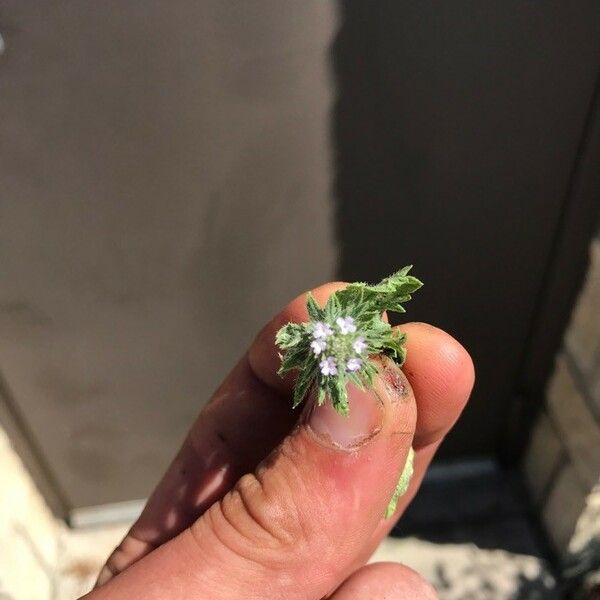
Plant Overview
The San Mateo Navarretia is a tiny, resilient gem often found clinging to the rugged, rocky slopes of Northern California’s coastal ranges. Often called the "San Mateo Pincushion," this diminutive wildflower looks like a miniature, prickly firework frozen in time. It is a specialist of harsh environments, frequently appearing in rare soil types where other plants struggle to survive.
🔍 How to Identify
- 🌵 The Rosette: True to its name (rosulata), it often begins as a tight, circular cluster of leaves close to the ground, looking like a green or reddish starburst.
- ⚔️ Prickly Foliage: The leaves are deeply divided and tipped with sharp, needle-like lobes. This "armor" helps protect the plant from grazing animals in its exposed habitat.
- 🌸 Flower Heads: The tiny blossoms are clustered into dense, spherical heads. They are typically a pale lavender, sky blue, or white, often featuring contrasting dark pollen on the anthers.
- 🎨 Sun-Blushed Stems: Under high UV exposure on rocky slopes, the stems and bracts often turn a deep, moody purple or burgundy.
🏡 In Your Garden
- ⛰️ The Serpentine Specialist: In the wild, this plant is a "geo-specialist," meaning it thrives in serpentine or volcanic soils rich in heavy metals. In a garden setting, it requires exceptionally well-draining, gritty soil and should never be pampered with rich fertilizers.
- 💧 Annual Lifecycle: Because it is an annual, it lives its entire life in a single spring. It relies on the winter rains to germinate and then quickly sets seed before the summer heat turns its hillside home to tinder.
- 👃 A Hidden Scent: Like many members of the Phlox family, if you get close enough, you might notice a faint, skunky, or "wet dog" aroma—a unique evolutionary trait used to attract specific pollinators.
⚠️ Safety & Toxicity
- 🟢 Non-Toxic: This plant is not known to be poisonous to humans, cats, or dogs.
- 刺 Physical Irritant: While not chemically toxic, the plant is extremely "spiny." The sharp, dried bracts can easily prick sensitive skin or get stuck in a pet’s fur or paw pads, leading to minor irritation.
✨ Fun Fact
- The San Mateo Navarretia is a California endemic, meaning it grows naturally nowhere else on Earth! It is so specialized that it is often used by ecologists as an "indicator species" to identify healthy, undisturbed serpentine chaparral ecosystems.

Detailed Care Instructions

Place in a bright room that is sun drenched almost all day. Or directly in a south-facing window.

Water-loving plants flourish in wet or sloppy soil and near ponds. The extensive root system enables these plants to absorb plenty of water. The surface of the soil should be kept moist at all times. Place your pot in a container filled with water to guarantee that plants get enough water. If the ground becomes dry, it is recommended that you water it well. Plants in smaller pots will need to be watered more frequently. Water the soil in which the plant is standing thoroughly using a watering can.








