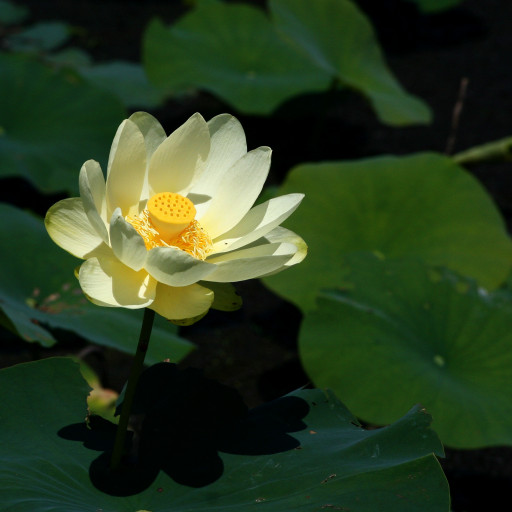
Plant Overview
The American Lotus is North America’s glowing answer to the sacred lotus of the East. Often called the "Water Chinquapin" because its nut-like seeds taste remarkably like chestnuts, this majestic aquatic perennial transforms quiet ponds into golden landscapes. For centuries, it has been a symbol of purity and a vital food source for Indigenous peoples, emerging from the muck to bloom with pristine elegance.
🔍 How to Identify
- 🌿 The Leaves: Massive, circular, and bluish-green. Unlike common water lilies that float on the surface, American Lotus leaves often rise several feet above the water on stiff stalks, acting like giant green umbrellas.
- 🌼 The Blooms: Pale, creamy yellow flowers that can reach 10 inches across. They are bowl-shaped with a dense cluster of golden stamens at the center, emitting a sweet, spicy fragrance.
- 🚿 The Seed Pod: After the petals drop, a unique, flat-topped pod remains that looks exactly like a showerhead. These pods turn brown and woody as they mature, becoming a favorite for dried floral crafts.
🏡 In Your Garden
- ☀️ Sun Worshiper: This plant is a solar-powered machine. To produce its iconic blooms, it requires at least 6 hours of intense, direct sunlight. In shaded ponds, you will get plenty of foliage but very few flowers.
- 🥣 Heavy Feeder: The American Lotus is a "hungry" plant with a vigorous appetite. It prefers to be planted in heavy clay or rich loam rather than loose potting mix, which helps anchor its sprawling rhizomes as they expand across the pond floor.
- 🌊 Depth Sensitivity: While it loves the water, it is surprisingly picky about depth. It thrives best in 6 to 18 inches of water. If the water level rises too quickly before the leaves are established, the plant can actually "drown" trying to reach the surface.
⚠️ Safety & Toxicity
- ✅ Safe Status: The American Lotus is generally considered non-toxic to humans. In fact, many parts of the plant, including the seeds and tubers, are edible when prepared correctly.
- 🐾 Pet Watch: While not listed as a dangerous plant for cats or dogs, the high fiber content in the leaves can cause mild stomach upset if a curious pet decides to use one as a chew toy.
- 💧 Environmental Note: If you are sourcing seeds or tubers from the wild, be cautious; aquatic plants are excellent filters and can store pollutants or heavy metals found in stagnant or contaminated water.
✨ Fun Fact
The seeds of the Nelumbo family are some of the most resilient living things on Earth. Thanks to their incredibly thick, waterproof shells, scientists have successfully germinated lotus seeds that were over 1,000 years old!

Detailed Care Instructions
To grow a Nelumbo Lutea plant, also known as American lotus or yellow lotus, follow these steps:
- Select a suitable location: Nelumbo Lutea requires a sunny spot with at least 6-8 hours of direct sunlight per day. The location should also provide plenty of space for the plant to spread, as it can grow quite large.
- Prepare the planting area: Clear any weeds, grass, or debris from the planting area. The lotus plant grows best in shallow water, so if you have a pond or container, ensure that it is large enough to accommodate the plant.
- Planting the tubers: Nelumbo Lutea is usually planted from tubers, which are the roots of the plant. Soak the tubers in warm water for a few hours before planting to soften them. Dig a small hole about 2-3 inches deep in the planting area and place the tuber horizontally, with the growing tip facing up.
- Covered the tuber: Gently cover the tuber with soil, leaving the growing tip exposed. Use sand or gravel to cover the soil, as it helps prevent floating and provides stability to the plant.
- Watering: Once the tubers are planted, flood the area with water. The water should be about 2-4 inches above the soil level. Maintain this water level throughout the growing season. If you are planting in a pond, ensure that the water is not too deep, as the lotus cannot tolerate deep water.
- Maintenance: Regularly remove any weeds or algae that may grow around the lotus plant, as they can compete for nutrients and space. Fertilize the plant with aquatic plant fertilizer once or twice during the growing season to promote healthy growth.
- Blooming and Harvesting: Nelumbo Lutea produces large, fragrant yellow flowers during the summer months. Enjoy the beautiful blooms, and if desired, harvest the seeds for propagation or culinary use. The seeds can be collected when the seed heads turn brown and start to dry out.
Remember, growing a Nelumbo Lutea plant requires patience, as it can take a couple of years for the plant to reach full maturity and start blooming. With consistent care and the right conditions, you can enjoy the beauty of this aquatic plant in your garden or pond.

Place in a bright room that is sun drenched almost all day. Or directly in a south-facing window.
One approach to watering Nelumbo Lutea plants is to provide appropriate moisture levels for their specific needs based on factors such as soil type, light exposure, and temperature. To start, it is important to choose a suitable planting location that offers proper drainage and access to sunlight, as these factors can affect water retention and uptake. Depending on the specific growing conditions, you may need to adjust the frequency and duration of watering accordingly.
One way to determine if your Nelumbo Lutea plant needs water is to check the moisture level of the soil. This can be done by inserting your finger into the soil to a depth of about one inch. If the soil feels dry to the touch, it is time to water your plant. When watering, it is important to avoid oversaturating the soil or allowing it to dry out completely. Instead, aim to provide moderate levels of moisture on a regular basis, allowing the soil to partially dry out between waterings.
Another important consideration when watering Nelumbo Lutea plants is to avoid getting moisture on the leaves and flowers. This can promote fungal growth and other types of plant diseases. To prevent this issue, try to water the soil directly at the base of the plant, using a watering can or other appropriate watering device. Finally, keep an eye on your plant for signs of stress or overwatering, such as yellowing leaves or wilted stems. With proper care and attention, your Nelumbo Lutea plant can thrive and produce beautiful blooms for years to come.
- Choose a well-draining container or pond for growing the plant.
- Use a nutrient-rich potting mix that contains organic matter.
- Wait until the plant has developed a few leaves before applying fertilizer.
- Select a balanced fertilizer with an N-P-K ratio of 10-10-10 or 20-20-20.
- Dilute the fertilizer according to the instructions on the packaging.
- Apply the diluted fertilizer to the soil or water around the plant's base.
- Avoid overfertilizing, as it can lead to nutrient imbalances or stunted growth.
- Fertilize the plant every two to four weeks during the growing season.
- Monitor the plant for signs of nutrient deficiency, such as yellowing leaves or slow growth.
- Adjust the fertilizer application rate or frequency if necessary, based on the plant's response.
For best growth and nutrient uptake, Nelumbo Lutea requires a well-draining soil that is high in organic matter. The ideal pH range for this plant is between 5.5 and 7.5. It is important to avoid soils that are too heavy, as they can lead to waterlogged roots and soil compaction. If planting in a container, use a mixture of peat moss, perlite, and vermiculite to promote drainage and aeration. Adding a slow-release fertilizer to the soil mix can also provide the necessary nutrients for healthy growth.
Nelumbo Lutea, a perennial aquatic plant, can be propagated through various methods including seed germination, rhizome division, and tissue culture. Here is a detailed description of each propagation technique:
- Seed Germination:
- Collect ripe seeds from mature Nelumbo Lutea plants. The seeds are usually located inside the center of the dried seed head.
- Scarify the seeds gently using a file or sandpaper to break the hard seed coat, allowing water to penetrate.
- Soak the scarified seeds in warm water for 24-48 hours to stimulate germination.
- Prepare a container with a well-draining, organic-rich soil mixture.
- Plant the seeds about 2-3 cm deep in the soil and cover lightly.
- Maintain warm temperatures (around 25-30°C) and provide ample sunlight.
- Keep the soil consistently moist, but not waterlogged, throughout the germination process.
- Germination typically takes 1-2 weeks. Once seedlings develop a few leaves, they can be transplanted into larger containers or directly into a suitable aquatic environment.
- Collect ripe seeds from mature Nelumbo Lutea plants. The seeds are usually located inside the center of the dried seed head.
- Rhizome Division:
- Identify a healthy mature Nelumbo Lutea plant with well-developed rhizomes.
- In early spring, when new growth emerges, carefully dig up the plant.
- Remove excess soil to expose the rhizomes.
- Using a clean, sharp knife, divide the rhizomes into sections, ensuring each section has at least one viable bud.
- Plant the divided rhizomes in individual containers or directly into the desired aquatic habitat, placing them horizontally with the bud facing up and covered lightly with soil.
- Provide sufficient sunlight, warm temperatures, and keep the soil or water consistently moist.
- Once the division establishes new shoots and roots, it can be transplanted to a more permanent location.
- Identify a healthy mature Nelumbo Lutea plant with well-developed rhizomes.
- Tissue Culture:
- This method is more suitable for commercial propagation.
- Sterilize a small section (explants) from the plant, such as a piece of rhizome or leaf, in a solution of bleach or alcohol to eliminate any potential contaminants.
- Prepare a culture medium containing necessary nutrients and growth hormones required for plant tissue growth.
- Place the explants in the culture medium and ensure they are properly submerged.
- Provide appropriate temperature and light conditions for tissue growth.
- Monitor the explants closely, as they develop new shoots and roots.
- Once the explants have developed enough tissue to support independent growth, they can be transferred into individual containers or planted directly into aquatic environments.
Regardless of the propagation method chosen, providing suitable growing conditions and consistent care is essential to ensure the long-term success of Nelumbo Lutea plants.
- This method is more suitable for commercial propagation.








