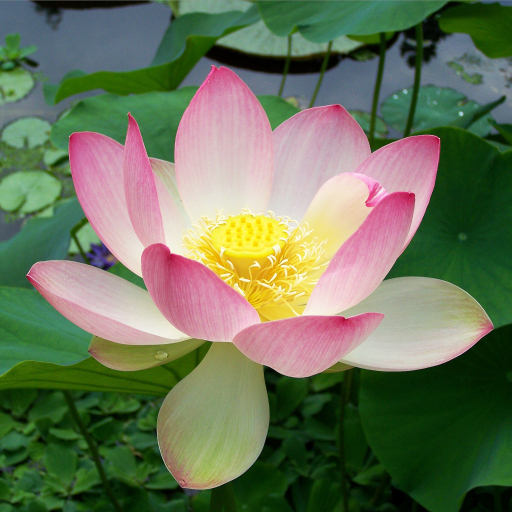
Plant Overview
Often called the Sacred Lotus, "Indian Lotus," or "Bean of India," this plant is a living symbol of spiritual awakening and resilience. Rising from the murky depths of ponds to produce pristine, wax-coated blooms, it is a staple of Eastern mythology and art. It isn't just a flower; it's a biological marvel that has inspired modern technology, from waterproof paint to self-cleaning fabrics.
🔍 How to Identify
- 🪷 The Foliage: Unlike water lilies that float on the surface, Lotus leaves are "emergent," standing high above the water on thick, prickly stalks. They are perfectly circular and possess the "Lotus Effect," where water beads up and rolls off instantly, taking dirt with it.
- 🌸 The Bloom: Massive, multi-petaled flowers typically appear in shades of creamy white or rosy pink. At the very center sits a bright yellow, flat-topped structure that is unmistakable even from a distance.
- 🚿 The Seed Pod: Once the petals fall, the remaining center develops into a unique receptacle that looks remarkably like a green showerhead, eventually turning brown and woody as the seeds mature.
🏡 In Your Garden
- ☀️ Sun & Warmth: This is an absolute sun-worshipper. To produce those iconic blooms, it requires at least 6 hours of direct sunlight and water temperatures that consistently stay above 70°F (21°C).
- 🥣 The "No-Drain" Rule: Lotuses are heavy feeders and must be planted in large, round containers without drainage holes. Using a round pot is vital; the creeping rhizomes (roots) can get "trapped" and break in the corners of square containers, which can kill the plant.
- 🧼 Muddy Roots: They thrive in heavy clay soil or specialized aquatic "soil" rather than standard potting mix. The plant needs this heavy density to anchor its tall stalks against the wind.
⚠️ Safety & Toxicity
- ✅ Safe Status: The Sacred Lotus is generally considered non-toxic to humans, cats, and dogs. In many Asian cultures, the rhizomes, seeds, and young leaves are a common culinary staple.
- 💧 Environmental Caution: While the plant itself is safe, aquatic plants can absorb heavy metals or bacteria from contaminated pond water. If you intend to harvest parts for tea or cooking, ensure the water source is filtered and food-safe.
✨ Fun Fact
- ⏳ The Time Traveler: Lotus seeds are the ultimate survivors. Scientists once successfully germinated a seed that had been buried in a dry lakebed in China for over 1,300 years—and it bloomed perfectly!

Detailed Care Instructions
| Lighting | Full Sun |
| Hardiness Zones | 7A - 10B |
To grow Nelumbo Nucifera, also known as the sacred lotus or simply lotus, follow these steps:
- Choose a suitable location: Nelumbo Nucifera requires a sunny location with at least six hours of direct sunlight each day. Ensure the planting area has rich, clay-like soil and is near a water source.
- Planting: Fill a container, such as a plastic pond basket or large pot, with loamy soil mixed with compost. Create a depression in the center of the soil and gently place the lotus tuber (rhizome) in the depression. Cover the tuber with soil, leaving the pointed end exposed.
- Watering: Fill the container with water up to an inch above the soil surface. Maintain water levels throughout the growing season, ensuring the plant is always standing in a few inches of water. Avoid harsh spraying of water on the foliage, as it can damage the leaves.
- Fertilizer: Use a slow-release granular fertilizer specifically designed for aquatic plants, following the manufacturer's instructions. Apply the fertilizer once every four to six weeks during the growing season.
- Pruning: As the plant grows, remove any dead or decaying leaves by cutting them close to the base. This promotes healthy growth and prevents disease.
- Overwintering: In colder climates, lotus plants need protection from freezing temperatures. Before the first frost, move the container indoors. Place it in a cool, dark location where temperatures remain above freezing, such as a basement or garage. Reduce watering during this period to allow the plant to enter dormancy. Resume regular care in spring once temperatures warm up.
- Pests and diseases: Monitor your lotus plant for any signs of pests or diseases, such as aphids or fungal infections. Treat any issues promptly using appropriate methods, which may include natural remedies or commercial insecticides or fungicides.
Remember, growing Nelumbo Nucifera from seeds can be more challenging, so starting with a tuber is recommended for beginners. Patience is key, as it may take some time for the lotus to establish and produce blooms, but with proper care, you can enjoy the beauty of this unique plant.

Place in a bright room that is sun drenched almost all day. Or directly in a south-facing window.

To properly water this plant, it is important to keep in mind its aquatic nature and the conditions it thrives in. The plant should be grown in a container or pond with a minimum depth of 2 to 3 feet to allow it to grow and develop. The water in the container or pond should be fresh and clean, with a pH level between 6.5 and 7.5.
When watering, it is important not to overwater the plant, as this can lead to root rot. The soil should be kept moist but not waterlogged, and the water level should be kept at approximately 6 inches above the soil level.
The plant should be fertilized regularly during the growing season to promote healthy growth and blooming. A balanced fertilizer with equal amounts of nitrogen, phosphorus, and potassium can be used, and the plant should be fertilized once every two weeks.
In addition to regular watering and fertilizing, the plant should be kept free of weeds and debris, and any dead or decaying leaves or flowers should be removed promptly to prevent the spread of disease. With proper care and attention, this plant can thrive and produce beautiful, showy flowers.
To properly fertilize this aquatic plant, first select a slow-release fertilizer that is low in nitrogen. Apply the fertilizer around the base of the plant, taking care to not let it touch the leaves or stem. Use a ratio of 5-10-5 for best results. Fertilize once a month during the active growing season, typically from spring to early autumn. If new leaves begin to turn yellow, reduce the amount of fertilizer used. Ensure that the plant is appropriately watered before and after application to prevent damage to the roots.
When selecting soil for the Nelumbo Nucifera plant, it is important to choose a nutrient-rich and well-aerated blend. The ideal soil for this plant should have a pH of around 6.5-7.5 and be able to retain moisture without becoming waterlogged. A mixture of loam, compost, and sand can provide the necessary nutrients and drainage. Additionally, adding a slow-release fertilizer to the soil can help to promote healthy growth and vibrant blooms. It is important to regularly monitor the soil moisture levels and adjust watering as needed to prevent over-saturation or drought stress.
To propagate this plant, you will need to harvest the seeds from the mature plants. Let the seeds dry out for a couple of days, then weigh them to determine the quantity of seeds you have. Soak the seeds in warm water to help them germinate. Once they have germinated, plant them in a nutrient-rich soil mixture. Water them regularly and ensure they are in a sunny location. With time, the plants will grow and mature, producing their own seeds and allowing you to continue the propagation process.








