Plant Overview
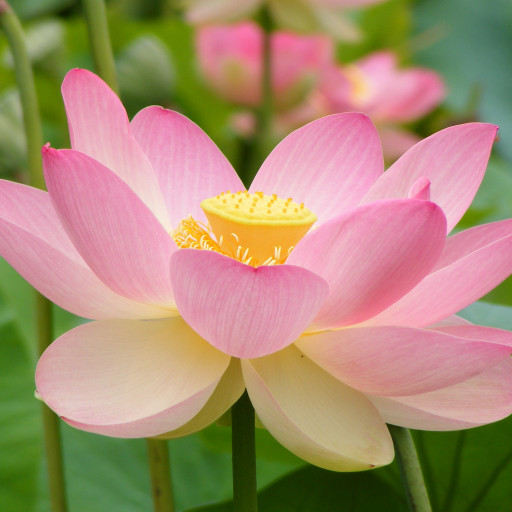
Known as the "Sacred Lotus," this ancient aquatic beauty has been revered for millennia as a symbol of spiritual awakening and purity. Rising clean and pristine from the murkiest mud, it tells a story of perseverance that resonates through Hindu and Buddhist traditions. Whether it is the rosy-pink Nelumbo nucifera from Asia or the creamy-yellow Nelumbo lutea of the Americas, these plants are the undisputed royalty of the pond.
🔍 How to Identify
- 🍃 Aerial Leaves: Unlike water lilies that float flat on the surface, Lotus leaves usually rise several feet above the water on thick, stiff stems. The leaves are "peltate," meaning the stem attaches directly to the center of the perfectly circular, emerald-green leaf.
- 🌸 Radiant Blooms: The large, multi-petaled flowers can reach up to 12 inches across. They feature a prominent, flat-topped yellow center that remains visible even as the petals begin to drop.
- 🚿 Showerhead Pods: Once the flower fades, the central receptacle develops into a unique, woody seed pod that looks remarkably like a handheld showerhead or a honeycomb, filled with nut-like seeds.
🏡 In Your Garden
- 🥣 The "Heavy Feeder" Rule: Lotuses are the bodybuilders of the aquatic world. To produce those massive leaves and blooms, they require rich, heavy clay soil and a consistent supply of fertilizer tabs throughout the growing season.
- 🧊 Tuber Fragility: The plant grows from sausage-linked tubers buried in the mud. These tubers have "growing eyes" that are extremely brittle; if you snap the tip while planting in the spring, the entire tuber may rot and fail to grow.
- ☀️ Heat Seekers: To bloom successfully, Nelumbo requires high light and consistent warmth. If your summers are short or cool, the plant may produce plenty of foliage but skip the flowering stage entirely.
⚠️ Safety & Toxicity
- ✅ Generally Safe: Nelumbo species are considered non-toxic to humans, dogs, and cats. In many cultures, the roots, seeds, and young leaves are celebrated culinary delicacies.
- 💧 Environment Matters: Because lotuses are excellent at "bioremediation" (absorbing toxins to clean the water), they can store heavy metals if grown in polluted ponds. Only consume lotus products sourced from clean, food-grade environments.
✨ Fun Fact
The Lotus is the ultimate master of self-cleaning. Its leaves possess what scientists call the "Lotus Effect"—a microscopic surface structure that causes water to bead up into perfect spheres. As the water rolls off, it picks up every grain of dust and even bacteria, leaving the leaf perfectly dry and spotless!

Detailed Care Instructions
To grow a Nelumbo plant, also known as the lotus plant, you can follow these steps:
- Obtain seeds: Purchase Nelumbo seeds from a reputable supplier or try collecting seeds from mature plants. Fresh seeds are preferred for better germination rates.
- Prepare the soil: Nelumbo plants require a mix of loamy soil and clay. Prepare a container or pond with this soil mix. If planting in a container, choose a wide, shallow pot that is at least 12 inches deep. If planting in a pond, select a location that receives full sunlight.
- Stratify the seeds: Nelumbo seeds need cold stratification to break their dormancy. Place the seeds in a container filled with distilled water and keep them in the refrigerator at a temperature between 32-41°F (0-5°C) for four to eight weeks. Change the water every few days to prevent mold and ensure proper hydration.
- Sow the seeds: After the stratification period, remove the seeds from the refrigerator and plant them about an inch deep in the prepared soil. If using a container, cover the seeds with a thin layer of gravel or sand. If planting in a pond, press the seeds gently into the soil at the bottom.
- Maintain water levels: Keep the soil constantly moist for the first few weeks until the plants start to grow. Maintain a water depth of 2-4 inches above the soil surface. Avoid submerging the seeds or young plants entirely, as this may inhibit growth.
- Provide sunlight: Nelumbo plants require full sun to thrive. Ensure they receive at least six to eight hours of direct sunlight daily. If growing indoors, place the container near a south or west-facing window.
- Fertilize regularly: Use a slow-release, aquatic fertilizer specifically designed for lotus or Nelumbo plants. Apply the fertilizer according to the instructions on the package.
- Control pests: Monitor the plants for any pests, such as aphids or snails. Treat any infestations promptly using organic insecticides or by manually removing the pests.
- Prune as needed: Remove dead leaves or spent flowers to maintain the health and appearance of the plant.
- Overwintering: In colder climates, lotus plants may need protection during winter. Move potted plants to a well-insulated, bright area with a constant temperature above freezing. In ponds, ensure the water doesn't freeze completely by using a pond heater or moving the plants to deeper water if possible.
By following these steps, you can successfully grow Nelumbo plants and enjoy their beautiful blooms.

Place in a bright room that is sun drenched almost all day. Or directly in a south-facing window.
Nelumbo plant requires regular watering to grow healthily. The general rule of thumb is to keep the soil consistently moist, but not waterlogged. It's important to provide enough water to saturate the roots, but also to allow for proper drainage.
To water, the plant's soil must be checked first. Stick your finger about an inch deep into the soil to feel if it's dry or moist. If the soil feels dry, it's time to water.
Slowly pour water over the soil, ensuring it's spread evenly to avoid pooling water in one area. It's best to avoid watering the plant's leaves as this can cause damage or invite fungal diseases.
In hot and dry conditions, watering the plant daily may be necessary. During cooler weather, watering once or twice a week may suffice. It's important to note that too much water can lead to root rot, so monitoring the soil's moisture level is crucial.
To fertilize this aquatic plant, use a slow-release fertilizer with a balanced ratio of nutrients. Apply the fertilizer to the soil at the bottom of the pond or container, taking care not to disturb the root system. Ideally, fertilize the plant once a month during the growing season, which ranges from spring to fall. Monitor the plant's growth and adjust the fertilization schedule as needed. Avoid over-fertilizing, as this can lead to excessive growth and decreased water quality.
For optimum growth, the Nelumbo plant requires a specific type of soil that has a balanced pH level and ample nutrients. This soil should have a slightly acidic pH level of around 6.5-7.5. The soil should be well-draining, but also retain enough moisture to support the plant's water needs. A nutrient-rich, loamy soil is considered ideal for Nelumbo plants, with a good balance of sandy and clay components. Organic matter should also be added to the soil to boost its fertility and texture. Avoid using soils that are too heavy or compacted, as they can lead to poor drainage and hinder the growth of the plant. It is also recommended to add a slow-release fertilizer to the soil to provide consistent nutrition throughout the growing season.
To propagate this plant, you will need to collect its seeds once they have fully ripened. These seeds should then be soaked in warm water for a period of at least 24 hours to help soften their outer coating and improve the likelihood of successful germination.
Next, you will need to carefully plant these seeds in soil that is rich in nutrients and keeps moist, but not waterlogged. Plant the seeds at a depth of about 2-3 inches and cover them with an inch of soil.
Keep the soil consistently moist and in a warm, sunny location to provide the best chance for successful germination. You may also want to cover the seedling area with plastic wrap or a clear plastic bag to help maintain moisture levels.
After several weeks, you should start to see sprouts emerging from the soil. As the seedlings grow, you can transplant them to larger containers or move them outdoors to a sunny, shallow pond or water garden where they can continue to thrive and grow into mature plants.
With proper care and attention, these plants can produce stunning blooms and spread across sizable surface areas, providing a beautiful accent to any water garden or natural pond setting.







