Plant Overview
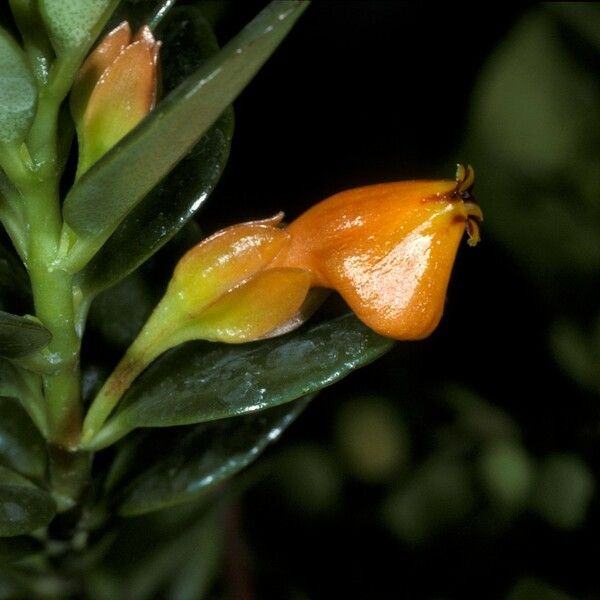
Known as the "Goldfish Plant," Nematanthus strigillosus is a charming Brazilian epiphyte that brings a splash of tropical color to indoor spaces. Its name comes from the peculiar shape of its flowers, which look like tiny, shimmering orange fish swimming through a sea of dark green foliage. In its native home, it clings to tree branches in the humid Atlantic Forest, making it a perfect candidate for hanging baskets in your home.
🔍 How to Identify
- 🍃 Foliage: Small, elliptical leaves that are thick, glossy, and waxy to the touch. They are designed to store water, much like a succulent.
- 🐟 The "Goldfish" Blooms: Tubular, pouch-like flowers in shades of bright orange or reddish-orange, featuring a constricted opening at the tip that mimics a fish's mouth.
- 🌿 Growth Habit: A trailing or spreading plant with slightly woody stems that gracefully arch over the sides of a container as they mature.
🏡 In Your Garden
- ☁️ Airy Foundations: Because this plant is an epiphyte (living on trees in nature), it hates heavy, compacted soil. It thrives best in a chunky, well-draining mix—similar to what you would use for orchids—to prevent "wet feet."
- 💧 Humidity over Wetness: It craves high humidity but is very sensitive to overwatering. If the waxy leaves start to drop suddenly, it’s usually a protest against soggy roots or a sudden cold draft.
- ☀️ Filtered Glow: It prefers bright, indirect light to produce its famous flowers. Direct midday sun will scorch the leaves, while too much shade will result in a leggy plant that refuses to bloom.
⚠️ Safety & Toxicity
- 🐾 Pet Friendly: Great news for animal lovers! Nematanthus strigillosus is generally considered non-toxic to cats, dogs, and horses according to the ASPCA.
- 👶 Safe for Kids: It is safe for households with children. While not poisonous, the waxy leaves and stems are not meant for consumption and should be kept out of reach of curious toddlers to avoid choking hazards.
✨ Fun Fact
The unique "pouch" shape of the flower isn't just a quirky visual; it is an evolutionary specialization. The narrow opening is perfectly sized for the beaks of hummingbirds, which are the plant's primary pollinators in the Brazilian rainforest!

Detailed Care Instructions

Place in a window with dappled sun or a spot in the middle of a room. Or directly in a window facing west or east.

To water this plant, one should first check the moisture level of the soil by inserting a finger or a moisture meter 2-3 inches deep into the soil. If the soil is dry, it is time to water the plant. When watering, one should pour the water slowly and evenly onto the soil until the excess water flows out through the drainage hole at the bottom of the pot. It is important not to let the plant sit in standing water as this can lead to overwatering and root rot. One should also avoid getting water on the leaves as this can cause damage and increase the risk of fungal diseases. The frequency of watering will depend on factors such as the size of the pot, the humidity level, and the temperature. In general, it is better to underwater than overwater the plant, and the soil should be allowed to dry out slightly between watering sessions.
These plant needs regular fertilizing during growing seasons. Fertilizing your plants in dormant state during the winter, might result in scorching or browning of the leaf tips. If mature plants display signs of nutrient insufficiency, fertilizer administration is necessary to restore the plant to its previous state.
You may use Flower Fertilizer for your Nematanthus Strigillosus
The best type of soil to use with this particular plant is a mixture that is specifically formulated for tropical plants. The soil should have a slightly acidic pH level and be well-draining, allowing water to flow easily through it to prevent the roots from becoming waterlogged. Additionally, the soil should be rich in organic matter, which will help provide the necessary nutrients and minerals that the plant needs to thrive. It is also important to make sure that the soil is kept moist but not waterlogged, as this can lead to root rot and other issues. A good rule of thumb is to water the plant when the top inch of soil feels dry to the touch. Finally, it is important to fertilize the plant regularly with a balanced fertilizer to ensure that it has all the nutrients it needs to grow healthy and strong.
Common pests of the nematanthus strigillosus include Mealybugs, spider mites, aphids, thrips. Make a habit of checking your nematanthus strigillosus frequently for pests so that any infestations can be caught and managed early.








