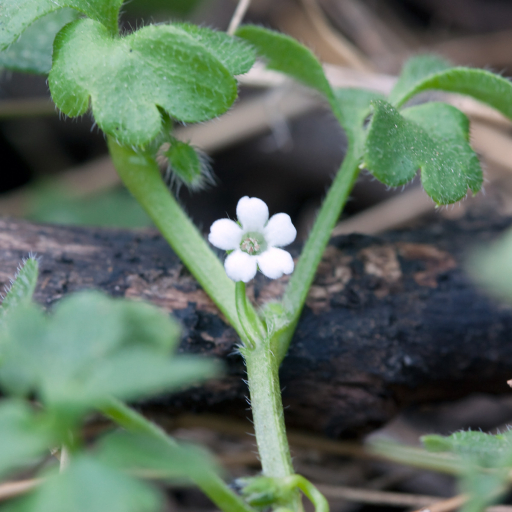
Plant Overview
Meet the shyest member of the waterleaf family. Often called the Smallflower Baby Blue Eyes, Nemophila aphylla is the subtle, woodland relative of the bright blue garden favorites. While it doesn’t shout for attention with neon colors, its delicate, lace-like foliage creates a soft, green carpet in the quiet, damp corners of the forest.
🔍 How to Identify
- 🌸 The Bloom: Tiny, bell-shaped flowers that are white to pale lavender. They are often less than a quarter-inch wide—so small they are frequently hidden by the leaves!
- 🌿 The Foliage: Deeply lobed, light green leaves that look almost like miniature ferns or feathery lace.
- 🌱 Growth Habit: A low-growing, sprawling annual that creeps along the ground. It has weak, watery stems that allow it to "climb" slightly over leaf litter.
🏡 In Your Garden
- 💧 Moisture Lover: This plant is a specialist for damp, shady spots. In the wild, it thrives in floodplains and moist ravines; it will quickly wilt if the soil dries out completely.
- 🌥️ Shadow Dweller: Unlike its showy cousins, this species shuns the spotlight. It prefers dappled sunlight or full shade, making it a rare flowering option for the darkest corners of a woodland garden.
- 🍂 The Spring Sprint: As a "spring ephemeral," it finishes its life cycle quickly. It blooms early in the year and disappears as the summer heat sets in, leaving seeds behind for next year.
⚠️ Safety & Toxicity
- ✅ Non-Toxic: Nemophila aphylla is generally considered safe and non-toxic to humans, dogs, and cats.
- 🤚 Physical Fragility: While not poisonous, the plant is incredibly delicate. Its stems are high in water content and break easily, so it should be planted away from foot traffic or curious paws.
✨ Fun Fact
- 🌳 The Name Game: The genus name Nemophila comes from the Greek words nemos (woodland) and philos (loving). It literally translates to "woodland-lover," a perfect tribute to its favorite place to grow!

Detailed Care Instructions
To grow Nemophila Aphylla, also known as the baby blue eyes flower, follow these steps:
- Choose the right location: Nemophila Aphylla prefers partial shade or full sun in mild climates. Ensure the area has well-draining soil.
- Prepare the soil: Turn over the soil in the planting area to a depth of 6-8 inches and remove any weeds or debris. Add compost or well-rotted manure to enrich the soil.
- Sow the seeds: Sow the Nemophila Aphylla seeds directly into the prepared soil. You can scatter the seeds evenly or sow them in rows, spacing them about 6-8 inches apart. Lightly cover the seeds with a thin layer of soil, about 1/8 inch deep.
- Water regularly: Keep the soil moist but not waterlogged. Water regularly, especially during dry spells, until the seeds germinate and plants establish themselves. Avoid overwatering as it can lead to root rot.
- Thin the seedlings: After the seedlings have grown a few inches tall, thin them out to provide enough space for each plant to thrive. Space them about 6-8 inches apart, removing the weaker seedlings.
- Mulch the plants: Apply a layer of organic mulch, such as straw or compost, around the base of the plants. This helps retain moisture, suppress weeds, and keep the roots cool.
- Fertilize (optional): If your soil is not particularly fertile, you can apply a balanced fertilizer once or twice during the growing season to promote healthy growth. Follow the package instructions for the recommended dosage.
- Monitor pests and diseases: Keep an eye out for common garden pests such as slugs, snails, and aphids. Treat infestations promptly using organic pest control methods.
- Deadhead spent flowers: To encourage continuous blooming, remove faded flowers by pinching them off or cutting them back. This prompts the plant to produce more blooms.
- Enjoy the blooms: Nemophila Aphylla typically blooms from spring to early summer. Enjoy the delicate, blue flowers and their attractive foliage.
Remember to check the specific growing requirements for your region, as conditions may vary.

Place in a bright room that is sun drenched almost all day. Or directly in a south-facing window.

To water this plant, use a watering can or hose with a gentle spray attachment to avoid disturbing the soil or damaging the delicate leaves. Water deeply and evenly, being careful not to overwater or let the soil become too saturated. Allow the soil to dry slightly between waterings, but do not let it completely dry out. Avoid getting water on the foliage to prevent the development of fungal diseases. Water in the morning or early evening to prevent evaporation and reduce stress on the plant during hot weather.
To fertilize this plant, apply a balanced, all-purpose fertilizer once a month during the growing season. Water the plant thoroughly before and after applying the fertilizer. Be sure to follow the manufacturer's instructions for application rates and frequency. Avoid over-fertilizing, as this can cause excessive growth and reduce flower production. Consider using a slow-release fertilizer if you prefer less frequent applications.
For optimum growth and development of this particular plant, it is recommended to use a well-draining soil that is rich in organic matter. The pH level of the soil should be slightly acidic to neutral, ideally between 5.5 and 7.0. This will help to ensure that the plant can absorb all the essential nutrients it needs to thrive. It is also important to ensure that the soil is consistently moist, but not waterlogged, as this can lead to root rot. Additionally, incorporating a slow-release fertilizer into the soil can provide the plant with the necessary nutrients to support healthy growth.
Nemophila Aphylla is propagated through seed propagation. The seeds should be collected when they have fully matured, which is typically in the late summer or early fall. They can then be sown directly into soil or started indoors in a seed tray. If starting indoors, the seeds should be planted in a well-draining soil mix with good moisture retention. The seeds require light to germinate, so they should not be covered with soil. They should be kept moist until they germinate, which typically takes one to two weeks. Once the seedlings have several true leaves, they can be transplanted into individual containers or directly into a garden bed. It is important to keep the soil moist but not waterlogged, and to provide the plants with bright but indirect sunlight. With proper care, Nemophila Aphylla will produce lovely blooms and can be a beautiful addition to any garden.








