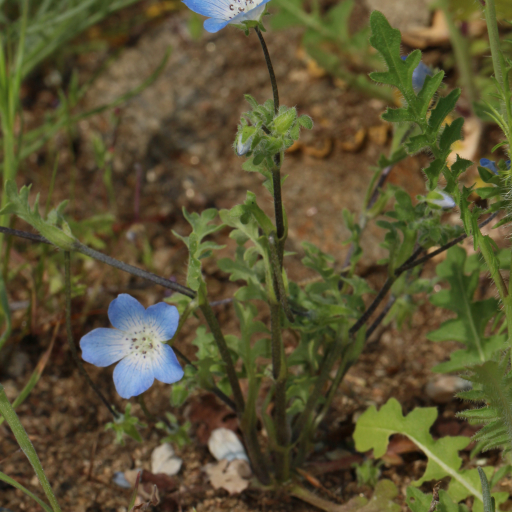
Plant Overview
Often called "Baby Blue Eyes," this charming California native is famous for creating vast, sky-blue carpets across meadows during the spring. Its delicate, cup-shaped blossoms are so vibrant they often look like a reflection of the clear sky fallen to the earth. In Victorian flower language, these blooms symbolized "success everywhere," making them a historic favorite for well-wishers and cottage gardeners alike.
🔍 How to Identify
- 🌸 Sky-Blue Blooms: The most striking feature is the five-petaled, bell-shaped flower, which displays a brilliant azure blue that fades into a clean, white center.
- 🌿 Lacy Foliage: The leaves are light green, deeply lobed, and almost fern-like in appearance, providing a soft, textured cushion for the bright flowers.
- 🌱 Prostrate Growth: This is a low-growing annual that rarely exceeds 6 to 12 inches in height, preferring to spread horizontally and "spill" over the edges of pots or garden borders.
🏡 In Your Garden
- ❄️ Cool Season Specialist: Unlike many sun-loving annuals, Baby Blue Eyes thrives in the cool temperatures of early spring. It tends to "melt" or go dormant once the summer heat becomes intense, so it is best enjoyed as a seasonal herald.
- 🚿 Sensitive Transplanter: Because it develops a delicate root system, it often suffers from transplant shock. It is much happier when sown directly into the soil where it is intended to grow permanently.
- 🐝 Pollinator Buffet: Its open, bowl-shaped flowers are specifically designed to be easily accessible for small native bees and syrphid flies, making it a powerhouse for local biodiversity.
⚠️ Safety & Toxicity
- ✅ Non-Toxic Status: Nemophila menziesii is generally considered safe and non-toxic for both humans and household pets like cats and dogs.
- 🧤 Mild Irritation: While not poisonous, some individuals with highly sensitive skin may experience very slight irritation from the tiny, soft hairs found on the stems and leaves if handled excessively.
✨ Fun Fact
- 🎞️ Nature’s Name: The genus name Nemophila is derived from the Greek words nemos (wooded pasture) and philos (loving), perfectly describing its favorite wild habitat at the edge of dappled woodlands.

Detailed Care Instructions
To grow Nemophila Menziesii, also known as baby blue eyes, you can follow these steps:
- Climate and Soil Conditions: Nemophila Menziesii prefers cool, coastal climates and well-draining soil. It thrives in areas with mild temperatures and partial shade.
- Choosing Seeds: Obtain Nemophila Menziesii seeds from a reliable source. You can buy them from local nurseries, garden centers, or online seed suppliers.
- Planting Seeds:
a. Prepare the seedbed: Clear the area of weeds, rocks, and debris. Loosen the soil to a depth of 6-8 inches, adding compost or organic matter to improve the soil's fertility and drainage.
b. Sow the seeds: Sprinkle the seeds evenly over the prepared soil. Gently rake the soil to lightly cover the seeds (approximately 1/8 inch deep).
c. Watering: After sowing, water the seeded area gently to ensure the top layer of soil remains moist. Avoid overwatering, as excessive moisture can lead to rotting.
- Care and Maintenance:
a. Watering: Keep the soil consistently moist but not waterlogged. Water the plants when the soil feels dry to the touch.
b. Fertilization: Apply a balanced, all-purpose fertilizer once every few weeks during the growing season to promote healthy growth and blooming.
c. Weed Control: Regularly check and remove any weeds that compete for nutrients and moisture with the baby blue eyes plants.
d. Mulching: Mulch the soil around the plants with organic material such as straw or wood chips to retain moisture, suppress weeds, and provide insulation.
e. Providing Shade: If you live in a hot climate, provide partial shade to protect the plants from excessive heat or sunburn.
f. Deadheading: Regularly remove wilted or faded flowers to encourage continuous blooming.
- Harvesting Seeds: If you want to collect the seeds for future planting, allow the flowers to wither and form seed pods. Once the pods turn brown and dry, harvest them and store them in a cool, dry place for future use.
By following these steps, you should be able to successfully grow Nemophila Menziesii plants and enjoy their delicate, baby blue flowers in your garden.

Place in a bright room that is sun drenched almost all day. Or directly in a south-facing window.

Nemophila Menziesii is a delicate plant that requires a specific watering method. It is essential to water the plant at the base to avoid wetting the foliage, which can result in fungal growth and disease. The plant needs to have well-draining soil that can hold moisture. During the growing season, it is recommended to water the plant sparingly, as it does not require large amounts of water. However, it is essential to keep the soil moist but not waterlogged. The plant may require more water during hotter weather and droughts. It is crucial to water early in the day, so the leaves can dry quickly, and avoid watering at night. Over-watering can cause root rot and other issues, so it is recommended to check the moisture level of the soil before watering.
To fertilize this plant, apply a well-balanced fertilizer with equal amounts of nitrogen, phosphorus, and potassium. Apply the fertilizer every two to three weeks during the growing season, starting in early spring. Be sure to follow the manufacturer's instructions for application rates and methods. Avoid over-fertilizing, as this can lead to excessive growth and reduced flowering. Additionally, it is important to provide adequate water and sunlight for the plant to thrive.
The ideal soil for the plant of Nemophila Menziesii is a well-draining, fertile soil that is mildly acidic. This plant prefers soil that is loose and nutrient-rich with good moisture retention capacity. It thrives best in soil that is rich in organic matter, which allows the roots to easily absorb nutrients and moisture. The soil should be well-drained to prevent waterlogging, which can lead to root rot and other fungal diseases. The plant prefers a soil pH between 6.0 and 7.0. Adding organic matter such as compost or leaf litter to the soil can improve its fertility and structure. It is important to keep the soil consistently moist, but not waterlogged, especially during the plant's growing season.
To propagate this plant, you should start by collecting mature seeds from healthy plants. These seeds should be sown in trays or pots with well-draining soil and kept in a warm and bright spot. Once the seeds have germinated, you can transplant the seedlings into individual pots to allow for their growth and development. They should receive regular watering and be kept in a sheltered spot until they are strong enough to be planted outside. It is also possible to propagate this plant using cuttings, which can be taken from established plants during their growing season and rooted in water or a suitable rooting hormone solution. Once the cuttings have taken root, they can be transplanted into soil and grown on as you would with seedlings. Care should be taken to ensure that all propagation methods are carried out carefully and with attention to the plant's specific needs in terms of watering, fertilizing, and climate, to ensure that the new plants thrive and grow to their full potential.








