Plant Overview
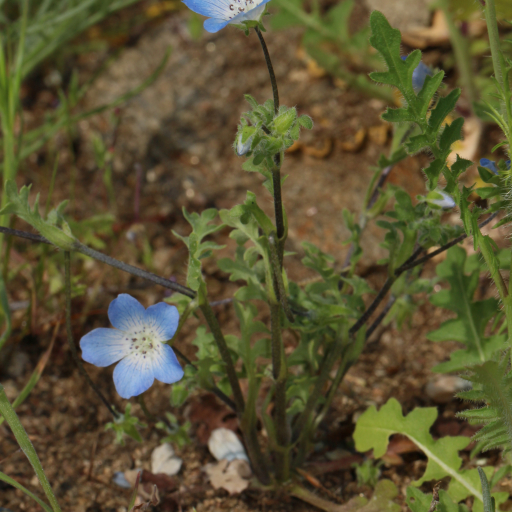
Known affectionately as "Baby Blue Eyes," Nemophila menziesii is a charming wildflower that paints the hills of the American West in a shade of blue so pure it mirrors a clear spring sky. These delicate annuals are famous for their role in California's "superblooms," where they form vast, shimmering carpets that look like the ocean has moved inland. They are the quintessential symbol of renewal and gentle beauty in the garden.
🔍 How to Identify
- 🌸 The Bloom: Small, bowl-shaped flowers featuring five rounded petals of a brilliant sky-blue, fading into a bright white center (occasionally dotted with dark spots).
- 🍃 The Foliage: Light green, feathery leaves that are deeply lobed and covered in fine, soft hairs, giving the plant a textured, "fern-like" appearance.
- 🌱 Growth Habit: A low-growing, succulent-stemmed plant that rarely exceeds 10 inches in height, preferring to sprawl outward to form a lush, floral carpet.
🏡 In Your Garden
- 🌥️ Cool Weather Lovers: Unlike many sun-worshippers, Baby Blue Eyes thrive in the cool temperatures of early spring. They are "ephemeral" in spirit, meaning they will put on a spectacular show in the morning or early season but will naturally fade away once the high heat of summer arrives.
- 💧 Moisture Balance: They enjoy consistent moisture but are sensitive to "wet feet." In a garden setting, they perform best in well-draining soil that mimics the rocky slopes of their native habitat.
- 🔄 Self-Seeding Magic: While they are annuals that die back after one season, they are prolific self-seeders. If you leave the dried seed pods alone, they will effectively "replant" themselves, ensuring a fresh blue carpet returns the following spring without any extra work.
⚠️ Safety & Toxicity
- 🐾 Pet Friendly: Good news for pet owners! Nemophila menziesii is generally considered non-toxic to dogs, cats, and horses, making it a "worry-free" addition to a shared backyard.
- 👶 Safe for Kids: These plants lack thorns, prickles, or irritating saps. While not intended for consumption, they are physically safe for children to touch and explore in a sensory garden.
✨ Fun Fact
The name Nemophila comes from the Greek words nemos (woodland) and philos (loving). Despite their fame in open meadows, they actually "love the woodland" edges where they can find a bit of afternoon shade to protect their delicate petals from the midday sun.

Detailed Care Instructions
Nemophila Menziezii, also known as baby blue eyes, is a beautiful annual flower that is native to California. Here are some tips on how to grow Nemophila Menziezii:
- Choose the right location: Nemophila Menziezii prefers full sun to partial shade. Make sure to plant them in a location where they will receive at least 6 hours of sunlight per day.
- Prepare the soil: Nemophila Menziezii prefers well-draining, slightly acidic soil. Amend the soil with compost or organic matter to improve drainage and fertility.
- Plant the seeds: Nemophila Menziezii can be easily grown from seeds. Sow the seeds directly into the garden bed in early spring after the last frost. Scatter the seeds on top of the soil and lightly press them into the soil. Keep the soil moist until the seeds germinate.
- Watering: Water the plants regularly, keeping the soil consistently moist but not waterlogged. Water from the base of the plant to prevent fungal diseases.
- Fertilizing: Nemophila Menziezii does not require much fertilization. However, you can feed them with a balanced liquid fertilizer every 4-6 weeks to promote healthy growth and blooming.
- Mulching: Mulch around the plants with a layer of organic mulch to help retain moisture and suppress weeds.
- Pruning: Deadhead the spent flowers regularly to promote continuous blooming and prevent self-seeding.
- Pests and diseases: Keep an eye out for common pests such as aphids, slugs, and snails. Treat any infestations promptly to prevent damage to the plants. Ensure good air circulation around the plants to prevent fungal diseases.
By following these tips, you can successfully grow Nemophila Menziezii and enjoy their delicate blue flowers in your garden.

Place in a bright room that is sun drenched almost all day. Or directly in a south-facing window.

Nemophila Menziezii plants should be watered consistently and evenly throughout the growing season. It is important to water the plant at the base, avoiding getting the foliage wet to prevent disease. The soil should be kept consistently moist, but not waterlogged. Checking the soil regularly and ensuring it does not dry out completely is key to keeping the plant healthy. Additionally, watering early in the morning or in the evening is recommended to avoid evaporation and ensure the plant can absorb the water efficiently.
Nemophila Menziezii plants should be fertilized with a balanced, water-soluble fertilizer once a month during the growing season. Be sure to follow the instructions on the fertilizer package for the correct dosage and application method. Avoid over-fertilizing, as this can be harmful to the plant. Water the plant thoroughly after fertilizing to ensure proper absorption.
Nemophila menziezii plants prefer to grow in well-draining soil that is slightly acidic to neutral in pH. A sandy loam or sandy soil mixed with organic compost is recommended for optimal growth. It is important to ensure that the soil is rich in nutrients and has good aeration to promote healthy root development. Additionally, adding perlite or sand to the soil mixture can help improve drainage and prevent waterlogging, which can lead to root rot. Consider adding a slow-release fertilizer to the soil to provide the necessary nutrients for robust growth. Regularly monitoring moisture levels and watering the plants as needed will help ensure the Nemophila menziezii thrive in their preferred soil conditions.
To propagate Nemophila Menziezii, you can collect seeds from mature plants and sow them directly in well-draining soil. It is best to sow the seeds in the fall or early spring. Ensure that the soil is kept consistently moist but not waterlogged during germination.
You can also propagate Nemophila Menziezii through division by carefully separating mature plants into smaller sections and replanting them in separate pots or garden beds. Make sure each division has a good root system and water it well after replanting.
Another method of propagation is through stem cuttings. Take a healthy stem cutting from a mature plant, dip it in rooting hormone, and plant it in a pot with well-draining soil. Keep the soil moist and provide indirect sunlight until roots develop.
Whichever method you choose, ensure that the new plants are kept in a location with adequate sunlight and water to promote healthy growth. It is important to provide proper care and maintenance to ensure successful propagation of Nemophila Menziezii plants.








