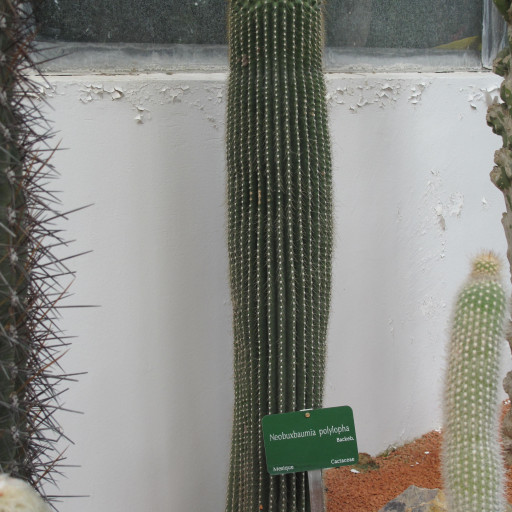
Plant Overview
Known as the "Golden Saguaro" or the "Cone Cactus," Neobuxbaumia polylopha is a majestic giant native to the limestone canyons of Mexico. While it starts as a modest, green cylinder in a pot, in the wild, it grows into a massive, unbranched pillar that can reach over 40 feet tall. Its architectural symmetry and golden-tinted spines make it a prized centerpiece for xeriscapes and cactus collectors alike.
🔍 How to Identify
- 🌵 The Ribs: Unlike many columnar cacti, this species features an exceptionally high number of ribs (often between 30 and 50), which gives the plant a finely pleated or "accordion" appearance.
- ✨ Golden Spines: The plant is covered in thin, bristly spines that range from yellow to pale brown. These spines are not particularly long but are dense enough to give the cactus a shimmering, golden glow in the sunlight.
- 🌺 Top-Heavy Blooms: When mature, it produces small, funnel-shaped flowers in a striking deep red or magenta. Interestingly, these flowers sprout near the very top of the column rather than along the sides.
🏡 In Your Garden
- ☀️ Sun Adaptation: This cactus craves intense light to maintain its tight ribbing and golden spine color. If grown indoors without enough light, it will "etiolate," meaning it will stretch and become skinny and weak at the top.
- 🪴 The Taproot Trap: It develops a significant root system to support its eventual height. If you are growing it in a container, use a heavy, deep pot (like terracotta) to prevent the plant from becoming top-heavy and toppling over as it matures.
- 💧 Drainage is Non-Negotiable: Because it naturally grows on limestone cliffs, it hates "wet feet." Use a mineral-heavy soil mix with plenty of pumice or perlite to ensure water moves through the roots quickly.
⚠️ Safety & Toxicity
- 🟢 Non-Toxic: This cactus is generally considered non-toxic to both humans and common household pets like cats and dogs.
- 🌵 Physical Hazard: While not "poisonous," its spines are sharp and brittle. They can easily puncture the skin or become lodged in a curious pet's paw or nose. Always wear thick gloves when repotting and keep it away from high-traffic walkways.
✨ Fun Fact
In its native habitat in Mexico, the Neobuxbaumia polylopha is considered a "vulnerable" species. While it is common in the nursery trade, its wild populations are threatened by habitat loss, making every garden-grown specimen a small contribution to the preservation of the species' legacy.

Detailed Care Instructions
| Lighting | Full Sun |
| Hardiness Zones | 9B - 11 |
To grow a Neobuxbaumia Polylopha plant, also known as Mexican giant cardon, follow these steps:
- Obtain seeds or a young plant: Purchase seeds online or find a nursery that sells Neobuxbaumia Polylopha plants. Alternatively, you can collect seeds from mature plants if you have access to them.
- Choose a suitable location: Neobuxbaumia Polylopha requires a warm and sunny location, ideally in a desert-like climate. Make sure the chosen spot receives full sun for at least six to eight hours a day.
- Prepare the soil: Neobuxbaumia Polylopha prefers well-draining soil. If your soil tends to retain moisture and become waterlogged, mix in some sand or perlite to improve drainage. Avoid heavy clay soils.
- Sow the seeds or plant the young plant: If you have seeds, plant them in pots or directly in the ground. Sow the seeds about 1 inch deep and cover them lightly with soil. If using a young plant, dig a hole slightly larger than its root ball and place the plant in the hole. Backfill with soil and gently firm it around the base of the plant.
- Watering: Water the plant regularly during its first growing season to establish proper root development. After that, Neobuxbaumia Polylopha is highly drought-tolerant and requires minimal watering. Water only when the soil is completely dry to avoid overwatering.
- Fertilization: Neobuxbaumia Polylopha does not require regular fertilization. However, you can apply a balanced cactus or succulent fertilizer once or twice during the growing season to provide some nutrients. Follow the package instructions for application rates.
- Pruning: Neobuxbaumia Polylopha generally does not require pruning, but you can remove any dead or damaged branches for aesthetic purposes or to promote airflow.
- Protection from frost: Neobuxbaumia Polylopha is not frost-tolerant and requires protection during cold winter months. Cover plants with a cloth or move potted plants indoors to protect them from freezing temperatures.
Remember to check for any local regulations or restrictions before planting Neobuxbaumia Polylopha, as it may be protected or require permits in certain areas.

Place in a bright room that is sun drenched almost all day. Or directly in a south-facing window.

To water this plant, you should first ensure that the soil is completely dry before watering. This plant is drought-tolerant and does not need frequent watering. When watering, pour water slowly and evenly around the base of the plant until the soil is moistened. Avoid getting water on the plant's leaves or stem to prevent rot. During the winter months, reduce watering frequency to allow the plant to rest.
To fertilize the Neobuxbaumia Polylopha plant, use a balanced cactus fertilizer with equal parts nitrogen, phosphorous, and potassium. Apply the fertilizer once a month during the growing season (spring and summer) and reduce the frequency to every two months during the dormant season (fall and winter). Dilute the fertilizer to half strength before use and apply it to moist soil. Avoid applying fertilizer to the plant foliage. Always follow the manufacturer's instructions on the fertilizer packaging.
The ideal soil mix for the Neobuxbaumia Polylopha plant is a well-draining, sandy soil that is slightly acidic with a pH range of 6.0 to 7.5. A soil mixture that contains a high proportion of sand, perlite or vermiculite will benefit the plant. The soil should be free of any clay or loamy soil as it can lead to root rot. The plant prefers a dry soil mix, so it is recommended to use a soil mix with low water retention. In addition to the soil mix, it is recommended to add some compost or organic matter to the soil to improve soil structure and drainage and to provide nutrients to the plant. When planting, ensure that the soil is well-draining and compacted around the roots to prevent air pockets. Overall, Neobuxbaumia Polylopha thrives in a well-drained, nutrient-rich medium and under the right growing conditions, it can grow into a stately and impressive plant.
Propagation of the plant can be achieved through the process of seed germination or stem cutting. In the case of seed germination, the seeds need to be removed from the fruit and cleaned thoroughly before planting. They can be sowed directly in the soil or in a pot filled with well-drained soil, ensuring that they are not buried too deep. The pot or the planting area, in this case, needs to be covered with a transparent plastic bag to create a greenhouse-like environment that retains moisture and heat.
Watering the seed regularly is important, and the bag needs to be removed once the plant's shoot has developed. Cuttings from the plant can also be propagated by taking a small section of the stem and letting it root in well-drained soil. The cutting should be allowed to dry for a day or two before planting to avoid any chance of rot. The potting soil needs to be kept moist, and the new plant needs to be placed in an area with indirect sunlight until it establishes roots. Once the roots are established, the plant can be relocated to a permanent site with full sunlight.
Common pests of the cone cactus include Scale insect, mealybugs, spider mites. Make a habit of checking your cone cactus frequently for pests so that any infestations can be caught and managed early.








