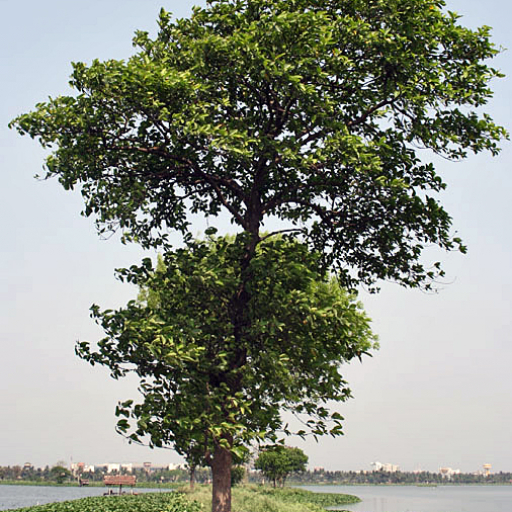
Plant Overview
Known as the Kadam or the Burflower-tree, this legendary giant is steeped in Indian mythology and folklore. Often associated with the deity Krishna, who is said to have played his flute beneath its fragrant shade, it is celebrated for its perfectly spherical, golden-yellow flowers that look like glowing suns. In its native South Asia, the blooming of the Kadam is the traditional herald of the monsoon season.
🔍 How to Identify
- 🟠 The Flowers: Its most striking feature is the ball-shaped inflorescence. These "orange pom-poms" are actually clusters of hundreds of tiny, sweet-scented flowers.
- 🍃 The Foliage: The leaves are large, glossy, and oval-shaped with very distinct, deep veins that give the tree a lush, tropical appearance.
- 🌳 Growth Habit: It is a fast-growing tree with a straight, tall trunk and horizontal branches that spread out to form a majestic, umbrella-like canopy.
🏡 In Your Garden
- 💧 Thirsty Roots: In the wild, this tree loves "wet feet" and is often found near riverbanks. If you plant one, ensure the soil stays consistently moist; it will struggle in dry, neglected corners.
- 🚀 Space Requirements: This is not a plant for a small backyard or a balcony pot! Because it grows incredibly fast (reaching up to 45 meters in the wild), it needs plenty of vertical and horizontal room to thrive without interfering with structures.
- ☀️ Sun Seeker: To produce those iconic ball-shaped flowers, the Kadam needs full, direct sunlight. Shady spots will lead to leggy growth and fewer blooms.
⚠️ Safety & Toxicity
- ✅ Status: Generally considered non-toxic and safe for humans and pets.
- 🍂 Garden Maintenance: While the tree isn't poisonous, the large leaves and heavy fruit drop can create a slipping hazard on walkways or clog gutters.
- 💊 Traditional Use: Various parts of the tree are used in traditional Ayurvedic medicine, but you should never ingest any part of the plant without professional guidance.
✨ Fun Fact
The Kadam tree is the primary source of "Kadam Attar," a rare and traditional Indian perfume. The scent is described as "the smell of the first rain on dry earth," capturing the essence of the monsoon in a bottle.

Detailed Care Instructions
To grow Neolamarckia Cadamba plants, follow these steps:
- Obtain seeds or saplings: Neolamarckia Cadamba plants can be grown from seeds or saplings. Purchase seeds from a reputable nursery or collect them from existing plants. Alternatively, get saplings from a nursery or propagate them from cuttings.
- Choose the right location: Neolamarckia Cadamba plants prefer full sun to partial shade. Select a spot with well-draining soil that is rich in organic matter.
- Prepare the soil: Before planting, prepare the soil by removing any weeds or rocks. Loosen the soil to improve drainage and mix in compost or well-rotted manure to enrich it.
- Sow the seeds or plant the saplings: If using seeds, sow them in pots or seed trays filled with potting mix. Cover them lightly with soil and water gently. Place the pots or trays in a warm and sunny location. If using saplings, dig a hole slightly larger than the root ball and place the sapling in it, ensuring the top of the root ball is level with the soil surface.
- Water regularly: Neolamarckia Cadamba plants need regular and consistent watering to establish themselves. Keep the soil moist but not waterlogged. Water deeply, but allow the top inch or so of soil to dry out before watering again.
- Provide support: Neolamarckia Cadamba plants have weak branches, so it is advisable to provide support such as stakes or trellises when they are young.
- Prune if necessary: Once the plant reaches a desired height, you can prune it to shape it or control its growth. Remove dead, diseased, or crowded branches to promote healthy growth.
- Fertilization: Apply a balanced fertilizer every few months during the growing season to provide extra nutrients. Follow the manufacturer's instructions for dosage.
- Protection from pests and diseases: Neolamarckia Cadamba plants are generally resistant to pests and diseases. However, keep an eye out for potential issues such as aphids or leaf spots. Use appropriate organic or chemical treatments if necessary.
- Harvesting: Neolamarckia Cadamba trees produce fruit capsules that contain numerous seeds. Harvest the capsules once they turn yellowish-brown and allow them to dry. Extract the seeds for propagation or storage.
Remember, growing a Neolamarckia Cadamba plant requires patience, as it can take several years to reach maturity and start flowering.

Place in a bright room that is sun drenched almost all day. Or directly in a south-facing window.

The Neolamarckia Cadamba plant should be watered regularly, keeping the soil moist but not overly saturated. It is important to ensure proper drainage to prevent waterlogging and root rot. Allow the soil to slightly dry out between watering, but avoid letting it completely dry out. Depending on the climate and humidity, watering may need to be adjusted. It is important to water the soil rather than the leaves to prevent fungal growth. During periods of active growth, the plant may require more water, while during dormant periods it may need less.
- Choose a well-draining pot or site that receives partial shade.
- Use a balanced fertilizer (such as 10-10-10) and apply at the beginning of the growing season.
- For potted plants, mix the fertilizer with soil or apply on top of the soil and water thoroughly.
- For plants in the ground, sprinkle the fertilizer evenly around the plant base and water thoroughly.
- Repeat the fertilizer application every 4-6 weeks during the growing season.
- Reduce or stop fertilizing during the winter months.
- Monitor the plant for signs of over-fertilization, such as yellowing or burning of leaves, and adjust the amount and frequency of fertilizer accordingly.
When planting a certain tree species, it is important to choose the appropriate soil to ensure its optimum growth and development. With regards to this particular plant, soil preference is highly dependent on its specific characteristics and requirements.
To start with, the soil type must be well-drained to prevent waterlogging and ensure good aeration. It should not be too sandy nor too clayey, but must have a loamy texture with moderate organic matter content. This type of soil provides the right amount of moisture retention and nutrient availability for the roots.
Moreover, the pH level of the soil should be between 5.5 and 7.0 to prevent acidity or alkalinity issues. It is important to note that this species requires a slightly acidic soil environment for optimum growth and nutrient absorption.
When planting, it is crucial to ensure that the soil is rich in nutrients such as nitrogen, phosphorus, and potassium which are essential for the plant's growth and health. Appropriate soil amendments such as compost, aged manure, or organic fertilizers can be added to enrich the soil and enhance its nutrient content.
Overall, the best soil for this particular plant must be well-drained, loamy, slightly acidic, and nutrient-rich to ensure its healthy growth and development.
To propagate this plant, first take a 4-6 inch stem cutting from a healthy, mature plant using sharp, clean pruning shears. Remove the bottom leaves of the cutting and dip the cut end in rooting hormone powder. Plant the cutting in moist soil in a pot or seedling tray. Keep it in a warm, humid location with indirect sunlight. Water the cutting regularly to keep the soil moist but not waterlogged.
After a few weeks, roots should start to form, and new growth will appear on the cutting. Once the cutting has developed a good root system and several new leaves, it can be transplanted into a larger pot or directly into the garden. Water the transplanted plant regularly and protect it from direct sunlight until it is well-established.








