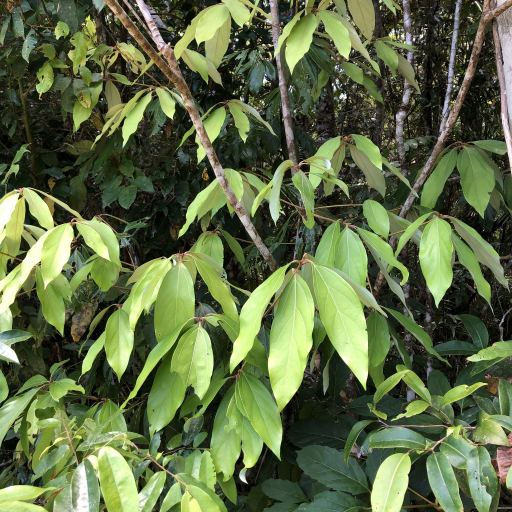
Plant Overview
Known affectionately as the Silver-leaved Litsea or Hairy-leaved Bolly Gum, this Australian native is a showstopper in any rainforest-themed garden. It is famous for the striking contrast between its deep green topsides and its shimmering, ghostly white undersides. When the wind blows, the entire tree appears to change color, flickering like silver in the sunlight.
🔍 How to Identify
- 🍃 Two-Tone Leaves: The most iconic feature is the leaf underside, which is covered in a pale, waxy coating that looks white or silver. The top is a glossy dark green.
- 🌿 Venation Pattern: Look for three prominent veins that start right at the base of the leaf and run toward the tip, a classic trait of the Laurel family.
- 🧶 Velvety New Growth: Young stems and fresh leaves are often covered in soft, rusty-brown hairs, giving the plant a "fuzzy" appearance before it matures.
- 🔮 Glossy Fruit: In autumn, the tree produces small, round berries that turn from green to a deep, polished black, held in tiny cup-like structures.
🏡 In Your Garden
- 🌦️ Microclimate Needs: Because it originates in the rainforests of Eastern Australia, it loves humidity and protection from harsh, drying winds. It is an excellent choice for a "layered" garden where it can sit under the canopy of larger trees.
- 🦋 Wildlife Magnet: This plant is a vital resource for local ecology. It is a primary host for the larvae of the Blue Triangle Butterfly and provides a high-energy feast for rainforest birds like the Topknot Pigeon and the Green Catbird.
⚠️ Safety & Toxicity
- ✅ Status: Generally non-toxic and safe for home gardens.
- 🧤 Mild Sensitivity: While not considered poisonous, the fine hairs on new growth may occasionally cause very mild skin irritation for people with highly sensitive skin.
- 🐾 Pets & Kids: There are no recorded toxic effects for dogs or cats, but as with any ornamental berry, it is best to discourage children from tasting the fruit, as they are meant for the birds!
✨ Fun Fact
The specific name dealbata comes from the Latin word for "whitewashed." It refers to the silver-white underside of the leaves, which reflects light so effectively that the tree can be easily spotted from a distance in a dense, dark forest.

Detailed Care Instructions

Place in a window with dappled sun or a spot in the middle of a room. Or directly in a window facing west or east.

Some plants require more regular watering than others, which should be done every few days. It's critical to maintain the soil moist all of the time. The water requirements of the same plant placed in pots with varying sizes will differ. Because the water in the smaller pot evaporates faster than the water in the larger pot, it will require more watering. Regardless of pot size, the surface should constantly be maintained moist.








