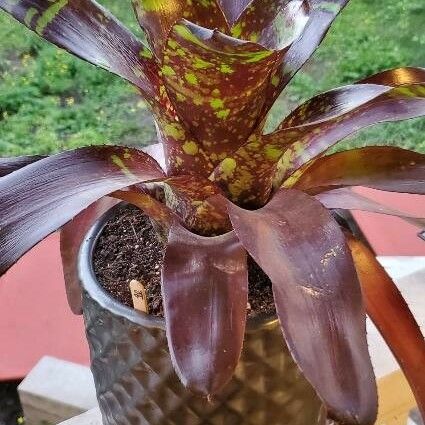
Plant Overview
Known affectionately as the Marble Plant, the Neoregelia chlorosticta is a stunning Brazilian bromeliad that looks as though it was hand-painted with splashes of burgundy ink. Native to the Atlantic rainforests, this plant is an "epiphyte," meaning in the wild, it spends its life perched high on tree branches rather than in the dirt. It is a favorite for tropical terrariums and indoor plant collectors who want high-impact color without the high-maintenance drama.
🔍 How to Identify
- 🎨 The Marbling: The most striking feature is its strap-shaped, olive-green leaves heavily mottled with irregular spots of deep red, maroon, or chocolate brown.
- 🏺 The Central Tank: Like most Neoregelias, the leaves form a tight, water-holding "cup" or "cistern" in the center, which acts as the plant’s primary drinking fountain.
- 🌸 Hidden Blooms: During its flowering phase, the center of the rosette often flushes with a brighter red hue, and tiny, delicate lavender or white flowers appear deep inside the water-filled cup.
🏡 In Your Garden
- 💧 The "Cup" Method: Unlike traditional houseplants, this bromeliad prefers to have its central tank kept filled with fresh rainwater or distilled water. Avoid heavy soil watering, as its roots are primarily for anchoring itself to surfaces rather than absorbing moisture.
- ☀️ Light for Color: To keep those "marbled" spots vivid and dark, it needs bright, indirect light. If the plant is kept in too much shade, the red spots will fade, and the plant will turn a plain, dull green.
- 🌬️ Air Circulation: Because it naturally lives on trees, it craves humidity but hates stagnant air. If you are keeping it in a bathroom or a terrarium, ensure there is occasional airflow to prevent "heart rot" in the center.
⚠️ Safety & Toxicity
- ✅ Pet Friendly: The Neoregelia chlorosticta is considered non-toxic to cats, dogs, and horses, making it a safe choice for households with curious nibblers.
- 🧤 Leaf Edges: While not "dangerous," the edges of the leaves can be slightly serrated or "toothy." Use caution when wiping the leaves to avoid tiny paper-cut-like scratches on your skin.
✨ Fun Fact
The Neoregelia is a "monocarpic" plant, meaning it blooms only once in its lifetime. However, don't mourn its passing—before the mother plant fades, she will produce several "pups" (offsets) around her base, allowing you to grow an entire colony from a single original plant!

Detailed Care Instructions

Place in a window with dappled sun or a spot in the middle of a room. Or directly in a window facing west or east.

Neoregelia Chlorosticta is a type of plant that requires regular watering to ensure healthy growth and development. When watering this plant, it is important to keep the soil evenly moist, but not overly wet, as this can cause root rot and other problems.
To water Neoregelia Chlorosticta, begin by checking the soil to see if it is dry to the touch. If the soil feels dry, it is time to water the plant. When watering, use a watering can or hose with a gentle, steady stream of water to avoid damaging the leaves or roots.
Be sure to water the soil around the base of the plant, rather than directly onto the leaves or petals. This will help to prevent the plant from becoming waterlogged and reduce the risk of fungal growth.
After watering, allow any excess water to drain away from the pot or container. Do not let the plant sit in standing water, as this can lead to root rot and other issues.
In addition to regular watering, Neoregelia Chlorosticta will benefit from occasional fertilization and pruning to promote healthy growth and prevent diseases. With proper care and attention, this beautiful plant will thrive and provide years of enjoyment.
These plant needs regular fertilizing during growing seasons. Fertilizing your plants in dormant state during the winter, might result in scorching or browning of the leaf tips. If mature plants display signs of nutrient insufficiency, fertilizer administration is necessary to restore the plant to its previous state.
You may use All Purpose Plant Food or Flower Fertilizer for your Neoregelia Chlorosticta
When choosing soil for this particular plant, it is important to consider the natural habitat of the plant and replicate those conditions as closely as possible. This plant typically grows in nutrient-poor soil, so a well-draining mix with low levels of organic matter is preferred. The soil should also have a slightly acidic to neutral pH level, ideally around 5.5 to 7.0. Coconut fiber or peat moss can be added to the soil to increase its water retention capacity, as this plant likes to be kept slightly moist but not waterlogged. Additionally, a layer of small pebbles or charcoal at the bottom of the pot can help with drainage. When repotting, it is recommended to use a pot that is just slightly larger than the current one to prevent overwatering and nutrient build-up in the soil.
Common pests of the neoregelia chlorosticta include Scale insect, mealybugs, spider mites. Make a habit of checking your neoregelia chlorosticta frequently for pests so that any infestations can be caught and managed early.








