Plant Overview
Often called the Painted Fingernail Plant, this Brazilian beauty looks like it just stepped out of a high-end botanical salon. As a member of the Bromeliad family, it brings a bold, architectural flair to any indoor jungle or tropical garden. In the wild, it is an epiphyte, meaning it spends its life clinging to tree branches rather than sitting in the soil.
🔍 How to Identify
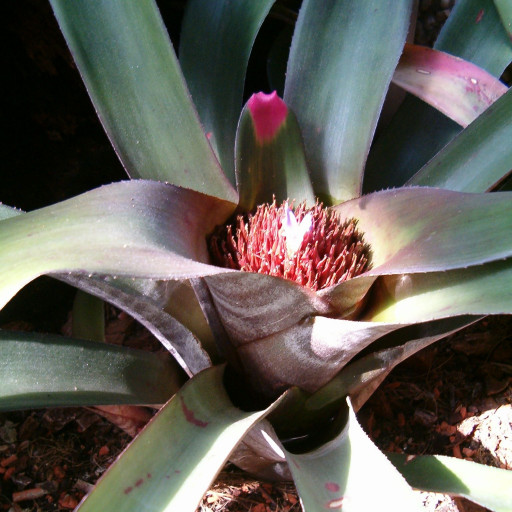
- 💅 The "Fingernails": The most striking feature is the brilliant, hot-pink or blood-red tip on the end of every leaf, looking exactly like a fresh coat of polish.
- 🦓 Banded Foliage: The long, leathery, olive-green leaves are often decorated with subtle, silvery-grey horizontal stripes (trichomes) on the undersides.
- 🕳️ The Central Tank: The leaves form a tight, waterproof rosette or "cup" in the center, designed to catch and hold water in its natural habitat.
🏡 In Your Garden
- 💧 The "Tank" Method: Because this plant drinks through its center, you must keep the central cup filled with fresh water. Use rainwater or distilled water when possible, as they are sensitive to the salts and minerals found in tap water.
- ☀️ Light for Color: To keep those "painted nails" looking vibrant, provide bright, indirect light. In deep shade, the red tips will fade to a dull green, and the plant will lose its compact shape.
- 🪴 Drainage is Key: Since they naturally grow on trees, their roots are primarily for anchoring. If planting in a pot, use a very airy mix like orchid bark or perlite; they will quickly rot in heavy, wet potting soil.
⚠️ Safety & Toxicity
- 🐾 Pet Friendly: Great news for pet owners! Neoregelia spectabilis is generally considered non-toxic to cats, dogs, and horses.
- ⚔️ Sharp Margins: While not poisonous, the leaves have tiny, serrated "teeth" along the edges. These can cause minor scratches, so wear gloves when repotting or moving large specimens.
✨ Fun Fact
In their native Brazilian rainforests, the central water tanks of these plants act as "micro-ponds." They are so reliable that species of tiny tropical frogs spend their entire lives inside them, using the plant’s reservoir to lay their eggs and raise tadpoles high above the forest floor!

Detailed Care Instructions
To grow Neoregelia spectabilis plant, follow these steps:
- Lighting: Neoregelia spectabilis plant needs bright, indirect light. Place it near a window where it can receive bright but filtered light. Avoid direct sunlight as it can burn the leaves.
- Temperature: Neoregelia spectabilis prefers warm temperatures ranging from 60-80°F (15-27°C). Ensure that it is kept in an environment with a stable temperature.
- Humidity and air circulation: Neoregelia spectabilis prefers higher humidity levels. To increase humidity, you can use a humidifier or place the plant on a tray filled with water and pebbles. Also, ensure good air circulation around the plant to prevent fungal growth.
- Watering: Water the plant regularly to keep the soil slightly moist. Stick your finger into the soil, and if the top inch feels dry, it's time to water. Avoid overwatering, as it can lead to root rot. Neoregelia spectabilis can also absorb water through its central rosette, so misting the leaves occasionally is beneficial.
- Fertilizer: Feed the plant with a balanced, water-soluble fertilizer formulated for bromeliads or houseplants. Dilute the fertilizer to half-strength and apply it monthly during the growing season (spring and summer). Reduce or stop fertilizing during the winter months.
- Potting mix: Neoregelia spectabilis prefers a well-draining potting mix. Use a combination of orchid bark, peat moss, perlite, and coarse sand to create a well-aerated soil mixture. Ensure that the pot has drainage holes to avoid waterlogging.
- Repotting: Neoregelia spectabilis does not require frequent repotting, as it prefers being rootbound. However, if the plant becomes top-heavy or the soil is depleted, repot it into a slightly larger pot with fresh potting mix.
- Pups: Neoregelia spectabilis plants produce offset pups or "pups" around the base of the plant. When the pups are approximately one-third to one-half the size of the parent plant, they can be gently detached and potted separately to propagate new plants.
- Pest and disease control: Monitor the plant regularly for common pests like mealybugs or scale insects. If infested, wipe them off using a cotton swab soaked in rubbing alcohol. Neoregelia spectabilis is generally disease-resistant and thrives well when kept in proper conditions.
Remember to regularly clean the central rosette of the plant and remove any accumulated debris or stagnant water to prevent rot or pest infestations. With the right care, Neoregelia spectabilis can grow into a beautiful and healthy plant.

Place in a window with dappled sun or a spot in the middle of a room. Or directly in a window facing west or east.

To properly water this type of plant, you should ensure that the soil is well-drained before watering. It is best to water deeply and allow the soil to dry out slightly between waterings. It is also important to ensure that any excess water is removed from the plant's center as it can cause rotting. When watering, it is important to avoid getting water on the leaves as it can cause damage or rot. The plant should be watered regularly, typically once a week, but this can vary depending on the environment and climate. Overall, it's important to pay attention to the plant's needs and adjust watering frequency accordingly.
To fertilize this plant, use a balanced fertilizer blend that contains equal amounts of nitrogen, phosphorus, and potassium. Apply the fertilizer every other week during the growing season, and reduce the frequency to once a month during the winter months. Dilute the fertilizer by half and apply it directly to the soil, taking care to avoid getting any fertilizer on the leaves. Water the plant after fertilizing to help distribute the nutrients evenly throughout the soil.
It is recommended to use a well-draining soil for Neoregelia Spectabilis plants. The soil should be rich in organic matter and have a slightly acidic pH level. A mix of peat moss, perlite, and coarse sand is often used as a growing medium for these plants. It is important to avoid using heavy soil or soil that retains too much moisture, as this can lead to root rot. Before planting, ensure that the soil is moist but not waterlogged.
Neoregelia Spectabilis is a plant that can be propagated by using offsets. An offset is a new plant that forms at the base of the parent plant. These offsets can be removed and replanted to create new plants.
To propagate Neoregelia Spectabilis, start by identifying a healthy parent plant with offsets that are at least a third of the size of the parent plant. Then, use a sharp, sterile knife to cut the offset away from the parent plant. Be sure to cut as close to the base of the offset as possible without damaging the parent plant.
Next, allow the cut surface of the offset to dry for a few hours. This will help prevent infections and rot. Once the cut has calloused over, plant the offset in a well-draining potting mix that is moist but not wet. Gently firm the soil around the offset to remove any air pockets.
Finally, place the potted offset in bright, indirect sunlight and keep the soil consistently moist. Within a few weeks, the offset should begin to root and grow new leaves. Once the new plant has established itself, it can be fertilized and treated like a mature Neoregelia Spectabilis plant.
Common pests of the fingernail-plant include Scale insect, mealybugs, spider mites. Make a habit of checking your fingernail-plant frequently for pests so that any infestations can be caught and managed early.








